

A new racer's first season usually goes the same way: hours spent dialing in the bike, picking the right gear ratio, choosing tires for the track surface - and then almost no thought given to the grips. That's a mistake, because grips are the only part of the bike a rider's hands actually touch, and on a race bike, that contact point affects acceleration, cornering precision, and how confident a rider feels pushing for speed.
This guide breaks down everything a beginner racer needs to know about BMX grips for beginners in 2026 - the difference between racing and street grips, the main grip types worth considering, sizing standards, and a clear decision framework for picking the right one. Billet BMX stocks a full range of race BMX grips, and by the end of this guide, choosing the right set should feel straightforward rather than overwhelming.
1. What Are BMX Grips and Why They Matter for Racing
BMX grips are the rubber or foam sleeves that slide onto the handlebars, giving riders the surface they actually hold onto throughout a race. They serve four critical functions: control, comfort, durability, and style.
For racers specifically, grip choice has a direct effect on performance. The right grip improves precision through corners, helps maintain speed through sprints, and keeps control consistent even when hands get sweaty under race pressure. A grip that feels great for casual riding can actually work against a racer chasing tenths of a second on the track.
2. Racing vs Street BMX Grips: Key Differences
Racing grips and street grips are built around completely different goals, and understanding this difference is the foundation for every decision that follows.
Racing grips run a slim, thin profile for a direct feel of the bar, while street grips are thicker and softer for shock absorption on hard landings. Racing grip compound is harder and firmer for clean power transfer, whereas street grips use a softer rubber for cushioning during tricks. Racing grips are typically flanged, giving the hand a stop point during hard acceleration, while street grips go flangeless for cleaner bar spins. Racing grips run shorter to match narrower race bars, while street grips run longer for wider setups. Texture differs too - racing grips prioritize maximum traction under pressure, while street grips often use deep ribbing or knurling for grip in wet or sweaty conditions.
The bottom line: racing grips are built for speed, precision, and control, while street grips are built for comfort, durability, and trick performance.
3. Essential BMX Grip Types for Beginner Race Bikes
Rubber Race Grips are the best starting point for most beginners. They're durable, easy to install, and provide a firm grip ideal for competitive racing, fast laps, and tight corners. With a slim profile, harder compound, and flanged design, rubber race grips are a safe first choice for anyone new to the sport.
Dual Density Grips balance durability with comfort, making them genuinely beginner-friendly. Using a dual-layer construction - a firm base under a softer top layer - these grips suit new racers who want both speed-focused performance and a bit more hand comfort during longer practice sessions.
Flanged Racing Grips add a flange at the base specifically to prevent hand slippage during aggressive acceleration. With a firm compound and shorter length, these are the right choice for high-intensity race sprints and power-focused riders who push hard out of the gate.

Flangeless Race Grips simplify the design entirely - no flange, firm compound, compact build. They're less bulky and offer a more streamlined feel, which makes them a good option for beginners still learning proper hand placement before committing to a flanged setup.
4. Top BMX Grip Features for Beginner Racers
A handful of features consistently matter most for new racers shopping for their first set of grips. A slim profile delivers a more direct bike feel and better responsiveness through corners. A firm compound improves power transfer and precision control during sprints. Flange design prevents hand slippage during hard acceleration - a real safety consideration, not just a performance one. Shorter length matches narrow race handlebars and reduces overall weight. High traction keeps grip reliable even under sweaty, fast-paced conditions. Easy installation matters for beginners who don't want to deal with special tools. And durability ensures the grip holds up through repeated race use rather than wearing thin after a few sessions.
5. BMX Grip Size Guide for Race Bikes
Sizing mistakes are one of the most common and easily avoidable issues for new racers. The standard handlebar diameter for BMX race bikes is 7/8 inch, or 22.2mm - confirming this measurement before buying is the first step.
For length, racing grips typically run 120mm to 140mm - shorter generally means less added weight, which matters on a race-focused build. Thickness usually falls in the 10mm to 12mm range, with slimmer grips offering better control and more direct bar feel. Measuring the handlebar before ordering avoids the frustration of a grip that doesn't seat properly.
6. Best BMX Grip Brands for Beginner Race Bikes
Several brands stand out in the race grip space, each with a slightly different strength. Billet BMX offers high-quality grips with fast US shipping and over 40 color combinations, making it a strong all-around choice for beginner racers. ODI's Longneck ST uses race-specific grip technology built for competitive racing. S&M Bikes' Holder grips are a favorite among riders who prioritize precision control. Cult Vans grips go flangeless and comfortable, suiting riders who split time between freestyle and racing. Answer grips lean fully race-focused with a firm compound built for speed-focused beginners.
7. Billet BMX Ultra Grips Diamond Series: Perfect for Beginners
Among the options available, the Billet BMX Ultra Grips Diamond Series stands out as a particularly strong choice for new racers. The two-piece design combines a main grip body with a diamond-pattern sleeve, delivering extra thick rubber with a super soft feel and a no-slip diamond texture that holds up even when hands get sweaty mid-race.
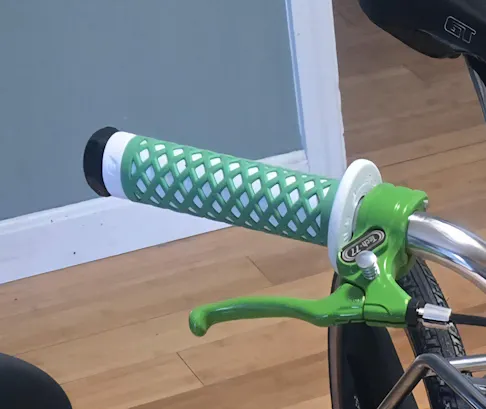
The set comes with over 40 color combinations, matching donuts for hand blister protection, and removable end plugs featuring the Billet Shield logo - no cutting required, and easy to upgrade to Billet bar ends later. Priced at $49.99, it sits in the premium tier but delivers genuine durability for the cost.
For beginners specifically, the appeal comes down to four things: the soft feel adds comfort during long practice sessions, the construction is durable enough to withstand repeated race use, installation requires no technical skill, and the wide color range makes it easy to match any bike theme.
8. How to Choose Grips: A Decision Framework for Beginners
Step one is identifying riding style - a racing focus points toward firm, slim grips. Step two is checking handlebar size, with 7/8 inch (22.2mm) as the standard to confirm. Step three is deciding between flanged and flangeless, with flanged generally recommended for racing due to the hand-stop benefit. Step four is choosing compound, where harder generally means better power transfer. Step five is factoring in comfort, where dual density grips offer a useful balance between performance and hand comfort. Step six is matching budget, with rubber grips sitting at the affordable end and dual density landing mid-range. Step seven is selecting a brand, and Billet BMX stands out for combining quality with fast US shipping.
9. Installation Guide: How to Install BMX Race Grips
Installing race grips is a manageable beginner task. Start by cleaning the handlebar with rubbing alcohol to remove any grease or oil residue. Applying WD-40 or grip glue to the inside of the grip is optional but makes installation easier. Slide the grip onto the handlebar with a gentle twisting motion while pushing it into place, then align it flush with the bar end for comfortable hand placement. If using grip glue, let it dry for 24 hours before riding. Install end plugs separately - no cutting needed - and give the grip a test before heading out. The whole process takes about 15 to 20 minutes for both grips, using just rubbing alcohol and optional WD-40 or grip glue.
The Bottom Line: Grip the Ride with Billet BMX
For beginner race bikes, the formula is straightforward: choose firm, slim, flanged racing grips. Rubber grips or dual density grips are the best starting points for most new racers, and the Billet BMX Ultra Grips Diamond Series stands out as a top recommendation thanks to its high-quality build, 40-plus color options, fast US shipping, and genuine durability.
The right grips make a real difference in race performance. Whether tearing up the race track or grinding rails downtown between sessions, Billet BMX offers grips designed to perform exactly where they're needed.
Frequently Asked Questions
Q1: What type of BMX grips should a beginner racer choose?
Beginners should start with rubber race grips or dual density grips. Both offer durability and easy installation, with a firm compound and slim profile suited for racing. Dual density grips add extra comfort, making them ideal for new racers transitioning from casual riding.
Q2: What handlebar size do BMX race grips fit?
Most BMX race bikes use a standard 7/8 inch, or 22.2mm, handlebar diameter. Always measure the handlebar before purchasing grips to confirm proper fit. Racing grips typically run 120mm to 140mm in length and 10mm to 12mm in thickness.
Q3: Should beginner racers use flanged or flangeless grips?
Flanged grips are generally recommended for racing because the flange prevents hand slippage during aggressive acceleration. Flangeless grips offer a cleaner, more compact feel and can help beginners learn proper hand placement before transitioning to a flanged setup later on.
Q4: Why are the Billet BMX Ultra Grips Diamond Series good for beginners?
The Ultra Grips Diamond Series combines a soft, comfortable feel with genuine durability and a no-slip diamond texture. Easy installation requires no technical skill, and over 40 color options make it simple to match any bike theme while getting reliable race performance.
Q5: How often should BMX race grips be replaced?
Replace grips once the surface texture wears smooth, since this means traction has dropped significantly. Most racers check grips weekly for wear and clean them with rubbing alcohol regularly. Worn grips reduce control and create a real safety risk during racing.


