

Building or upgrading a BMX bike comes down to one thing - parts that hold up when you put them to work. Not just in the shop, not just on paper, but at the park, on the street, and over every jump, grind, and drop you put them through.
That is harder to find than it sounds. The BMX parts market is full of options that look right but fall short fast. Riders who have been through a few broken stems or a set of cranks that stripped out after a month know exactly what that feels like.

Billet BMX was built around a different standard. Every part in the store is there because it meets the bar serious riders expect - not because it fills a shelf.
Why Your Parts Choice Actually Matters
A lot of newer riders focus on the complete bike and treat parts as an afterthought. That changes fast after the first component fails mid-session.
BMX puts unusual stress on equipment. Repeated impacts, grinding contact, lateral force on pegs and cranks - these are not conditions most bike components are designed for. Parts built specifically for BMX freestyle and street riding handle that load differently than generic alternatives.
The difference shows up in material choice, heat treatment, weld quality, and geometry. A set of BMX handlebars designed for street riding handles differently than one built for racing. BMX forks built for park riding have different dropout width and offset than dirt jump forks. Getting the right part for your riding style is just as important as getting a quality part.
The Parts Every Rider Needs to Know
BMX Handlebars
Bars are one of the most personal parts on the bike. Rise, width, backsweep, and upsweep all affect how the bike feels under you. Most street and park riders run two-piece bars in the 9 to 10 inch rise range. Four-piece bars offer a different feel and are common in racing. Material matters too - chromoly is the standard for strength without excess weight.
BMX Forks
Forks take more abuse than most riders realize. Every landing transfers force directly through the fork legs and dropout. A quality fork holds its geometry under repeated impact and keeps your wheel tracking straight. Offset and steerer tube length affect steering responsiveness - shorter offset gives quicker steering, longer offset feels more stable at speed.
BMX Cranks
It is the heart of the drivetrain. Three-piece chromoly cranks are the standard for serious riding - stronger, stiffer, and more serviceable than one-piece options. Arm length affects leverage and clearance. Most street riders run 165 to 175mm. Bottom bracket compatibility - mid, Spanish, or American - needs to match your frame before you order.
BMX Wheels
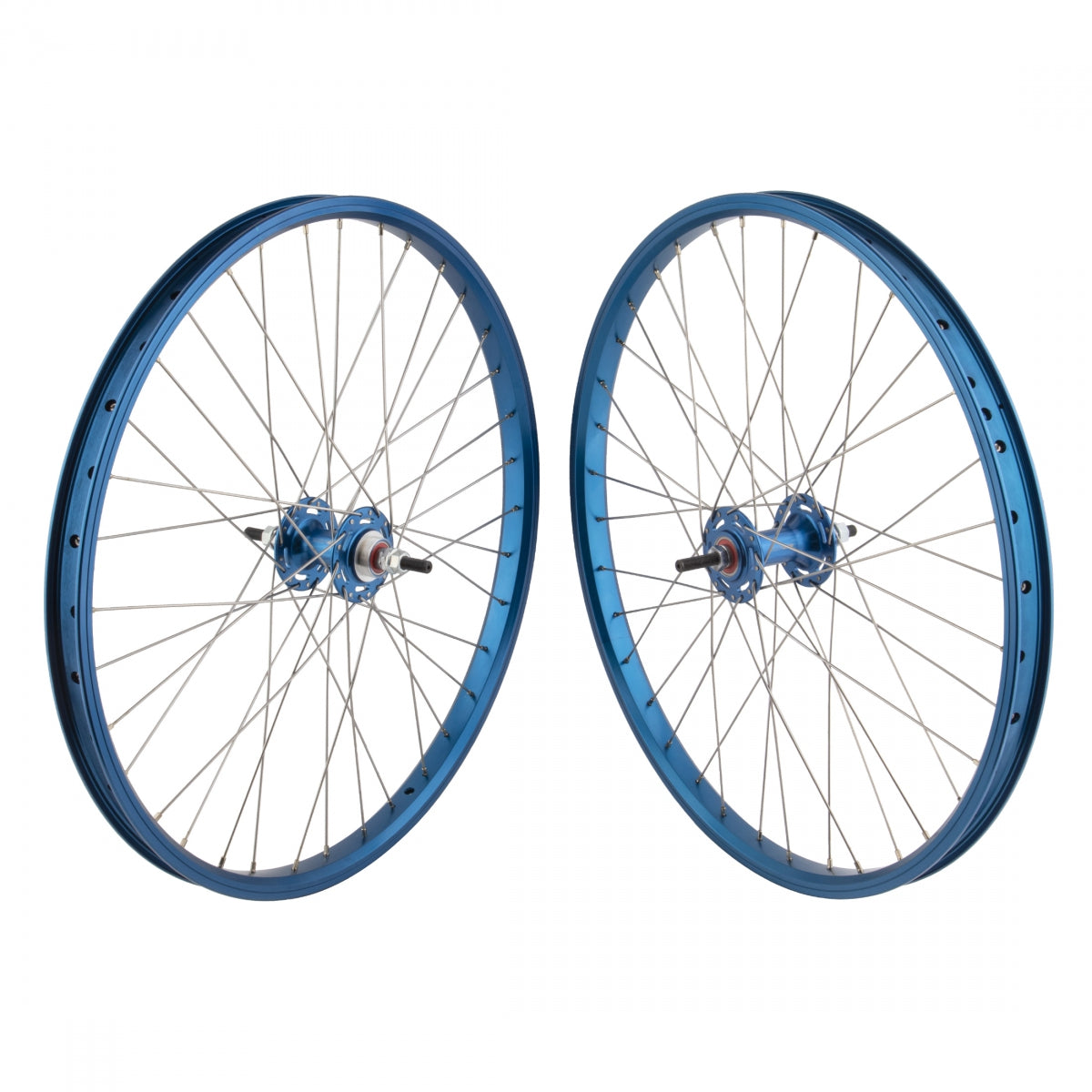
Wheels take a beating. BMX wheels built for freestyle need strong rims, reliable hubs, and consistent spoke tension. Cassette hubs are standard for street and park - lighter, quieter, and with less maintenance than freecoaster setups. Rim width affects tire feel and profile. A wider rim gives a wider contact patch, which changes how the bike tracks on concrete and transitions.
BMX Grips
It wears out faster than almost anything else on the bike. They are also one of the cheapest and easiest upgrades you can make. Flange grips are popular for the added hand stop on manuals and rails. Flangeless grips suit riders who prefer a cleaner bar end. Compound hardness affects feel - softer grips absorb vibration better, firmer grips last longer.
BMX Pegs
Pegs are where the metal meets the rail. BMX pegs take constant grinding contact and need to be hard enough to slide well without wearing through immediately. Steel pegs last longer and grind slower on rougher surfaces. Plastic sleeves over steel cores slide faster and are easier on coping and rails. Length and diameter affect grind feel and leverage on smith and feeble grinds.
Finding Cheap BMX Parts Online Without Compromising Quality
The phrase cheap BMX parts online comes with a warning. Price matters - but so does what you are actually getting for that price.
The smart approach is separating parts where quality is non-negotiable from parts where budget options are fine. Cranks, forks, and handlebars are not where you cut corners. Grips, cables, valve caps, and hardware - those are reasonable places to save.
Billet BMX keeps pricing honest across the range. You can find competitive prices on core components without getting pushed toward parts that will not last. The product descriptions include the specs riders actually need to make the right call - material, geometry, compatibility - so you are not guessing when you order.
For riders putting together a first real build or upgrading a complete, shopping BMX bike parts online through a dedicated BMX store beats the general sporting goods approach every time. The selection is more specific, the specs are more complete, and you are less likely to end up with a part that almost fits.
Before You Order - A Few Things Worth Checking
Every BMX build has compatibility considerations that are easy to miss. Check your bottom bracket shell size before ordering cranks. Confirm your steerer tube diameter before ordering a stem. Know your axle size before buying a new hub or wheel. These details are in your frame specs and take two minutes to verify - they save you a return shipment and a delayed build.
If you are newer to building up a bike, Billet BMX product pages spell out compatibility clearly. You can also cross-reference with our earlier guide on how to spec your first BMX build for a full walkthrough on matching parts to your frame.
The Bottom Line on BMX Parts
Good riding starts with parts that work. Not parts that almost work. Not parts that hold up for a few sessions before something gives. Parts built for what you are actually doing on the bike.
Billet BMX carries the components serious riders come back to - handlebars, forks, cranks, wheels, grips, and pegs that handle real riding conditions. Whether you are building from scratch, replacing a worn component, or upgrading what came stock on your complete, the right part makes every session better.
Start with what you need. Build from there.
Frequently Asked Questions
Q1. What BMX parts wear out fastest?
Grips, brake pads, and chains wear out quickest. Pegs, tires, and cables follow. Check these regularly and replace them before they affect your riding or safety.
Q2. Are BMX cranks universal fit?
No. Cranks depend on your bottom bracket shell - mid, Spanish, or American. Always check your frame spec before ordering to avoid compatibility issues on delivery.
Q3. What size BMX handlebars should I get?
Most street and park riders run 9 to 10 inch rise bars. Width and sweep are personal preference. Match bars rise to your riding style and height for best comfort.
Q4. Can I buy quality BMX parts on a budget?
Yes. Prioritize quality on structural parts like cranks and forks. Save on grips, cables, and hardware. Billet BMX offers competitive pricing across both categories.
Q5. How do I know if BMX parts will fit my bike?
Check your frame's bottom bracket shell, steerer tube diameter, and axle size. These three measurements cover most compatibility questions before you place an order.


