

Freestyle riding is brutal on a bike in a way that street commuting or casual cruising never is. Every grind scrapes metal, every drop slams the frame, and every failed trick puts stress on parts that were never designed for that kind of abuse in the first place. A lot of stock components hold up fine for a few weeks before something starts creaking, slipping, or cracking. Knowing which freestyle BMX parts are actually built for that punishment, versus which ones just look the part, saves riders from replacing the same component three times in a season.
Billet BMX builds and stocks components specifically with that abuse in mind, since freestyle riding is exactly the kind of riding most parts fail under first.
Chain Tensioners: Small Part, Big Job
Nothing ruins a session faster than a chain that skips mid-trick because the rear wheel shifted out of position. Chain tensioners exist to lock that wheel in place and keep tension consistent, but a lot of budget tensioners use bolts that stick out past the frame, right where a peg or a grind rail can catch them.
Billet BMX chain tensioners solve that with an internal bolt design that sits flush instead of protruding, machined from 6061 T6 aluminum and CNC finished for precision fit. The Shield adjusts front to back with numbered markings, so dialing in axle position after a wheel swap takes seconds instead of guesswork. For a rider grinding rails and ledges regularly, that flush design isn't a cosmetic detail - it's the difference between a clean grind and a part getting torn off mid-trick.

Pegs: Plastic vs. Steel for Grinding
Pegs take a beating that most other parts never see, since they're the actual contact point on every rail, ledge, and box grind. Plastic pegs run lighter and slide smoother on most surfaces, which a lot of street and park riders prefer for the feel. Steel pegs weigh more but shrug off repeated impact and grind far longer before showing wear, making them the better call for riders hitting metal rails or rough ledges regularly.
Neither option is universally "better" - it comes down to riding style. A rider doing mostly smooth park grinds can get away with plastic pegs for a lighter setup, while a street rider sessioning rough handrails and concrete ledges is better off with steel pegs that won't chew through in a month.
Freestyle BMX Components That Are Easy to Overlook
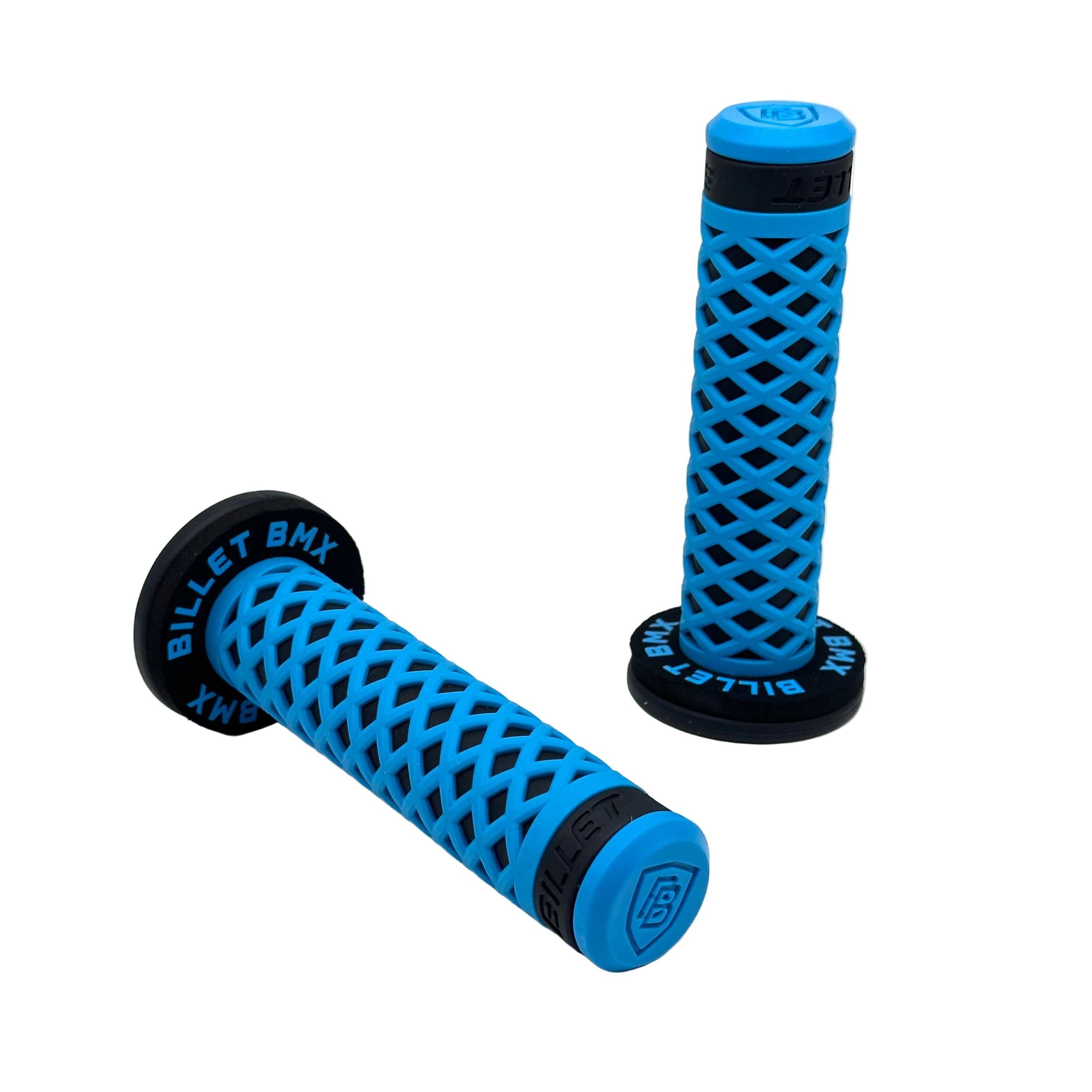
A few smaller freestyle bike parts don't get much attention until they fail mid-session. Axle nuts hold the rear wheel in position under real load, and a cheap set can strip or loosen faster than expected once pegs and grinding get involved. Grips matter more than most riders think too - a worn or slick grip loses hold exactly when a rider needs it most, mid-trick, with both hands doing the work of keeping the bike under control.
Drivetrain setup plays a role as well. Standard BMX gearing runs a 25-tooth sprocket paired with a 9-tooth driver, which covers most street and park riding fine. Riders doing heavy grinding often drop to a smaller sprocket specifically to reduce the chance of the sprocket contacting a rail or ledge mid-grind - a small change that prevents a specific, common point of failure.
Freestyle BMX Parts: What to Look For
Building a Freestyle Setup That Doesn't Quit
None of this means every part needs to be top-of-the-line to survive freestyle riding. It means knowing where the abuse actually lands - the chain tensioners, pegs, grips, and drivetrain - and putting real thought into those specific components instead of treating every part on the bike the same. A frame can be solid and still get let down by a fifteen-dollar bolt that wasn't built for the job.
Billet BMX designs its chain tensioners, axle hardware, and grip lineup specifically around that kind of repeated abuse, which is why riders doing serious street and park sessions tend to gravitate toward the brand once stock parts start failing. Freestyle riding will always be hard on equipment. The parts don't have to be the reason a session ends early.
Frequently Asked Questions


