

A wheelie bike earns its keep on a single wheel, and for heavier riders that wheel takes a beating. The rear rim, the spokes, the axle and the frame carry every pound for as long as the front end stays in the air. A bike that looks right in a photo can still go out of true, bend a dropout or crack a weld if those parts were never meant for the load.
That is why a wheelie bike is worth choosing by its hardware rather than its paint. The notes below cover how weight limits actually work, what makes a rim strong, why spoke count matters, and where a frame runs out of headroom.
Why Rider Weight Changes the Way a Wheelie Bike Gets Chosen
Wheelie riding is not gentle on parts. Holding a balance point means the rear wheel carries most of the combined weight of rider and bike, and it does so in surges: pedal stroke, manual, drop back down, repeat. Every landing sends a short spike through the rim and spokes that is bigger than the static weight on the scale.
A heavier rider simply raises that baseline. Parts with plenty of margin shrug it off for years, while parts built to a price show it as a wobbly rear wheel or a bent axle after one rough weekend.
How to Read a Wheelie Bike Weight Limit
A wheelie bike weight limit sounds like a clean number, but it rarely tells the whole story. Brands rate their bikes differently, and the details sit in the fine print.
What the number usually covers
Some makers list rider weight only. Others count rider plus gear, a backpack or a loaded bag. A few publish nothing at all, which leaves the buyer guessing. Ratings are also written around normal riding. Repeated wheelies, bunny hops and drops put harder loads on a bike than a rider cruising to the store, so a rider near the posted limit should treat it as a ceiling rather than a target.
What the number does not cover
A single figure on a spec sheet does not say which part sets the limit. It might be the frame, the fork, the rims or the cranks. Often it is the wheels, because they are the most common component to under-spec. When a listing does not name a limit, the safest move is to ask the retailer or brand directly before ordering.
Rim Strength: What Makes Strong BMX Wheels
Strong BMX wheels come down to three things: the rim, the spokes and how well the two were built together. The rim comes first because it takes the direct hit from every landing.
Double-wall rims and eyelets
A double-wall aluminum rim has two layers joined by an inner bridge, which keeps it stiffer and slower to dent than a single-wall rim. Eyelets, the small metal reinforcements where each spoke meets the rim, spread the spoke load so the metal around the hole does not crack under repeated stress. For a heavier rider, a double-wall rim with eyelets is the sensible starting point. Browsing strong BMX wheels by size and brake type makes the shortlist easier.
Rim width and tire pairing
A tire that is too narrow for a heavy rider pinch-flats sooner, and a pinch flat can dent the rim at the same moment. A roomy tire on a sturdy rim does more for durability than most riders expect.
Spoke Count: Why 36 Holes Still Earns Its Place
Spokes are the part riders ignore until one snaps. Each spoke carries a share of the load, so more spokes mean a smaller share per spoke and a wheel that stays true longer. Many race wheels run 28 holes to save grams, which makes sense on a track but is a harder sell for a heavier rider doing repeated wheelies.
The 36-hole layout remains the usual choice for heavy use, and several wheelsets in the Billet BMX range use it. Spoke gauge matters too, since thicker spokes resist stretching, and a wheel laced evenly will outlast one that was merely assembled.
Tension and truing
Even a well-built wheel loosens as the spokes settle during the first rides. Skipping that check leads to uneven tension, the usual reason a rim goes wavy or a spoke snaps. A short walk-through on how to true a BMX wheel covers the basic tools and the feel of correct tension.
29 Inch BMX Wheels: Bigger Wheel, Bigger Demands
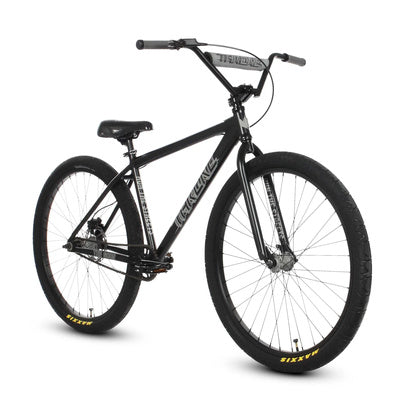
Most wheelie bikes now roll on large wheels, and the 29 inch BMX size is the most common option. The larger diameter rolls over cracks and curbs easily and holds momentum through a long manual.
The cost is leverage. A 29 inch wheel has longer spokes and a longer rim span than a 20 inch wheel, so each spoke has more room to flex under load. For a heavier rider, that means rim and spoke choices matter more on a 29 than on a smaller wheel, not less.
A 26 inch wheel is a legitimate alternative, since it is stiffer and shorter with less flex, which suits a rider near the top of a bike’s weight limit. Riders new to the category can start with this wheelie bike guide for the basics before narrowing down a size.
Frame Limits: Where a Weight Rating Really Lives
Wheels can be swapped in an afternoon, but a frame cannot, so it deserves the most attention before a purchase.
Tubing, welds and wheelbase
Look at the tubing material and wall thickness first. Steel frames, whether high-tensile or chromoly, are common in BMX and usually the better match for heavy use than very light alloy builds. Then check the welds around the head tube, the bottom bracket and the rear dropouts, since those junctions take the most stress. A longer wheelbase, typical on wheelie bikes, adds stability but also adds leverage on the frame during a manual.
Axles and dropouts
The rear axle is a quiet failure point. A 14mm axle is noticeably thicker than a 3/8 inch one, and it spreads load better across the dropouts. Heavier riders should lean toward the thicker size when the frame and hub allow it, and keep the axle nuts tight so the wheel cannot shift in the dropout.
Cranks, seat post and contact points
Smaller parts get overlooked. Three-piece chromoly cranks tend to tolerate heavy pedaling and long manuals better than budget two-piece sets, and a thick-walled seat post with a secure clamp keeps the saddle from creeping under load. Pedals with a solid spindle complete the chain. None of these parts sets the headline weight limit, yet each one can quietly end a ride when it gives up first.
Riding style shifts the math too. A rider who mostly cruises and holds long wheelies puts steady load on the bike, while one who hops curbs and drops off ledges adds impact loads. The second style calls for more margin in every part above.
A Quick Checklist for Heavier Riders
This table pulls the key parts together so a shopper can compare bikes side by side.
| Part | What to look for | Why it matters |
|---|---|---|
| Rim | Double-wall with eyelets | Resists dents and cracked spoke holes |
| Spokes | 36 holes, evenly tensioned | Shares load and holds true longer |
| Axle | 14mm where possible | Stiffer and less likely to bend |
| Frame | Steel, clean welds, listed rating | Sets the real ceiling for the bike |
| Tires | Wider volume, correct pressure | Protects rim from pinch flats |
Upgrades Worth Making First
The wheelset is usually the best first move because it improves strength without touching the frame. Options like the PRO+ 29" BMX wheel sets give a 29 inch bike a simple upgrade without a full rebuild.
After the wheels, the next priorities are roomy tires, a sturdy rear axle and nuts, and a check of the cranks and pedals. Frames and forks come last because they cost the most to replace.
Habits That Keep the Hardware Alive
Good parts still need good habits. Tire pressure should sit within the range printed on the sidewall, and heavier riders usually run toward the higher end to protect the rim. Spoke tension, axle nuts and frame welds all deserve a glance before a session, and a look at the dropouts catches hairline cracks early.
Landing matters as well. Dropping a wheelie flat and hard sends a shock through the rear wheel, while rolling the front down gently saves the rim.
FAQs
Is there a weight limit on a wheelie bike?
Yes. Each wheelie bike has a rider weight rating set by its maker, which differs by model. Confirm it on the listing or with the retailer first.
How many spokes should a wheel have for a heavier rider?
Thirty-six spokes are the safest pick for heavier riders because the load spreads across more spokes, which helps the wheel stay true longer than a 28-hole build.
Are 29 inch BMX wheels strong enough for heavier riders?
They can be when the rim is double-wall with eyelets and spokes are evenly tensioned. Longer spokes flex more, so build quality matters more than wheel size.
What makes BMX wheels strong?
A double-wall aluminum rim with eyelets, a 36-hole spoke layout, even tension and a thick axle together make wheels strong enough for repeated wheelies and landings.
Can a heavier rider upgrade only the wheels instead of buying a new bike?
Often yes. A stronger wheelset fixes the most common weak point without replacing the frame, but the frame’s rated limit still applies and needs checking first.
Conclusion
A wheelie bike for a heavier rider comes down to margins. Rims that resist dents, a spoke count that spreads the load, an axle that does not flex and a frame with a clear rating add up to a bike that lasts. A bigger wheel brings real benefits, as long as the wheel build matches the demand.
Shoppers who pair careful reading of the spec sheet with a few direct questions to the retailer usually end up with a bike that holds up season after season. For a full range of rides and wheel upgrades, Billet BMX carries both complete bikes and the parts to strengthen them.
Ready to Roll on a Bigger Wheel?
Browse big wheel BMX bikes built for hard riding.
Shop Big Wheel BMX Bikes


