
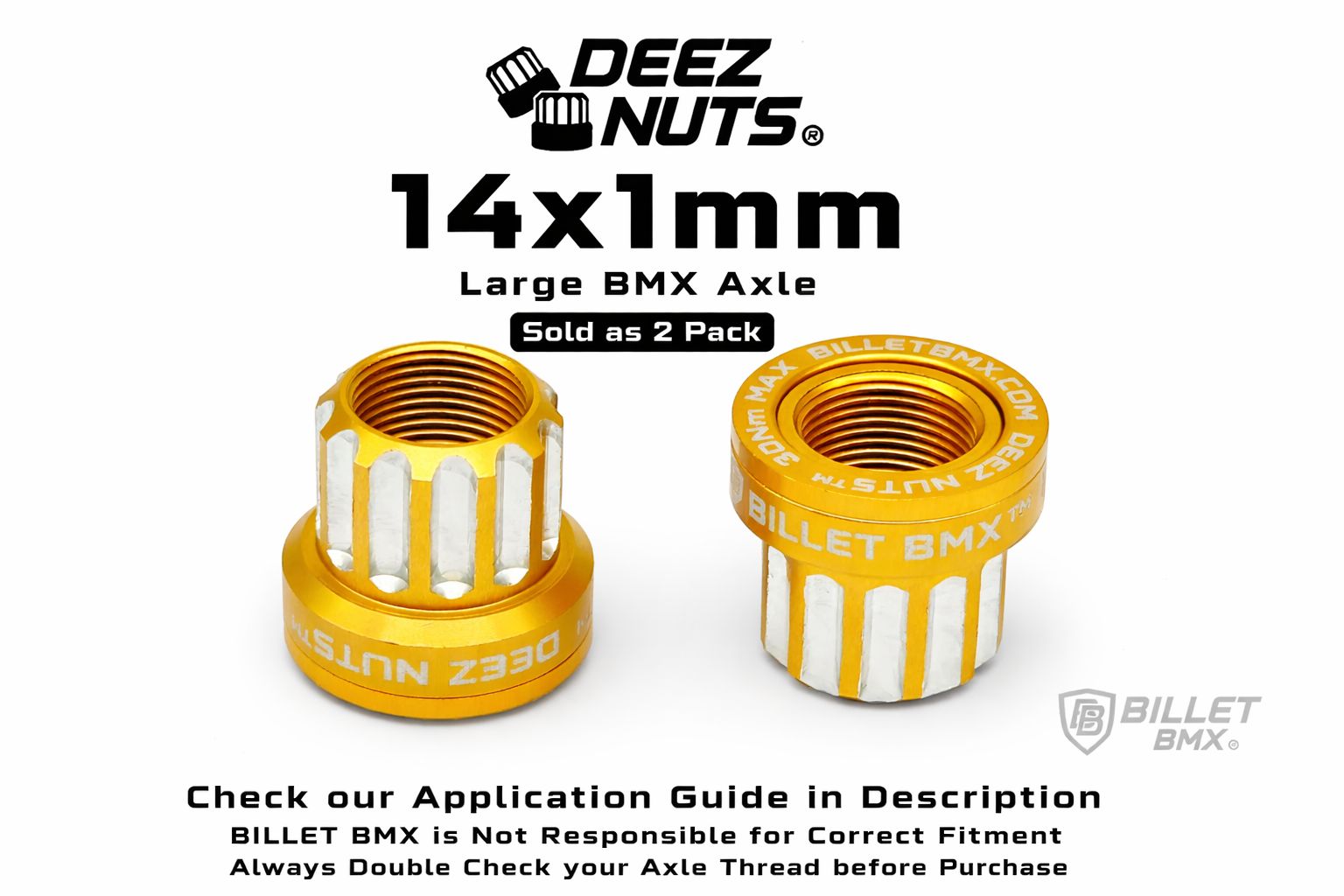
Have you ever stripped a nut right at the skatepark? Mid-session, wrench slipping, anodizing scraped off on the first install? Yeah. That's not just annoying -it's a sign your hardware isn't keeping up with your riding. If your bike runs a 14mm rear axle, the axle nuts you put on it actually matter more than most people realize.
This guide breaks down everything you need to know about 14mm axle nuts - what to look for, what to avoid, and why riders who care about their build keep coming back to Billet BMX.
What Are 14mm Axle Nuts and Who Needs Them?
Here's a quick rundown. BMX bikes generally come with one of two rear axle sizes: the more common 3/8" used on a lot of freestyle and street setups, and the beefier 14mm found on race bikes and high-load riding platforms. Brands like GT, Throne, and certain e-bike manufacturers build their rear ends around the 14mm standard because the larger diameter simply handles more stress.
So if you're riding a GT Pro Series, a big-wheel BMX cruiser, or a performance-focused race bike, your rear wheel is almost certainly running a 14mm axle and that means you need nuts threaded specifically to that size. The most common thread spec is M14 x 1.0, though some e-bike platforms like Zooz use the rarer M14 x 1.5mm pitch, so always double-check before you order.
Why the Standard Nuts Fall Short
Most stock axle nuts are basic 6-point hex designs made from lower-grade alloy or steel. They work fine out of the box, but there's a real problem: every time you put a wrench or socket on them, the tool bites directly into the anodized surface. After a few installs and removals, the color is gone. The flats are rounded. And now you've got an ugly, difficult-to-remove nut that's been on the bike since day one.
That's the gap that actually started the conversation around upgraded billet BMX axle nuts.
Billet BMX didn't just make a prettier nut. They redesigned the whole concept. Their Deez Nuts™ 14mm axle nuts are machined from 7075-T6 aluminum -the same alloy used in aerospace and high-performance cycling components. That's significantly stronger than the 6061 T6 aluminum you'll find in most budget-tier parts.
But the design feature that really sets them apart? The 12-point configuration.
How the 12-Point Design Solves the Scratch Problem
Standard 6-point nuts get scratched because the wrench contacts the flat anodized faces directly. Billet BMX flipped the logic. With 12 points, your socket or wrench only makes contact in the recessed valleys between points -not on the color-anodized outer faces. The result? You can install and remove these things multiple times without leaving a mark.

Every unit is fully CNC machined and finished with laser engraving -that signature Billet BMX detail that tells you you're looking at a part that was actually designed, not just manufactured. They're anodized for both appearance and corrosion resistance, so they'll still look clean after a rainy session or a muddy race day.
Choosing the Right 14mm Axle Nut for Your Bike
Not all 14mm axle nuts are interchangeable. Before you buy, nail down two things:
Thread pitch - Most BMX bikes with 14mm rear axles use the M14 x 1.0 standard -that covers GT, Throne, and the majority of race frames. If you're riding a Zooz eBMX rear wheel, you'll need the M14 x 1.5mm version, which is a rare size that few brands even stock. Billet BMX makes both, which is honestly one of the reasons they stand out.
Hex size - This affects what wrench or socket you need on hand. Standard flanged BMX nuts in the 14mm range typically use a 17mm or 19mm hex, depending on brand and style. Double-check your current nut before ordering so you're not caught off guard at install time.
Does It Work With My Frame?
If you're running a larger-format BMX -26" to 29" wheel bikes from GT or Throne specifically -Billet BMX's 14mm parts are built with you in mind. Their chain tensioners for 14mm axles were purpose-designed for those exact frames, and pairing them with matching 14mm billet BMX axle nuts gives you a clean, fully coordinated rear end.
For reference, the 14mm setup is also commonly seen on bikes where the rear axle handles the brunt of landings -which is exactly why riders like National BMX Champion Pat Coo and X Games athlete Zach Lewis trust Billet hardware on their race builds.
Style Matters -Especially When It's Your Build
Look, some people don't care what their axle nuts look like. But if you've put real thought into your colorway -your bars, grips, frame, and wheels -there's something off about plain black steel nuts holding the whole thing together.
Billet BMX axle nuts come in a solid range of colors: black, chrome, gold, red, blue, and more. Whether you're building a clean all-black setup or a full gold bling cruiser, there's a finish that fits. Riders have used them to complete builds on Gold Fast Rippers, pro race bikes, and everything in between.
And because of that no-scratch 12-point design, the color you choose actually stays on the nut.
Installing 14mm Axle Nuts -What You Need to Know
Installation is straightforward, but a few things are worth keeping in mind:
- Always use the correct socket size - forcing an ill-fitting wrench is how you damage even the best hardware
- Follow your frame manufacturer's recommended torque specs to avoid stressing the axle threads
- If you're pairing with a chain tensioner, get your wheel centered before final tightening
- Billet BMX also sells a dedicated wrench designed for their 12-point nuts, which makes installation completely scratch-free and is worth grabbing at the same time
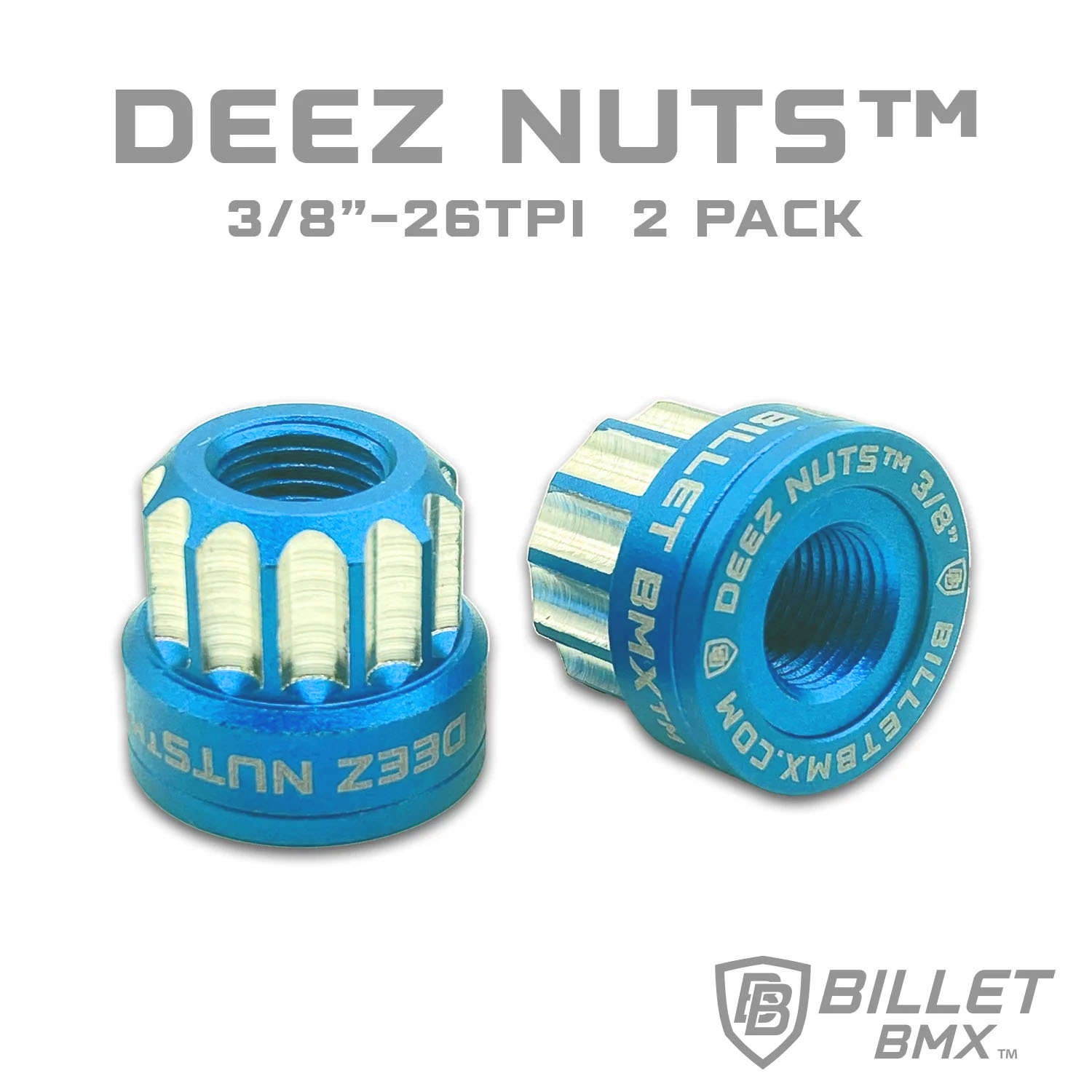
For more on how thread sizes affect fitment and performance, Billet BMX has a detailed breakdown on understanding BMX axle nut thread sizes that's worth reading before your next parts order.
Ready to Upgrade Your Rear Axle Hardware?
If your bike runs a 14mm axle and you've been making do with whatever came on it from the factory, this is a simple, affordable upgrade that makes a real difference - both in how your bike looks and how reliably it holds together under pressure.
Billet BMX makes some of the most dialed billet BMX axle nuts on the market, and their 14mm options cover everything from standard race frames to specialized e-bike platforms. Shop the full Deez Nuts™ lineup at billet bmx and pick the size, thread pitch, and color that fits your build.
Your bike's rear end deserves better than scratched-up stock nuts.
FAQ -
Q: What size wrench do I need for 14mm axle nuts?
Most 14mm BMX axle nuts use a 17mm or 19mm hex. Check your specific nut's specs before installing to avoid using the wrong tool and damaging the finish.
Q: Are 14mm axle nuts the same as 3/8" axle nuts?
No. They are different sizes and are not interchangeable. The 14mm is larger and used on race BMX and heavier-duty frames, while 3/8" is standard on most freestyle bikes.
Q: What thread pitch are 14mm BMX axle nuts?
Most use M14 x 1.0. Some e-bikes like the Zooz use M14 x 1.5mm. Always verify your axle's thread pitch before purchasing replacement or upgrade nuts.
Q: Do billet BMX axle nuts work on GT and Throne bikes?
Yes. Billet BMX's 14mm axle nuts are specifically compatible with GT and Throne frames that use the standard M14 x 1.0 thread on their rear axles.
Q: Why do my axle nuts keep getting scratched during installation?
Standard 6-point nuts get scratched because the wrench contacts the anodized faces. Billet BMX's 12-point design keeps tool contact in the recessed valleys, so color stays intact through multiple installs.


