
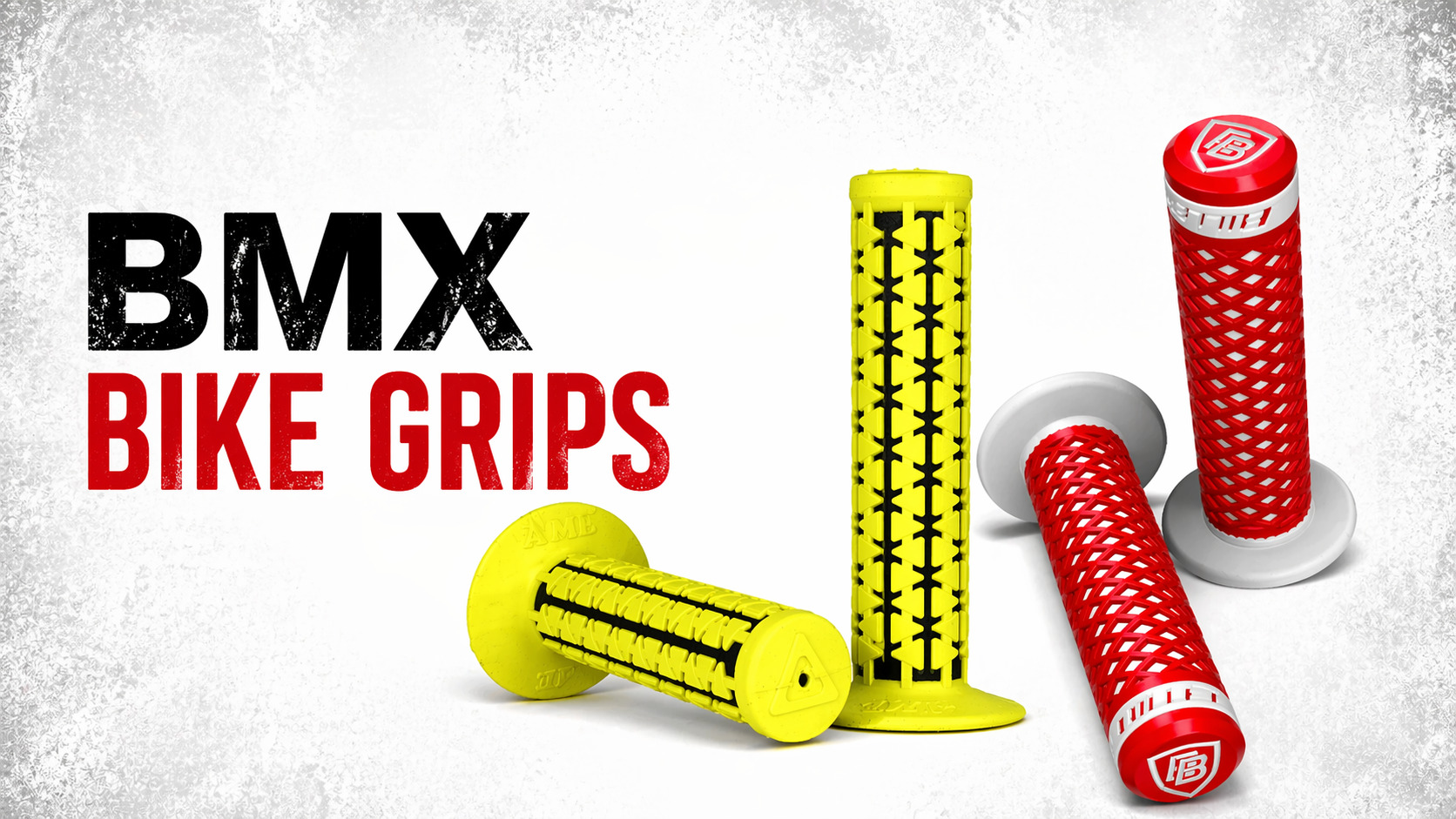
Your hands never leave the bars. Every trick, every landing, every sharp turn - it all runs through your BMX bike grips. And yet most riders obsess over wheels, stems, and frames while completely ignoring the one part that actually connects them to the bike.
Wrong grips can kill your control, wreck your hands after an hour, and make technical tricks harder than they need to be. The right BMX grips? You stop thinking about them entirely - which is exactly where you want your head when you're riding.
Here's what actually matters when you're picking grips for your setup.
Why Grips Make a Bigger Difference Than Most Riders Expect
Think about it this way: your feet touch pedals, your body rests on a seat- but every single input you make on a BMX bike goes through your hands. Turns, pulls, catches, presses- all of it runs through your grips.
A soft, well-textured grip absorbs vibration on rough street surfaces and keeps your hands fresher across a long session. A worn, hard, or poorly sized grip creates fatigue, reduces feel, and quietly chips away at your confidence on the bike. Riders who've made the switch from stock grips to a quality aftermarket set notice the difference from the first session- not after a month of breaking them in.
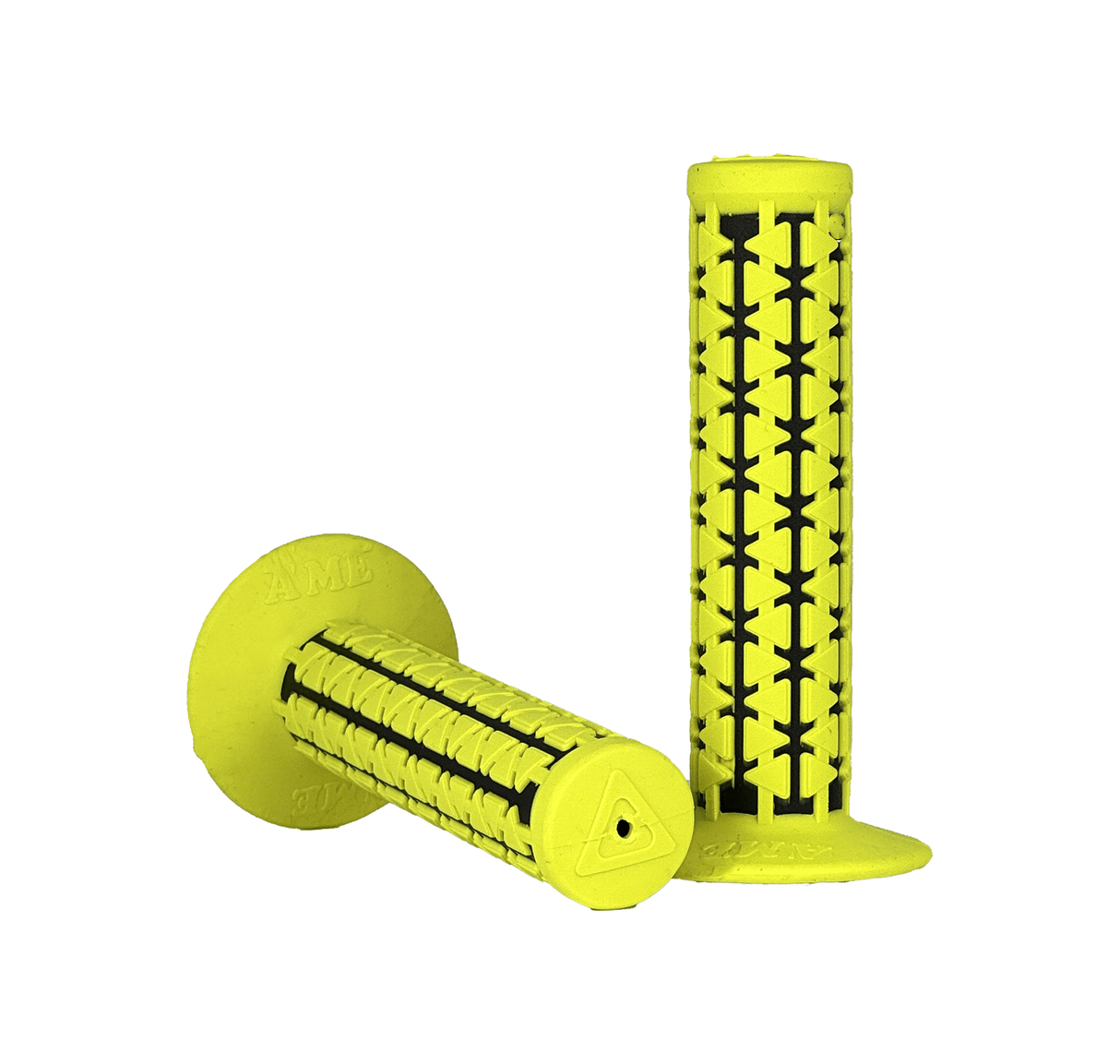
Billet BMX builds their grips around this reality. The goal isn't just something that looks good on the bars- it's a grip that holds up through hard riding and actually improves how the bike feels in your hands.
Grip Types: What the Options Actually Mean
Walk into any shop or browse a proper BMX catalog and you'll hit a few different grip styles fast. Here's what separates them.
Flanged vs. Flangeless
A flanged grip has a raised collar on the outer end that acts as a physical stop for your palm. During hard landings and aggressive riding, that collar keeps your hand planted exactly where you set it. This is why flanged grips have dominated BMX for decades- they solve a real control problem.

Flangeless grips have a clean, open outer end. They're popular with riders who do a lot of barspins, since there's nothing catching your palm on the catch. If technical tricks are a big part of your riding, flangeless is worth serious consideration.
Lock-On vs. Slide-On
Lock-on grips use small aluminum clamps to anchor them to the bar. They won't rotate mid-session no matter how hard you're pushing, and you can remove and reinstall them without replacing them. For street and park riders doing long sessions without gloves, lock-on grips are one of the smartest upgrades you can make.
Slide-on grips are the traditional style- installed with rubbing alcohol and held by friction. Lighter and cheaper, but require more maintenance attention to stay put.
Grip Material: Rubber, Foam, or Something in Between
Rubber is the standard for a reason. It holds its texture through heat, sweat, and cold, lasts months of regular riding without breaking down, and performs reliably in wet conditions where foam loses traction. For most riders doing street, park, or trail sessions, rubber is the right call.
Foam grips feel immediately comfortable and are lighter than rubber alternatives. The trade-off is longevity- foam wears down noticeably faster, especially for riders logging heavy daily sessions. If you ride casually or prioritize feel over durability, foam has its place.
For everyday riding in 2026, a quality rubber compound- soft enough to absorb vibration but firm enough to last- is where Billet BMX focuses their grip lineup.
Size: Length and Diameter Actually Matter
Most riders skip this step and wonder why the grips feel off.
Length typically runs from 140mm to 165mm. Street and park riders generally land in the 155mm–165mm range, which gives hands room to settle naturally without crowding the stem area. Go too short and the grip feels cramped on longer sessions.
Diameter affects how much bar feedback reaches your hands. Thinner grips in the 27mm–29mm range give sharper, more direct feel- technical street riders who rely on precise input tend to go this route. Thicker grips (30mm–32mm) absorb more vibration and suit riders doing extended sessions or rougher terrain.
There's no universally right answer- it comes down to what your riding actually demands from your hands.
A Word on Vans BMX Grips
If you've spent any time in the BMX world, you've seen Vans BMX grips on bars. The Cult x Vans collaboration- manufactured by ODI using their proprietary rubber compound- took Vans' iconic waffle shoe sole pattern and applied it directly to a grip.
The result is a firm, textured rubber grip that offers serious traction and recognizable style. At 150mm, they're a comfortable length for most riders. They come in both flanged and flangeless versions, available in a wide range of colorways. The waffle pattern increases surface contact with your hands, which keeps control consistent even during sweaty sessions.
They're on the firmer side compared to softer compound grips, so riders who prefer a cushioned feel may want to try before committing. But for style-conscious riders who want performance to match the look, they've earned their reputation.
How to Install BMX Grips Without Ruining Them
Installation is simpler than most people make it. The fastest, cleanest method: pour a small amount of 90%+ rubbing alcohol inside the grip, squeeze it a few times to distribute it, then slide the grip onto the bar. The alcohol acts as a lubricant going on and evaporates quickly, leaving the grip locked in place by friction.
No WD-40. No air compressor. No zip ties. Just alcohol, a firm push, and about sixty seconds per side.
For lock-on grips, slide them into position and tighten the clamp bolts evenly- don't overtighten on one side. Sit on the bike, find your natural wrist position, then lock them down there.
When It's Time to Replace Your Grips
Grips don't last forever, and riding on worn-out ones hurts your control more than most riders realize. Replace them when:
- The texture feels smooth or glassy under your hands
- They're tearing, cracking, or visibly breaking down
- Your hands slip during normal riding even without sweat
- They've lost their tackiness after a season of regular use
Most riders doing regular sessions replace grips roughly once or twice a year. It's one of the cheapest upgrades on a BMX bike- and one of the most immediately noticeable.
Ready to Upgrade Your BMX Bike Grips?
Your BMX bike grips are the most direct connection between you and your bike - every ride proves it. Get the type, size, and compound right for how you actually ride and everything clicks into place. Billet BMX carries the options to dial your setup completely, from rubber compound to colorway. The right pair is already waiting.
FAQs:-
Q: What size grips fit a BMX bike?
Nearly all BMX handlebars use a standard 22.2mm diameter, so most grips are universally compatible. Length and thickness vary- choose based on your hand size and riding style preferences.
Q: Are Vans BMX grips good for barspins?
The flangeless version works well for barspins since there's no outer collar to interfere with your catch. The flanged version offers more palm support for general riding and hard landings.
Q: How do I keep my BMX grips from spinning on the bars?
Use rubbing alcohol during installation for a tight slide-on fit, or switch to lock-on grips which use aluminum clamps to prevent rotation entirely, regardless of how hard you ride.
Q: How long do BMX grips last?
With regular riding, most rubber grips last several months to a year. Foam grips wear faster. Replace them when texture feels smooth, grip feels slick, or visible cracking or tearing appears.
Q: What's the difference between soft and hard compound BMX grips?
Soft compound grips absorb more vibration and feel comfortable on long sessions. Hard compound grips offer more direct bar feedback and durability. Street riders often prefer softer; technical riders lean toward firmer.


