

Most people obsess over frames, forks, and wheel setups. They spend hours reading specs, watching build videos, and comparing weights down to the gram. Then they bolt on the grips that came with the bike and move on.
BMX grips are the one contact point between your hands and every input your bike responds to. Bumps, landings, tight turns all of it travels through those two pieces of rubber before your hands process it. If the grip is wrong, everything downstream suffers. It is not a finishing touch. It is where your control actually starts.

This guide breaks down what makes one grip better than another, how to match grip style to the way you ride, and why riders across the USA keep coming back to Billet BMX when they are ready to stop settling.
Why Your Stock Grips Are Already Holding You Back
Every BMX bike ships with grips. Almost without exception, those stock grips are a cost decision made by a factory - not a performance decision made for you.
After a few sessions, you feel it. A dull ache in your palms. Reduced sensitivity through your fingers. That slightly disconnected feeling when you try to read terrain through your bars. That is not fatigue. That is your grip failing you.
Aftermarket bike BMX grips fix this immediately - and the difference is not subtle. It is something you feel from the very first turn. Riders who upgrade to quality grips almost never go back to stock, because the feedback difference is simply too obvious to ignore.
The Four Main Types of Bike BMX Grips
Not all BMX grips are built the same way, and choosing the wrong type for your style will undo every other upgrade you have invested in.
Flanged Grips
The flange is the raised collar at the outer end of the grip. It acts as a physical palm stop during hard landings, sharp turns, and aggressive bar inputs. Without it, your hand can creep toward the bar end mid-maneuver - and once your palm loses its reference point, control drops immediately.
Flanged BMX grips have dominated the market for decades because that collar solves a real problem rather than a cosmetic one. For street riding, park sessions, and dirt jump use, flanged grips are the default choice of serious riders. Billet BMX flanged grips are CNC-detailed, anodized in multiple colorways, and built to hold up through the kind of sessions most grips quit on.
Flangeless Grips
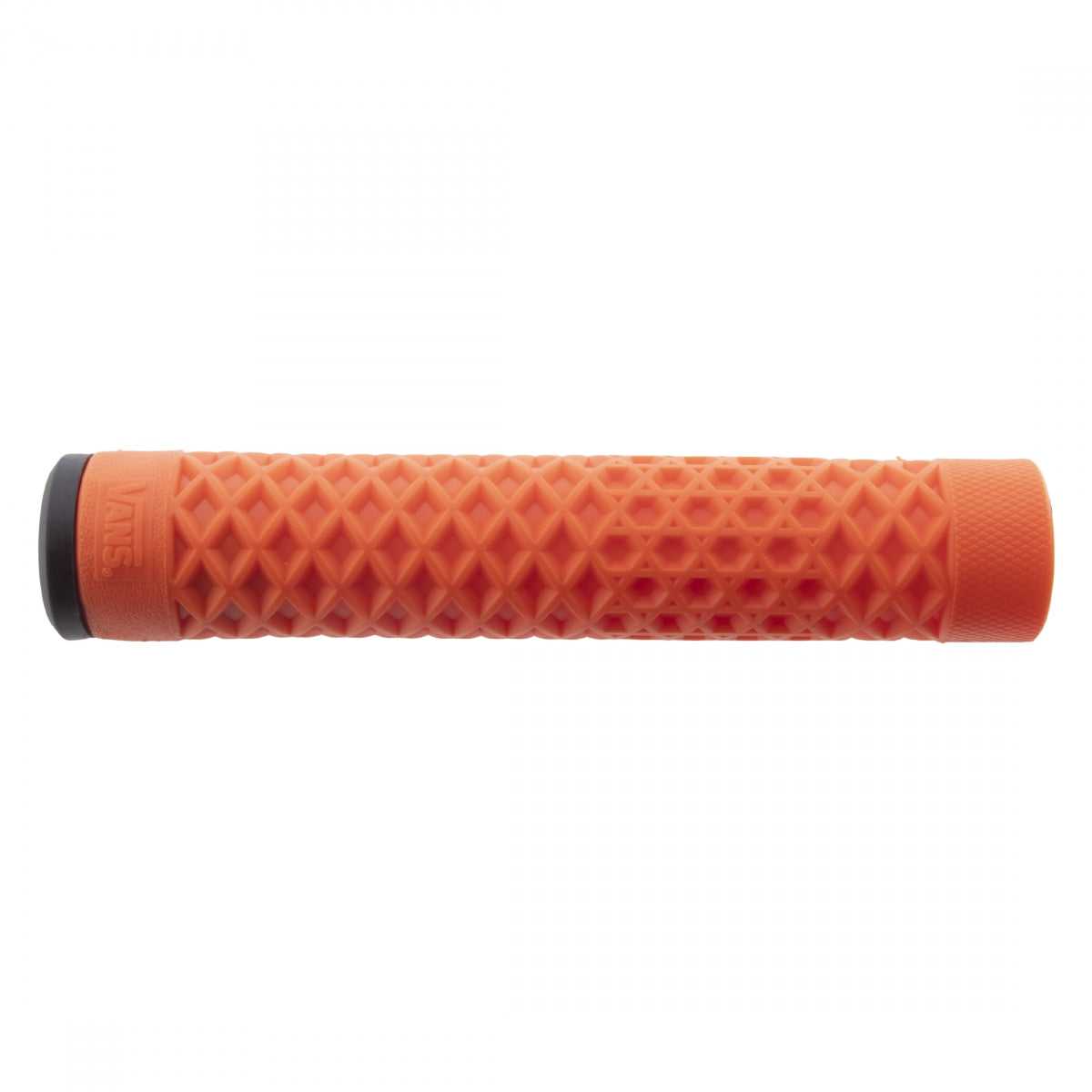
No collar. Clean look. Unrestricted hand movement. Flangeless grips suit flatland riders and anyone doing heavy barspins or tailwhips where a flange creates friction mid-trick. They tend to run slimmer, giving you more direct bar feel and a cleaner aesthetic. The trade-off is you lose the palm stop, so they work best for riders with a dialed, consistent grip position.
Lock-On Grips
Lock-on grips use aluminum clamps to mechanically secure the grip to the bar. Zero rotation. Zero slippage. BMX racers reach for lock-on grips specifically because the last thing you want in a gate sprint is a grip shifting under your hand. They use a firmer compound and work best with gloves. If you race competitively or ride in wet conditions regularly, lock-on grips are worth every gram of the slight weight premium - and Billet BMX builds them to the standard competitive riders expect.
Dual Density Grips
Two layers, two purposes. A firmer inner layer gives structural support and a solid, consistent mount. A softer outer layer absorbs vibration and cushions your hands through rough surfaces. Dual density BMX grips are the most versatile option available - effective for street riders on rough spots, park riders in long sessions, and anyone managing hand fatigue on technical terrain.
Choosing the Right Grip Size - Length and Diameter
Getting grip size wrong is one of the most overlooked reasons riders feel uncomfortable on otherwise well-built bikes.
Grip length typically runs from 140mm to 165mm. Shorter grips suit smaller hands or riders who prefer a compact bar feel with bar ends installed. Longer grips provide more palm surface area and a more relaxed hand position - better for bigger hands and longer sessions where fatigue compounds.
Diameter ranges from 27mm to 32mm. Thinner grips at 27 - 28mm give maximum bar sensitivity and direct feedback - preferred by riders who want to feel every input. Thicker grips at 30 - 32mm absorb more vibration and reduce hand fatigue significantly over longer sessions and rough terrain.
Rubber, Foam, or Silicone - Which Material Is Right for You?
Rubber is the most durable option and the dominant choice across BMX disciplines. Quality rubber grips balance tackiness, durability, and vibration absorption in a way that foam and silicone cannot match for everyday serious riding. They hold their texture through heavy use and maintain performance in both dry and damp conditions.
Foam grips are immediately comfortable - soft, light, and cushioned from the moment your hand wraps around them. The trade-off is longevity. Foam wears faster than rubber, which means more frequent replacement for daily riders. For occasional riders who want maximum comfort, foam is worth serious consideration.
Silicone sits between the two. Excellent vibration dampening, a unique tacky feel, and reliable wet-weather performance make silicone grips a strong option for riders dealing with unpredictable conditions.
Why Grip Texture Is a Performance Decision, Not a Style Choice
The pattern on your grip is not decoration. Every ridge, knurl, and channel serves a mechanical function that affects control under real riding conditions.
Ribbed patterns channel sweat away from the palm, keeping traction consistent in warm conditions. Diamond-cut textures maximize hand-to-grip surface contact under pressure - strong for aggressive street and park riding. Waffle patterns provide traction in multiple directions simultaneously, making them excellent for tricks where your hands reposition or rotate mid-move.
Buying grips purely on colorway and skipping the texture question is the same mistake as choosing tires based on appearance. Texture drives grip performance. Let your riding style dictate which pattern makes mechanical sense for what you actually do on a bike.
Five Signs Your Current Grips Need Replacing Right Now
Grips wear out gradually, which means most riders push theirs far longer than they should. Here are the signals that your current set is already past its best:
- The surface feels smooth or glassy where your palms sit instead of tacky
- Visible cracking or tearing anywhere in the rubber
- The grip rotates on the bar even when your stem and clamps are tight
- Hand fatigue arrives noticeably earlier in sessions than it used to
- The texture pattern has flattened completely in your palm zone
Replacing grips is one of the cheapest, fastest performance upgrades available on any BMX build. Do not let worn-out rubber quietly drain your session quality when a fresh set from Billet BMX costs less than most meals near the park.
Why Riders Choose Billet BMX Grips
Billet BMX is not a brand that treats grips as a low-margin add-on. Every grip in the Billet BMX range is built with the material quality and design precision that serious riders expect from a parts brand serious about performance.
CNC-machined construction. Premium rubber compounds. Multiple colorway options in anodized and chrome finishes. Sizing that accounts for different riding styles and actual hand dimensions - not just one generic option shipped in bulk.
Browse the full grip range and find exactly what your handlebars have been missing: Shop BMX Grips
FAQs:-
Q1: What size bike BMX grips do I need for my handlebar?
Most BMX handlebars use a standard 7/8 inch diameter. Grips fit universally across BMX, MTB, and cruiser bars - always confirm your bar diameter before purchasing replacement grips.
Q2: How often should I replace my bike BMX grips?
Replace every three to six months with regular riding. If your grip feels slick, shows cracking, or rotates freely on the bar, replace immediately regardless of how recently you installed them.
Q3: Are lock-on BMX grips better than slip-on for street riding?
Lock-on grips eliminate rotation entirely, ideal for racing and wet conditions. Slip-on grips are lighter with more direct feel, suiting most street and park riders who prefer sensitivity over mechanical security.
Q4: What is the difference between flanged and flangeless BMX grips?
Flanged grips have a raised outer collar that physically stops your palm from sliding during tricks and landings. Flangeless grips allow unrestricted hand movement, preferred by flatland and barspin-focused riders.
Q5: Can I use mountain bike grips on a BMX bike?
Yes. Most MTB grips fit standard 7/8 inch BMX bars. However, BMX-specific grips are engineered for the grip positions and impact demands unique to BMX riding and will generally outperform MTB crossovers.


