
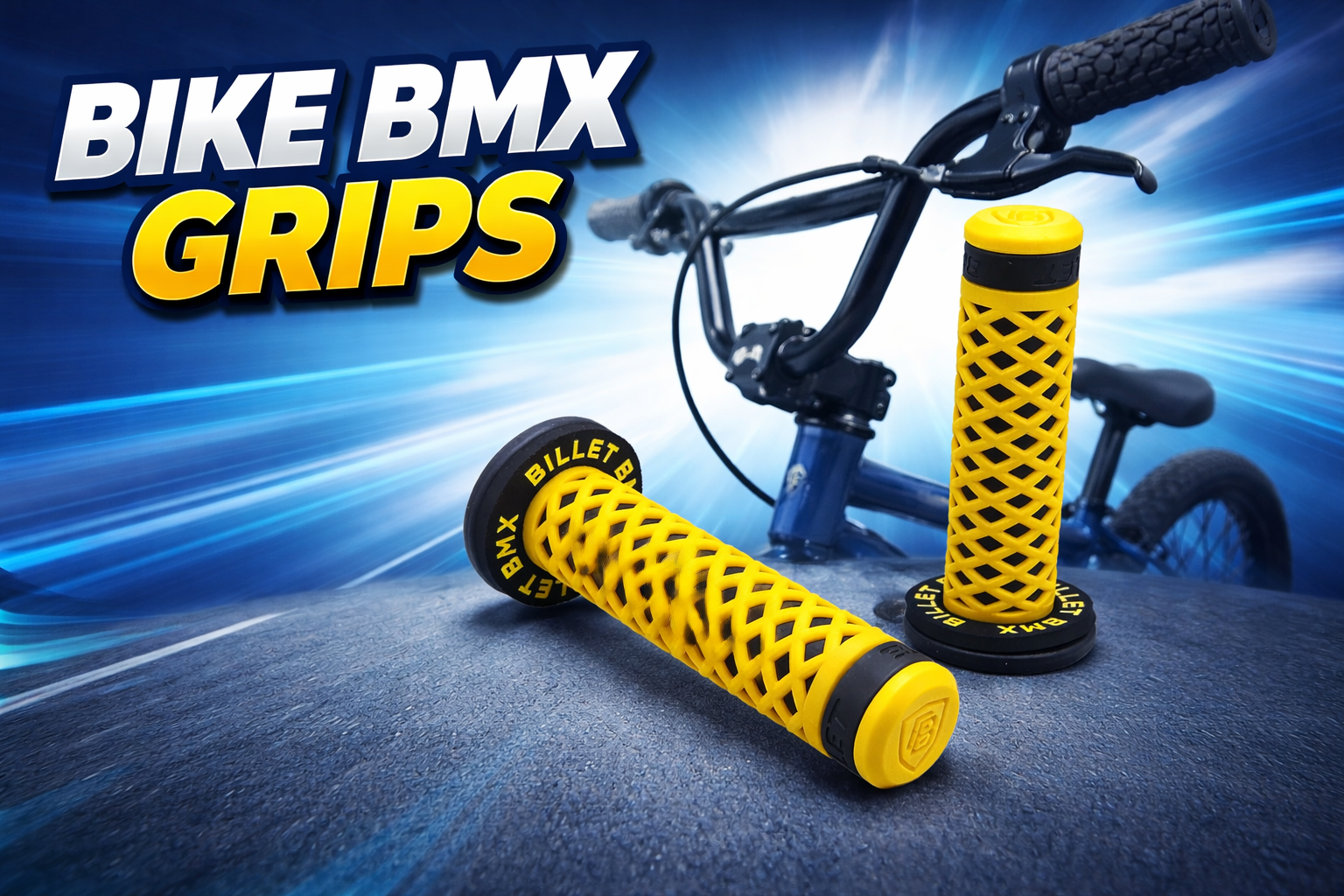
BMX grips are the single most direct connection between you and your bike. Every input - every turn, every pull, every catch - goes through them. And yet most riders replace grips last, after everything else has been dialed. In 2026, US riders are thinking about this differently. Grip quality, compound type, and riding-style fit are being treated as seriously as stem choice and headset spec.
This guide breaks down what actually separates quality bike bmx grips from cheap alternatives, what to look for based on how you ride, and why the Billet BMX Diamond Grip system keeps showing up as the top choice for riders who want their setup to perform as hard as they do.
Why BMX Grips Affect More Than Comfort
Most riders treat grips as a comfort component. They're not wrong - but they're only seeing half the picture. Your hands, your primary control input for every single maneuver, only touch your handlebars through your grips - making grips the most important tactile component on your entire bike. Bad grips cause hand fatigue, reduce steering precision, and create a subtle disconnected feeling that makes riding harder than it needs to be.

Think about what your hands experience in a real session. Every landing sends vibration through your forks, up your bars, and directly into your palms. Every barspin catch asks your hand to find the bar cleanly without interference. Every manual demands consistent feedback from the bar so your weight corrections feel deliberate rather than reactive. A grip that absorbs that energy properly makes all of it feel cleaner. A grip that transmits it straight through makes every session a little harder than it needs to be.
The compound - the rubber formulation - is what determines vibration absorption. Soft compound absorbs energy before it reaches your hands. Hard compound transmits it. Stock rubber on most complete bikes hardens within a few months of real riding and stops absorbing anything. That's when sessions start feeling tiring in ways that don't match your fitness level. It's not you. It's the rubber.
Flanged vs Flangeless vs Lock-On - The Decision That Matters Most
Before you look at color, length, or diameter - this is the choice that changes how your riding actually feels. And most riders make it wrong by defaulting to whatever came stock rather than picking what their style demands.
Flange grips have a rubber edge on the inner end called the flange. Some riders prefer having a flange and they are especially popular with people who run brakes as it offers some protection from the lever. Flangeless grips are more popular with street riders and park riders mainly because barspins are easier to catch without a flange in the way.
That distinction is real and it matters daily. If you spin bars, a flanged grip creates a small edge exactly where your palm lands on the catch. Over hundreds of repetitions that interruption adds up - broken catches, missed timing, confidence that never fully builds. Flangeless removes that interference entirely and gives you a clean bar every single time.
Lock-on grips attach to the handlebar via clamps on each end of the grip and have a solid plastic core. They are popular among racers because they completely eliminate grip slippage. These grips are usually a harder compound which works better with gloves.
For street and park riders doing long sessions without gloves, lock-on grips in a soft compound are the best of both worlds - they won't rotate mid-session no matter how hard you ride, and if you choose the right compound they still absorb vibration effectively. The Billet BMX Diamond Grip system is compatible with lock-on installation, meaning you get the security without sacrificing the soft feel.
Grip Size - Getting Length and Diameter Right for Your Hands
BMX grips are universal - they fit all handlebars at the standard 22.2mm diameter, so compatibility is rarely an issue. What you're choosing between is feel, not fitment.
Length is the first variable. Most street and park riders run between 155mm and 165mm. That range gives your hands room to shift slightly without crowding the stem area. Go shorter and your hands feel cramped on longer sessions. Go longer and the grip starts encroaching on stem space, which makes hand position feel forced rather than natural.
Diameter is about bar feedback. Thinner grips - in the 27mm to 29mm range - give you sharper, more direct feedback from the bar. You feel exactly what the front end is doing. Technical street riders who rely on precise bar input tend to prefer this range. Thicker grips in the 30mm to 32mm range absorb more vibration and cushion the hands over longer sessions. Big wheel cruisers, trail riders, and anyone doing extended distance work on their BMX tend to prefer the thicker end.
There's no objectively correct diameter. What matters is matching the feel to what your riding demands from your hands.
What Riding Style Demands From Your Bike BMX Grips
Street, park, dirt, and racing each put different demands on grip compound, pattern, and construction. Understanding what your discipline actually requires helps you buy right the first time rather than guessing.
Street riding demands a soft compound above everything. Urban terrain - concrete, rough ledges, metal grates - transmits constant vibration. Sessions are long. Your hands take cumulative punishment. A soft rubber compound that stays tacky through sweat and heat is what keeps your hands fresh at the end of a two-hour session. For more detail on what specifically makes a grip right for street versus park versus dirt, the Best BMX Grips for Street, Park and Dirt Riders guide covers the specific requirements of each discipline in depth.
Park riding demands clean catches and a lightweight feel. Flangeless and slim diameter are the priority - tricks happen fast and your hands need unobstructed bar contact on every catch. Heavier, thicker grips dull the agility that park tricks reward.
Dirt and trail demands the same soft compound as street but with even more emphasis on traction pattern. Rough terrain shifts your hands constantly. A multi-directional diamond pattern that grips from multiple angles keeps the bar secure through irregular surfaces in ways that standard ribbed patterns can't match.
Racing demands lock-on security above all else. Your grip position is set and you don't want any movement during a gate start or a sprint. A harder compound works here because gloves handle most of the vibration management.
Why Billet BMX Diamond Grips Lead in 2026
The Billet BMX Diamond Grip system was built around real rider feedback - two years of listening to what worked and what didn't across different riding styles, then designing around those insights rather than a cost target.
The diamond-cut traction pattern is the defining feature. Standard ribbed grips grip front-to-back - they resist your hand pulling toward the end of the bar but don't grip laterally. The diamond pattern grips in multiple directions simultaneously. That matters most when your hands are warm from a long session, when you're landing slightly off-axis, or when a catch comes in at an angle rather than perfectly aligned.
The performance rubber compound stays soft and tacky through extended sessions. It doesn't harden the way budget stock rubber does after a few weeks of real riding. Soft compound absorbs vibration from hard landings and rough concrete - keeping your hands fresher through long sessions in a way that harder compound simply can't replicate regardless of grip pattern.
Build Your Grip Setup Right the First Time
BMX grips are the cheapest significant upgrade you can make to your bike. They cost less than almost any other component and they deliver one of the most immediate, noticeable improvements from the first session after fitting. Better traction means more confident tricks. Better compound means less fatigue over long sessions. The right type for your riding style means nothing in the way of how you actually want to ride.
Shop the full Billet BMX Diamond Grip and find the color and spec that completes your build.
FAQs -
Q: What diameter are standard bike BMX grips?
Standard BMX grips fit the universal 22.2mm handlebar diameter. This covers virtually all freestyle, cruiser, and race BMX setups - grip compatibility across bikes is almost never an issue.
Q: Are flanged or flangeless BMX grips better for barspins?
Flangeless grips are better for barspins. The clean inner end gives your palm an unobstructed bar to catch every time. Flanged grips suit brake riders who want a defined hand stop position.
Q: How often should I replace my BMX grips?
With regular riding, replace grips every three to six months. Quality rubber compound like the Billet BMX Diamond Grip formula lasts longer than budget alternatives under consistent hard use.
Q: Do Billet BMX grips work for both street and park riding?
Yes. The diamond traction pattern and soft performance compound cover both disciplines - multi-directional grip for street landings and clean bar feel for park tricks in one setup.
Q: What is the best way to install BMX grips so they don't rotate?
Use 90% or higher isopropyl alcohol. Pour a small amount inside the grip, spread it, then slide onto the bar. It lubricates during install then evaporates fully, bonding the grip without slippage.


