
You're mid-session, going into a manual, and your hand slips just enough to kill the trick. You didn't fall. But the line is dead. That's not a skill problem that's a grip problem.
BMX handlebar grips are the most overlooked contact point on the bike. Riders drop serious cash on frames and wheels, then leave on the worn rubber that came stock. But your grips are what your hands are on every single second you're riding every trick, every landing, every catch. Getting them right is one of the cheapest, fastest upgrades you can make. And you'll feel it immediately.
What BMX Handlebar Grips Actually Do
Most riders think of grips as comfort padding. That's part of it, but not the full picture. BMX grips are placed on your handlebars to give you control when riding the ideal grip is comfortable, durable, and shock absorbent. Those three things working together are what separate a good grip from a grip that just looks okay on the bike.
Every landing sends vibration up through your forks, into your bars, and straight into your hands. Without proper grip material absorbing that energy, your hands fatigue faster, your control decreases, and longer sessions start to hurt. Research has linked maximal hand grip strength with BMX performance riders with stronger, more secure grips showed 15–20% higher peak power during sprints and tricks. That stat tells you something important: your grip on the bar directly affects what your body can do on the bike.
And honestly, it's not just about function. A fresh set of grips that matches your build just makes the whole bike feel dialed. That matters too.
Flanged, Flangeless, or Lock-On : Know the Difference
Before you buy anything, you need to know which grip type suits your riding. This is where most riders either get it right immediately or waste money on the wrong thing.
Flangeless grips are more popular with street riders and park riders, mainly because barspins are easier to catch without a flange in the way. Lock-on grips attach to the handlebar via clamps on each end and have a solid plastic core popular among racers because they completely eliminate grip slippage. Flanged grips, on the other hand, have a rubber edge on the inner end that gives extra protection for riders running brakes and adds a small amount of hand security.
For street riding specifically, flangeless is almost always the better call. You want clean, unobstructed bar spins and catches. A flange that catches your palm on a catch is the kind of thing that breaks your flow mid-trick.
Lock-on grips are worth considering if you ride hard and hate re-adjusting your grips mid-session. Slip-on grips are the most common type and installed by sliding onto the handlebars, while lock-on grips feature a rubber sleeve held in place by clamps secured with bolts or screws. Lock-on setups stay put. Slip-ons are lighter and more forgiving to install, but they can rotate if not installed correctly.
Grip Size : Length, Diameter, and What Fits Your Hands
BMX handlebar grips generally vary between 100–250mm in length, and getting the right one depends on the length of your handlebars and how much of the bar you want your grip to cover. Most standard street and park grips land between 155mm and 165mm, enough surface to move your hands around without crowding the bar.
Diameter matters just as much as length. Grips come in varying thicknesses — thinner grips give better bar feel and responsiveness, while thicker grips absorb more vibration and suit riders who want a plush, cushioned ride. There's no universal right answer here. If you're doing technical street riding manuals, barspins, precise footplant lines a medium to slim diameter keeps your bar feedback sharp. If you're doing longer sessions on rough terrain, a thicker grip saves your hands.
Standard BMX handlebar grips fit any BMX handlebar with the universal 22.2mm diameter, so compatibility across bikes is rarely an issue. What you're choosing between is feel, not fitment.
What Makes a Grip Right for Street Riding
Street riding puts different demands on grips compared to park or dirt. You're hitting concrete, rough ledges, and unpredictable surfaces and you're often doing so for long sessions filming clips or learning new tricks. Rubber grips are the right call for street riding specifically because they maintain traction even in rough conditions and absorb shock from urban terrain better than harder compounds.
The pattern on the grip surface matters too. Ribbed patterns provide flexibility and comfort, while diamond-cut designs offer maximum grip for aggressive riders who need that locked-in feel on technical lines. If you're choosing the best BMX grips for street riding, a diamond or multi-directional traction pattern gives you consistent contact through manuals, grinds, and barspin catches regardless of whether your hands are dry or slightly sweaty from a long session.
Shock absorption is the other street-specific priority. A soft rubber compound reduces vibration on rough landings and long sessions, keeping your hands fresher for longer, something riders immediately notice when filming clips or riding all day. Cheap rubber compounds harden quickly, lose their tack, and stop absorbing vibration after a few weeks of real use.
Why Billet BMX Diamond Grips Stand Apart
If you're upgrading your BMX handlebar grips and want something that's been genuinely built around rider feedback rather than cost-cutting, the Billet BMX Diamond Grip system is worth your attention.
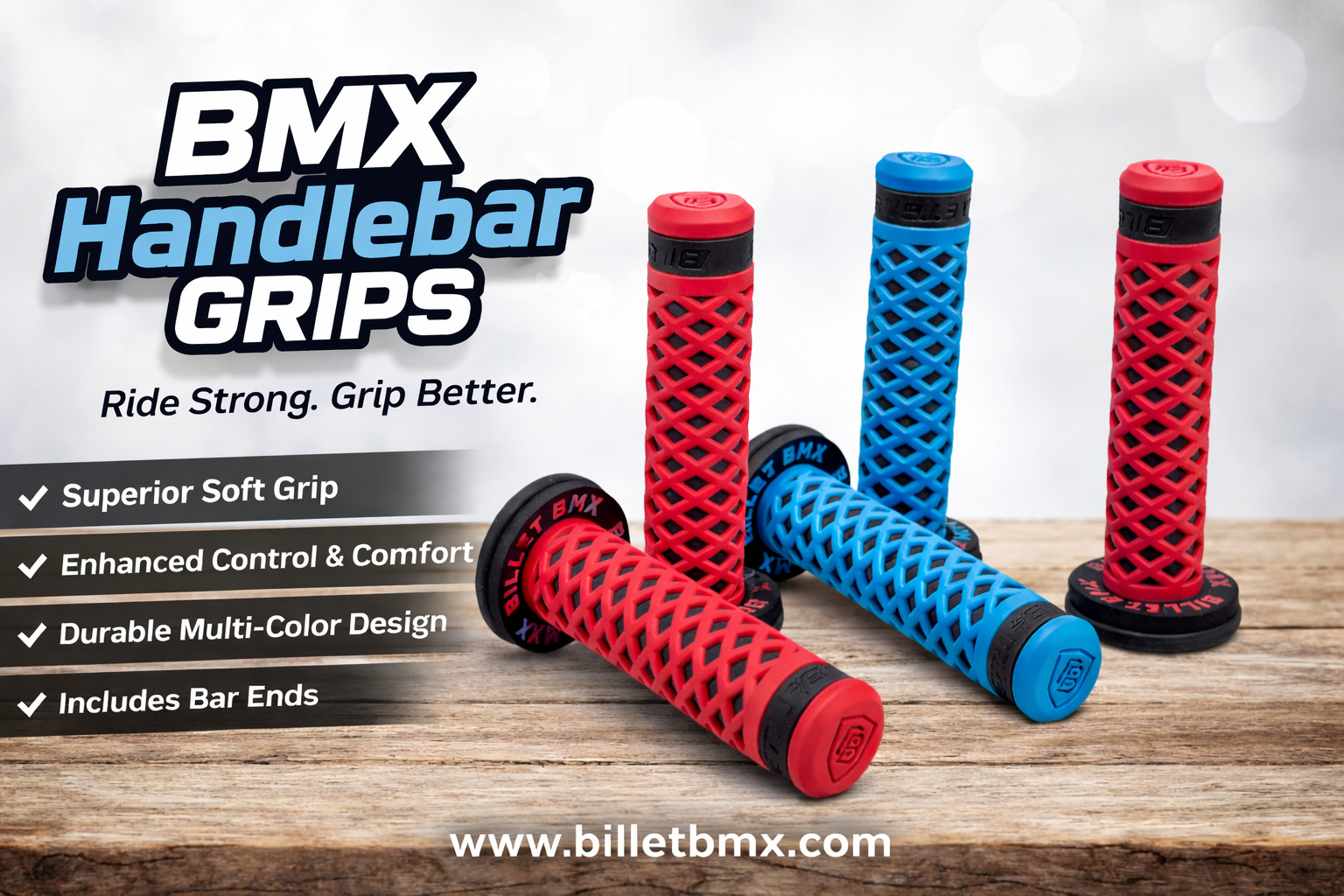
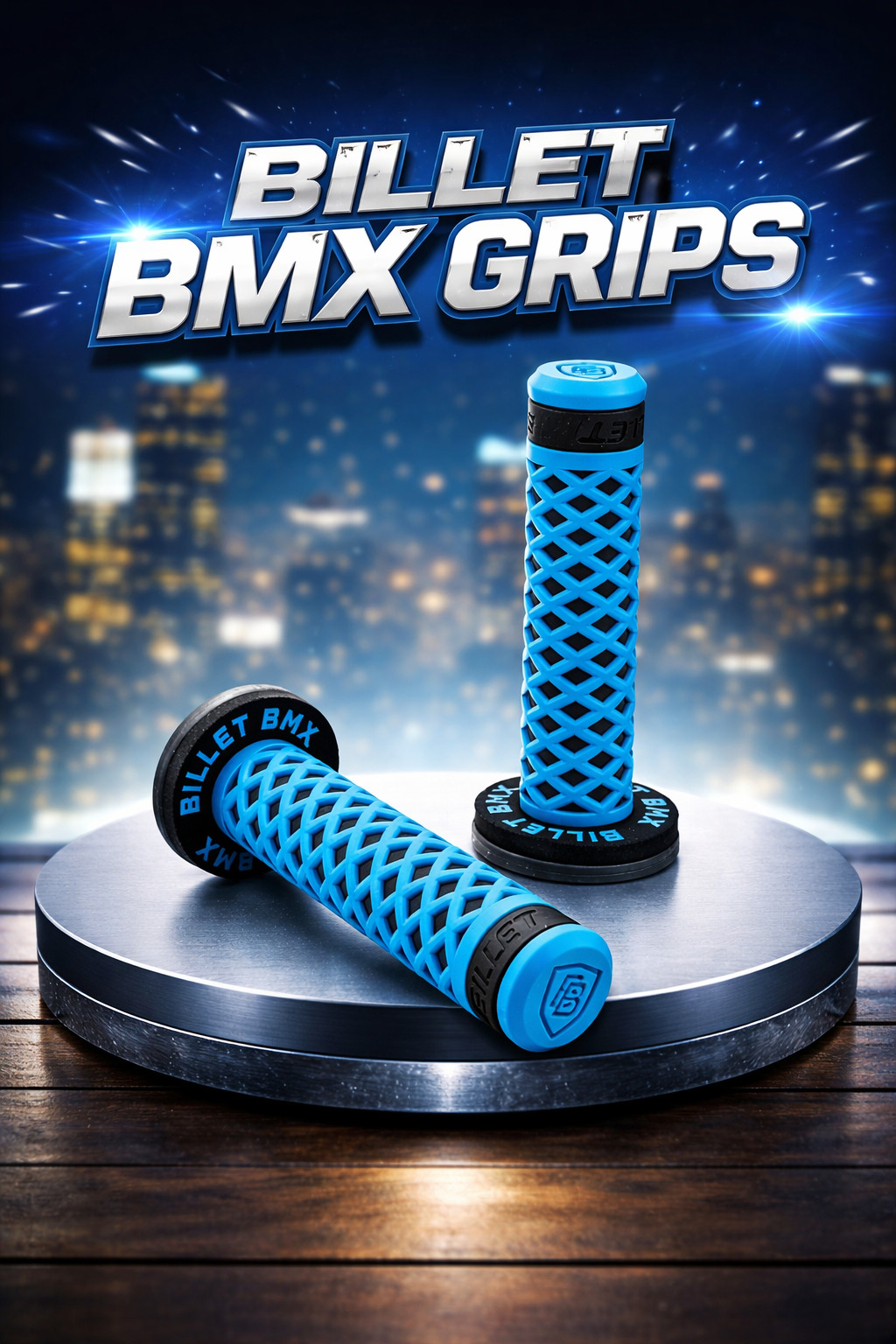
The Ultra Grips feature a diamond pattern traction design that increases surface contact with your hands, along with a performance rubber compound that absorbs vibration from rough terrain and hard landings reducing hand fatigue and allowing longer, more comfortable sessions. That combination of traction design and rubber quality is exactly what street riding demands.
What makes the Billet BMX design genuinely different is how it was developed. The designer spent two years listening to what riders liked and disliked about their grips, improving what worked and removing what didn't to create the Diamond Grip system. That's not marketing. That's product development that shows up in how the grip actually feels when you're riding.
The two-piece design with diamond sleeve offers over 40 different color options to match your bike's color theme, and the included matching donuts add extra comfort while helping avoid hand blisters. The end plugs are separate from the grips, which means upgrading to Billet handlebar ends later doesn't require cutting anything a small detail that shows how the whole system was thought through.
Billet BMX Diamond Handlebar Grips are a premium choice offering durability and control for maximum performance in street riding scenarios and they hold up the same way on park and dirt if your riding takes you there too.
How to Install BMX Handlebar Grips Correctly
Bad installation is the fastest way to ruin otherwise good grips. Most slip-ons installed with water will feel fine for a week, then start rotating when your session heats up.
The best and fastest way to install BMX grips is using alcohol at 90% or higher pour a small amount inside the grip, squeeze it a few times to spread it, then slide it onto the handlebar. The alcohol lubricates just enough for installation, then evaporates completely, leaving the grip locked in place without the rot or slippage that water can cause over time.
For lock-on grips, make sure the clamp bolts are torqued evenly on both ends before riding. Check them again after your first session; they settle slightly and often need a small re-tighten.
One more thing worth knowing: rotating your grips slightly every few weeks distributes wear evenly, since BMX riders naturally grip certain areas more than others this simple habit extends grip lifespan significantly.
The Right Grip Changes How Your Bike Feels
Upgrading your BMX handlebar grips costs less than most BMX parts and delivers one of the most immediate improvements you can feel on the bike. Better traction means more confident tricks. Better vibration absorption means longer sessions without hand fatigue. Better installation means no mid-session grip rotation killing your focus.
If you're looking for the best BMX grips for street riding in 2026, the Billet BMX Diamond Grip system covers all the right bases, proper rubber compound, diamond traction pattern, color options to match any build, and a design that was built by listening to real riders. Start there. Your hands will feel the difference from the first session.
FAQs :-
Q1: What size are standard BMX handlebar grips?
A: Most BMX grips fit the universal 22.2mm handlebar diameter. Length varies typically 155mm to 165mm for street and park riding. Measure your bar space before ordering if you're unsure.
Q3: Are flanged or flangeless grips better for street riding?
A: Flangeless grips are the better choice for street riding because they allow cleaner barspin catches without obstruction. Flanged grips suit riders running brakes who want added hand protection.
Q3: How long do BMX handlebar grips last?
A: With regular riding, expect to replace grips every 3–6 months. Quality rubber compounds like those in Billet BMX grips last longer than cheap alternatives, especially under hard street use.
Q4: Do Billet BMX grips fit all handlebars?
A: Yes, Billet BMX Ultra Grips fit standard 22.2mm BMX handlebars, making them compatible with virtually all freestyle BMX and custom builds.
Q5: What's the best way to stop grips from rotating on the bars?
A: Install with 90%+ isopropyl alcohol rather than water it evaporates and bonds the grip firmly. For lock-on grips, ensure clamp bolts are properly torqued on both ends before riding.


