
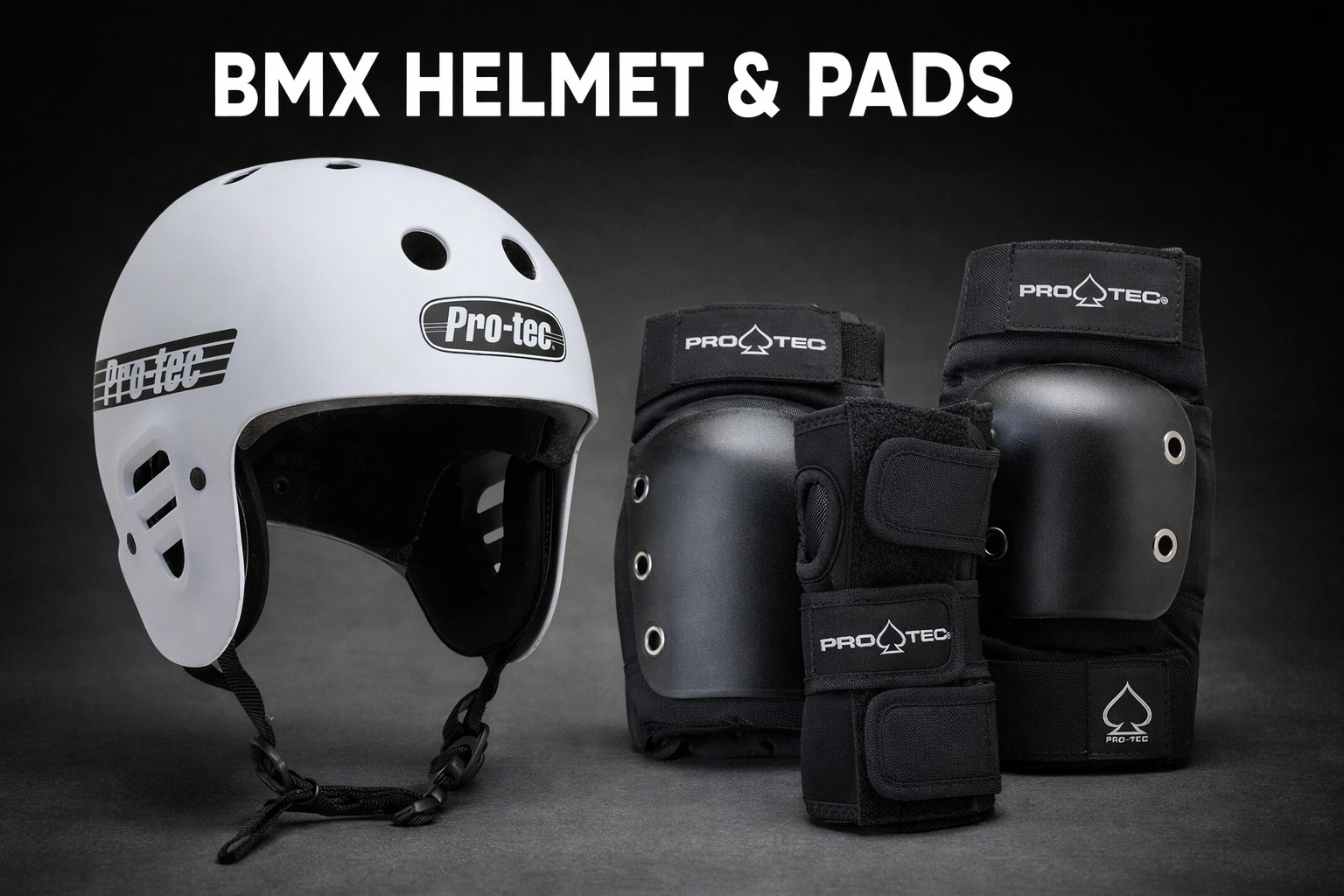
Nobody gets into BMX thinking about crashes. You're thinking about the trick, the line, the session. But here's the thing - every serious rider has a moment where the right protective gear made all the difference between walking away and sitting out for six weeks.
BMX pads and a properly fitted BMX helmet aren't just beginner gear. They're the foundation of riding confidently at any level. Whether you're learning your first manual or sending gaps at the park, your protection setup directly affects how hard you're willing to push. This guide breaks down what matters, what doesn't, and how to build a gear setup that actually works for the way you ride.

Why BMX Protective Gear Matters More Than You Think
Imagine this: you're three hours into a session, your legs are tired, your focus dips for half a second, and your front wheel washes out on a rail. It happens to everyone - beginners and pros alike. The difference isn't skill level. It's what you're wearing when it does.
Knees and elbows are the first body parts to hit the ground in most BMX crashes. Your head is the most critical. According to safety research across action sports, wearing a properly certified helmet reduces the risk of serious head injury by over 85%. That's not a small number. And yet, plenty of riders still skip the pads because they feel bulky or "uncool."
The gear has come a long way. Modern BMX pads use materials like D3O - a compound that stays soft and flexible during normal movement but hardens instantly on impact. You barely notice them until the moment you need them most. That's the entire point.
Choosing the Right BMX Helmet for Your Riding Style
Not every helmet works for every type of riding, and this is where most riders make their first mistake. They grab whatever's on sale without checking if it actually matches how they ride.
Full-face helmets cover your chin and jaw in addition to your skull. If you're racing, hitting vert, or sending anything fast and technical, full-face is the standard. BMX racing organizations mandate ASTM F1952 certification - a standard built specifically for downhill and high-impact riding, not just casual cycling.
Open-face helmets are the go-to for park, street, and freestyle. They give you better peripheral vision, more airflow, and the freedom to see your landing clearly when you're in the air. The tradeoff is chin protection - which is fine for the majority of park and street scenarios.
When choosing your helmet, fit is everything. The helmet should sit level on your head, cover your forehead without tilting back, and stay completely still when you shake your head side to side. A helmet that shifts during a crash isn't protecting you - it's just there for show. The chin strap should sit about a finger's width from your chin when buckled.
One thing that often gets overlooked: replace your helmet after any significant impact, even if it looks fine. EPS foam - the material that absorbs the shock - compresses on impact and doesn't fully recover. A helmet that's taken a hit is already compromised for the next one.
BMX Pads - What You Actually Need and What's Optional

Here's an honest breakdown of the pad setup that makes sense for most riders:
Knee pads - non-negotiable for park and ramp riding. Knees hit the ground first in most bails, and concrete doesn't forgive. Look for hard-shell pads with a soft foam backing for impact absorption. Slip-on styles stay in place better than strap versions during active riding. Slim-profile designs now fit under jeans without bulking up your silhouette.
Elbow pads - strongly recommended for beginners and ramp riders. Elbows are the second most common impact point. Even a thin foam elbow pad reduces road rash and bruising significantly. For street riders doing flatground and low-impact tricks, elbow pads become more of a personal preference.
Shin pads - underrated and underused. Pedal strikes to the shin are one of the most common BMX injuries, especially when learning new tricks where foot placement is unpredictable. Thin shin guards with a neoprene backing are comfortable enough to wear every session without thinking about them.
Wrist guards - particularly useful for beginners. The natural instinct when falling is to put your hands out, which transfers the impact directly to your wrists. Wrist guards reduce that force and protect against sprains and fractures during the learning phase.
The common mistake riders make is buying the cheapest pad they can find and wondering why it slides down their leg mid-session or feels like wearing cardboard. Quality BMX pads hold their position, flex with your body, and breathe during long sessions. As of 2026, brands using D3O and multi-layer foam construction are setting the standard for both protection and wearability.
Matching Your Protection to Your Riding Level
Your protection setup should evolve with your riding. Here's a practical framework:
Beginner riders should wear a certified helmet every single session - no exceptions. Add knee pads and wrist guards. Falls are frequent when you're learning, and building the habit early means you'll never ride without protection as your skills grow.
Intermediate riders hitting park and street should keep the helmet, maintain solid knee coverage, and add shin guards when working on new tricks involving foot placement. At this stage, you're pushing your limits more often, which means the margin for error is narrower.
Advanced riders often strip back to helmet and knee pads for casual sessions but gear up fully for progressive riding - bigger gaps, faster speeds, new ramps. Even X Games athletes run full protection during serious sessions. National BMX Champion Pat Coo is one example of a professional who treats gear as seriously as his components. The mindset isn't fear - it's smart riding.
Where to Shop for BMX Pads and Helmets Online
Billet BMX carries a curated range of safety gear built for the realities of BMX riding. The selection covers helmets across open-face and full-face styles, knee and elbow pads from brands that know the sport, and protective gear scaled for both youth and adult riders.
What you won't find at this BMX shop is generic cycling gear repackaged as BMX protection. Every product in the safety lineup is chosen by riders who understand what real sessions demand - not marketing departments guessing what looks good on a product page.
FAQs
Q: What type of BMX helmet is best for park and street riding?
An open-face certified helmet works best for parks and streets. It offers better visibility, airflow, and freedom of movement compared to full-face options designed for racing or vert.
Q: Do BMX pads really make a difference for experienced riders?
Yes. Even advanced riders crash regularly when pushing limits. Quality knee and shin pads reduce injury severity significantly, keeping riders on the bike instead of recovering on the couch.
Q: How often should BMX protective pads be replaced?
Replace pads when foam compresses noticeably, hard shells crack, or straps stop holding securely. Heavy daily riders should inspect gear every 6 months and replace it annually for consistent protection.
Q: Can kids use adult BMX pads and helmets?
No. Adult gear doesn't fit youth proportions correctly and won't protect properly. Junior-specific helmets and pads are sized and weighted for younger riders, offering the right fit and real protection.


