
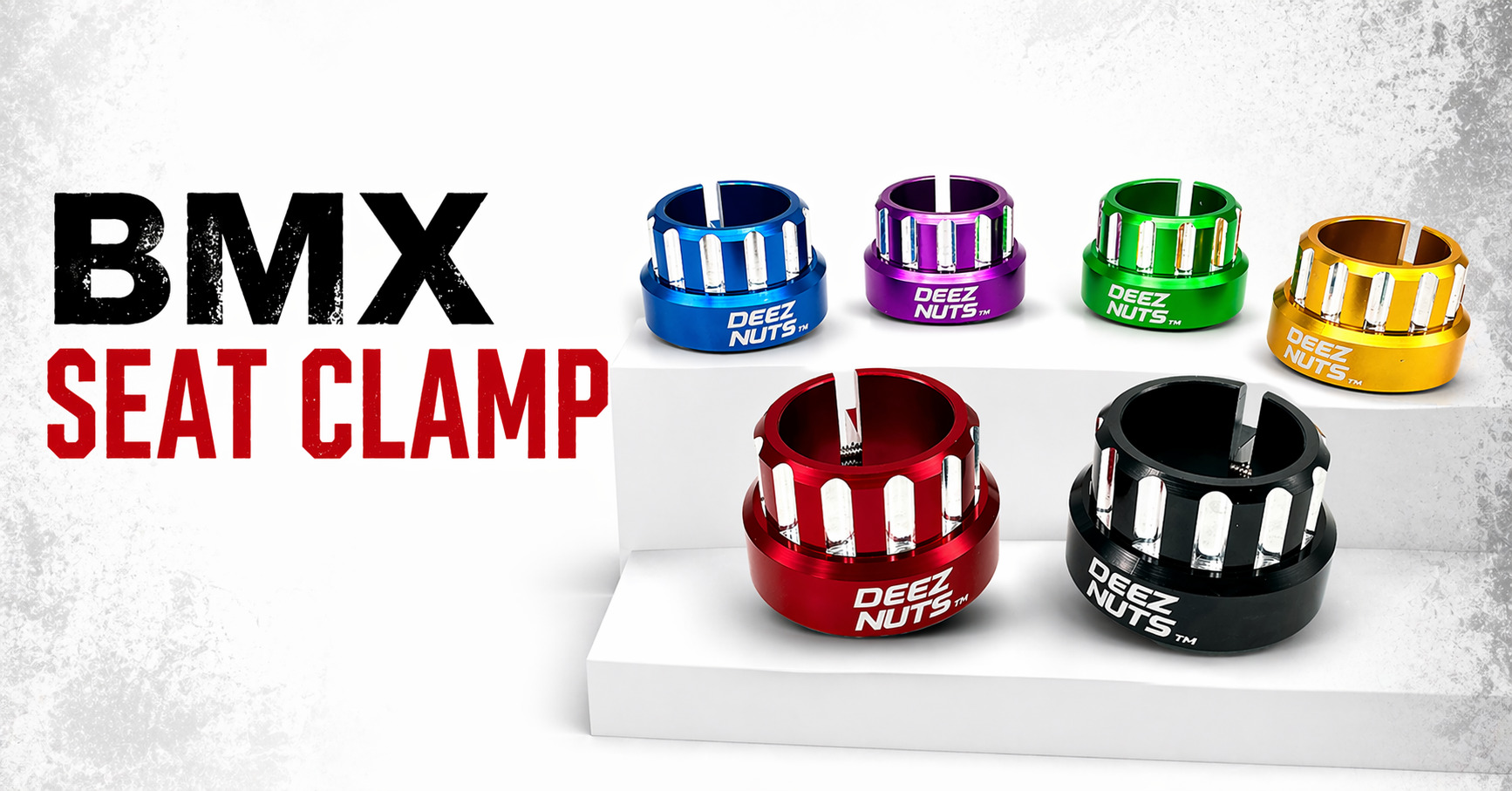
You're mid-session, everything's flowing - and then your seat drops. Again. It's one of the most frustrating things that can happen on a BMX bike, and most of the time, the problem isn't your seat or your post. It's the bicycle bmx seat clamp holding it all together.
This small part gets ignored until it fails. But once you understand what to look for, you'll get it right once - and genuinely forget about it for good.
Why the Seat Clamp Actually Matters
Think about what that little clamp is doing every single session. Hard landings, street gaps, park laps, grinding rails - your bicycle seat clamp absorbs all of that stress while keeping your post exactly where you set it. A quality clamp holds steady. A cheap or wrong-sized one lets the post creep down slowly until you're pedaling with your knees near your chin.

Most riders will happily drop money on a new grip or stem without a second thought, then grab the cheapest seat post clamp on the shelf without even reading the label. But here's what they eventually learn the hard way: the right clamp is the difference between a setup you trust completely and one you're constantly adjusting mid-ride.
Billet BMX machines their clamps to tight tolerances, and that detail matters more than most people realize. When a clamp is properly machined, clamping force distributes evenly around the seat tube. You don't need to over-torque it, which also protects your frame long-term. It's a small thing with a surprisingly big payoff.
Getting the Size Right (Most Riders Get This Wrong)
Here's the most common mistake: measuring the seat post itself and ordering a clamp to match. That's not how it works.
Your BMX seat clamp wraps around the outside of your frame's seat tube. So the measurement you need is the outer diameter of that tube - not the post inside it.
Standard BMX Clamp Sizing at a Glance
- Modern freestyle BMX - 25.4mm post → needs a 28.6mm clamp
- Old school / mid-school BMX - 22.2mm post → needs a 25.4mm clamp
- Race BMX frames - 27.2mm post → needs a 30mm clamp
The 28.6mm size covers the vast majority of modern freestyle builds from the last decade. But don't assume - use a caliper and measure the seat tube on your actual frame. Even bikes from the same brand can vary across model years, so eyeballing it can leave you with a clamp that won't seat properly.
If you're unsure, pull the old clamp off and check its size directly. That number tells you exactly what to replace it with.
Material: Aluminum, Steel, or Titanium?
Once you've nailed the size, material is your next decision.
Aluminum alloy is the standard for good reason. It's light, corrosion-resistant, and more than strong enough for freestyle and street riding. Most quality bike seat clamp options you'll find - including those at Billet BMX - are CNC-machined aluminum. For the vast majority of riders, that's exactly what you need.
Steel is heavier but handles more torque without cracking. Less common on modern builds, but worth considering if you're on an older frame and need something bulletproof.
Titanium is the premium pick - lighter than steel, stronger than most aluminum grades, and built to last years. You'll pay more, but riders focused on cutting weight without sacrificing security genuinely notice the difference.
For everyday freestyle and street riding, a well-machined aluminum clamp from a trusted brand hits the sweet spot. Billet BMX offers anodized options across several colors too - so your setup can look clean while staying locked down.
Bolt-Style vs. Quick-Release: Which One Do You Need?
Quick-release clamps are popular on road and mountain bikes where riders adjust seat height constantly. On a BMX, that's rarely the case. Most riders set their seat height once and leave it there.
A bolt-style bike seat clamp is more secure under repeated stress - hard landings and high-impact tricks won't rattle it loose the way they can with a quick-release mechanism over time. For the vast majority of BMX setups, a clean single-bolt or double-bolt clamp is the smarter choice.
That said, if you're someone who genuinely does change your seat height between sessions - say, cruising high one day and going low for tricks the next - a quick-release makes sense. Just know it requires a bit more monitoring to stay tight.
What About Integrated Clamps?
Some modern frames have a clamp built directly into the top of the seat tube. If yours does, you don't need an external clamp - you'll just need the replacement bolt specific to your frame. Check your frame's spec sheet if you're not sure. Billet BMX organizes their clamp collection by compatibility, so you're not left guessing when you browse.
How to Install a BMX Seat Clamp the Right Way
Getting the right clamp is step one. Installing it properly is step two - and riders skip this more often than you'd think.
Clean the seat tube first. Wipe off any grease or debris from the area where the clamp sits.
Slide the clamp over the seat tube with the bolt positioned where you can reach it - usually toward the back or side.
Insert the seat post to your preferred height and mark it lightly as a reference.
Hand-tighten the bolt first, then use an Allen key to snug it down firmly. Don't muscle it - you risk stripping threads or denting the tube.
Test it. Push down on the seat with real force. If it moves, give the bolt another quarter turn and check again.
That's all there is to it. A properly sized, quality clamp shouldn't need much more than that to hold solid through a full session.
Conclusion
The right BMX seat clamp isn't something you should have to think about mid-session. Get the size correct, choose quality material, and install it properly - then forget it exists. Billet BMX makes that easy with precisely machined clamps built to hold your seat post exactly where you put it, every single ride, every time.
FAQs:-
Q: What size seat clamp do I need for my BMX?
Measure your frame's seat tube outer diameter, not the post. Most modern freestyle BMX bikes use a 28.6mm clamp. Remove your old clamp and check it directly if you're unsure of your frame's measurement.
Q: Can I use a quick-release clamp on a BMX bike?
Yes, but most BMX riders don't need to. Seat height rarely changes on a BMX, and bolt-style clamps hold more securely under the repeated impact stress of tricks and hard landings.
Q: What's the difference between single-bolt and double-bolt seat clamps?
Double-bolt clamps spread clamping force more evenly and grip harder overall. They're a smart upgrade if you've had seat post slipping issues with a standard single-bolt setup.
Q: Are aluminum seat clamps strong enough for freestyle BMX?
Absolutely, for almost every rider. CNC-machined aluminum clamps from quality brands like Billet BMX handle daily freestyle and street riding demands without any issues.
Q: How tight should I make my BMX seat clamp bolt?
Tighten until the seat post doesn't shift when pushed firmly - but don't over-torque it. Excessive tightening can strip the bolt threads or gradually damage your frame's seat tube.


