
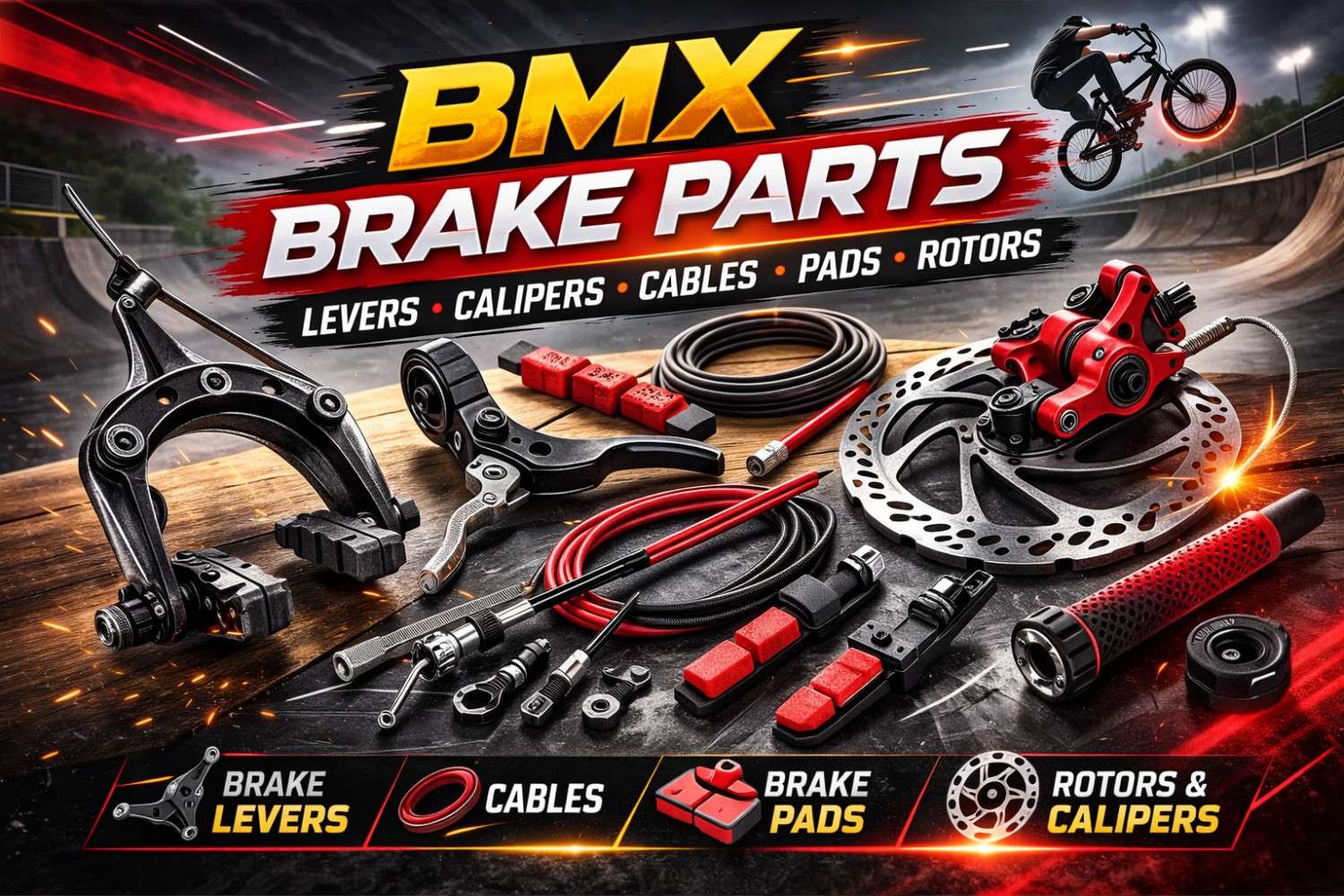
Braking control is really important when you are riding a BMX bike. It does not matter if you like riding on the street at the park on dirt or if you like racing. You need BMX brake parts so you can feel safe and confident when you are riding. Good brakes help you ride better. They keep you safe.
This guide will tell you everything you want to know about BMX brakes. You will learn about the kinds of brakes like V brakes and U brakes. You will also learn how to adjust your BMX brakes. If you should get a BMX bike, with disc brakes.
Do BMX Bikes Have Brakes?
One of the most common questions among beginners is: do BMX bikes have brakes,
Yes, most BMX bikes are designed to support brakes, and many riders use them regularly. While some street riders choose brakeless setups for style or freedom of movement, brakes remain essential for park riding, racing, and trail use.
BMX bikes typically come with:
- Rear brakes as standard
- Optional front brakes depending on riding style
- Frame and fork mounts designed for BMX-specific brake systems
High-quality BMX brake parts ensure consistent stopping power without compromising bike control or trick performance.
Core BMX Brake Parts Explained
A complete BMX braking system is made up of several components working together:
BMX Brake Lever
The BMX brake lever is the rider’s main control point. Designed to fit smaller handlebars and aggressive riding positions, BMX levers offer strong pull with minimal hand movement. Durable levers provide better modulation and long-term reliability.
Brake Calipers
Calipers apply pressure to the rim or rotor. In BMX, U-brakes and V-brakes are the most common options.
Brake Cables and Housing
Smooth cable movement is essential for responsive braking. Upgrading cables can dramatically improve lever feel and stopping performance.
Brake Pads
Brake pads determine how effectively the bike slows down. Proper compound selection improves braking in dry, dusty, or wet conditions.
How to Adjust BMX Brakes Properly
Knowing how to adjust BMX brakes is essential for maintaining safety and performance. Poorly adjusted brakes can feel weak, rub against the rim, or respond inconsistently.
Basic BMX Brake Adjustment Steps
Align the Brake Pads
Brake pads should hit the rim squarely, not the tire or below the rim surface.
Adjust Cable Tension
Use the barrel adjuster or cable clamp bolt to remove slack and fine-tune lever response.
Center the Brake Arms
Ensure both brake arms return evenly to prevent rubbing.
Test Lever Feel
The brake lever should engage smoothly without pulling all the way to the grip.
V Brake vs U Brake: What’s the Difference?
The debate of V brake vs U brake is common among BMX riders, as both systems serve different needs.
U-Brakes
Compact and lightweight: Small, lightweight brake design reduces overall bike weight and improves handling control.
Popular for park and street riding: Preferred by park and street riders for reliable braking without restricting tricks.
Mount under chainstays or seatstays: Designed to mount under chainstays or seatstays for improved clearance.
Clean appearance and less interference with tricks: Minimal brake profile keeps bike clean and avoids interference during tricks.
V-Brakes
Strong stopping power: Provides powerful braking force for controlled stops in high-speed or rough riding.
Longer arms for better leverage: Extended brake arms increase leverage, improving braking efficiency with less effort.
More common on dirt, cruiser, or hybrid BMX builds: Commonly used on dirt, cruiser, or hybrid BMX bikes needing stronger braking.
For most modern freestyle BMX setups, U-brakes remain the preferred choice due to their low profile and durability.
BMX Bike With Disc Brakes: Is It Worth It?
Another frequent question is whether a BMX bike with disc brakes makes sense. Disc brakes are powerful and consistent, especially in wet conditions, but they are not common in traditional BMX riding.
Pros of Disc Brakes
Disc brakes provide strong and reliable braking power, making them ideal for high-speed and aggressive riding. They perform exceptionally well in all weather conditions, including rain and mud. Since braking force is applied to the rotor instead of the rim, they also reduce rim wear and extend wheel lifespan.
Cons of Disc Brakes
Disc brakes add extra weight to the bike compared to traditional rim brakes. They are not compatible with all frames and forks, limiting upgrade options. Maintenance can also be more complex, often requiring specialized tools and proper alignment for optimal performance.
Do BMX Bikes Have Pedal Brakes?
Many people ask: do BMX bikes have pedal brakes?
The answer is no BMX bikes do not use coaster (pedal) brakes. Pedal brakes are found on kids’ bikes or cruisers, not BMX bikes designed for tricks or racing.
BMX riding demands instant, precise braking control, which is why hand-operated brake levers are standard. Pedal brakes would interfere with fakes, manuals, and backward movements.
Why Quality BMX Brake Parts Matter
Investing in premium BMX brake parts improves more than just stopping power. Quality components provide:
- Better modulation and control
- Consistent braking during long sessions
- Reduced maintenance issues
- Improved rider confidence
At Billet BMX, BMX brake components are engineered for strength, reliability, and real-world riding conditions, making them suitable for street, park, and dirt riders alike.
Choosing the Right BMX Brake Lever
The BMX brake lever plays a major role in braking feel. Riders should consider:
Lever reach and adjustability
Allows comfortable finger positioning and customized braking control feel.
Clamp strength
Ensures secure handlebar grip without slipping during aggressive riding.
Compatibility with cables and calipers
Matches properly with the brake system for smooth, responsive performance.
Durability under repeated impacts
Withstands crashes and tricks without bending or breaking easily.
Build a Safer, Smoother BMX Setup
Understanding BMX brakes helps riders make smarter upgrade and maintenance decisions. From answering whether BMX bikes have brakes to comparing V brake vs U brake, having the right knowledge ensures better control and safer riding.
With the right combination of BMX brake parts, proper adjustment, and a reliable BMX brake lever, riders can enjoy consistent stopping power without sacrificing performance or style. Quality braking is not just about slowing down, it's about confidence on every ride.
FAQs :-
Q1: Do BMX bikes have brakes?
Yes, most BMX bikes are designed with rear brakes, and some riders also use front brakes.
Q2: How do you adjust BMX brakes?
Align the pads, adjust cable tension, center the brake arms, and test lever feel.
Q3: Which is better, V brake or U brake?
U-brakes are preferred for freestyle BMX, while V-brakes offer stronger stopping power for dirt or cruiser setups.
Q4: Can BMX bikes have disc brakes?
Yes, but only on compatible frames, usually for racing or dirt riding.
Q5: Do BMX bikes use pedal brakes?
No, BMX bikes use hand-operated brake levers, not pedal brakes.


