
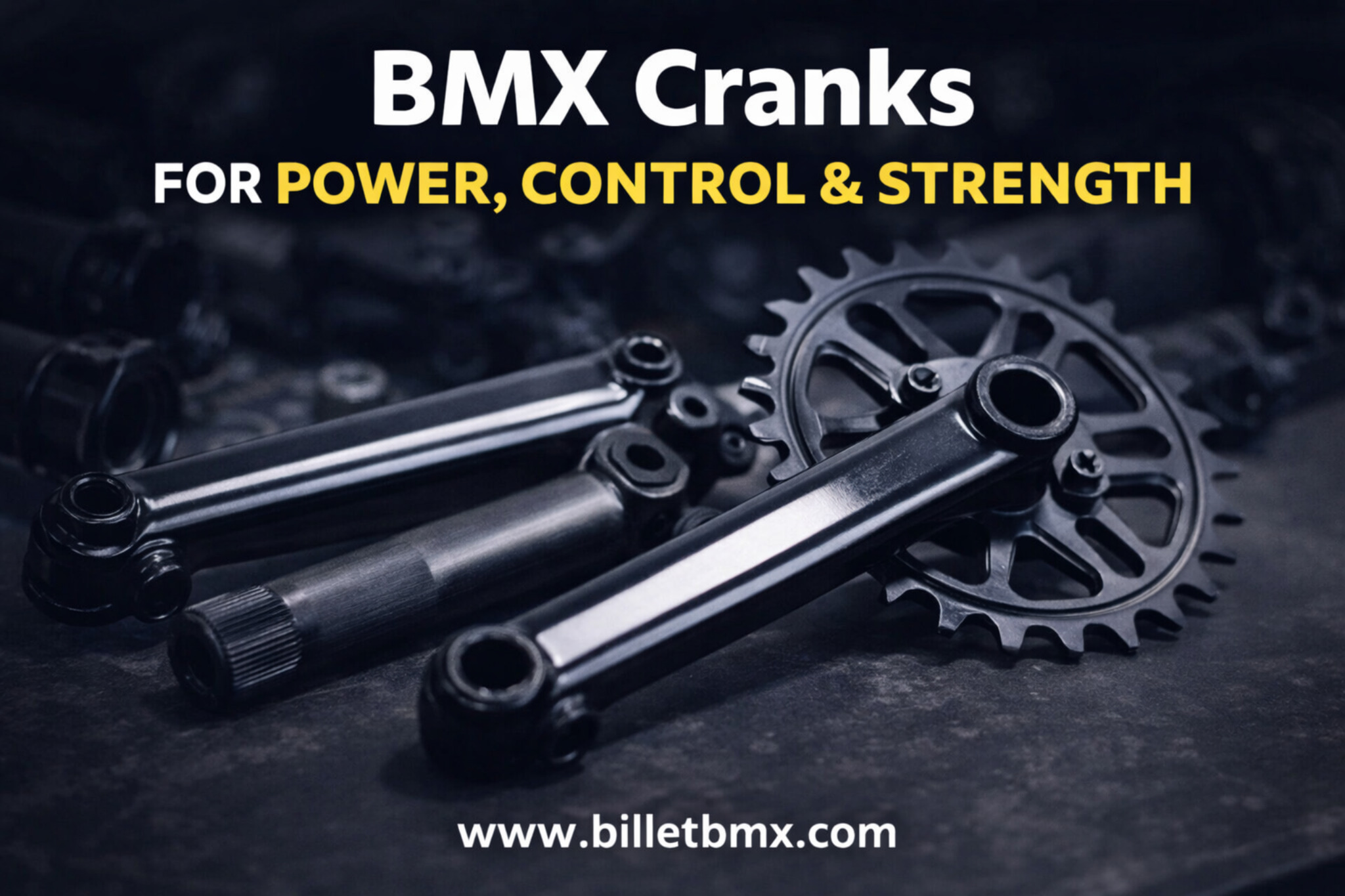
When riders talk about improving power, balance, and confidence on a BMX bike, BMX cranks are often at the center of the conversation. Cranks are not flashy parts, but they quietly do the hardest work on every ride. Every pedal stroke, every landing, and every sprint runs through the crankset. Choosing the right bike crank BMX setup can completely change how a bike feels under pressure.

This guide explains BMX cranks in clear, simple language, based on real riding experience. It covers how they work, why quality matters, how to choose the right type, and what mistakes riders should avoid. The goal is to help you make informed decisions without needing to search elsewhere.
What Are BMX Cranks and Why Do They Matter?
BMX cranks connect your pedals to the bottom bracket and transfer your leg power directly to the drivetrain. If cranks flex, bend, or fail, the bike loses efficiency and control. Strong BMX cranks give a solid feel when pedaling, help maintain balance in the air, and hold up to repeated impacts.
Riders who upgrade from entry-level cranks often notice better responsiveness immediately. The bike feels tighter, smoother, and more predictable. This is why experienced riders never treat the bike crank BMX system as an afterthought.
Types of BMX Cranks Explained Simply
One-piece cranks are commonly found on beginner or complete bikes. They are simple and affordable but heavier and less durable. These are best for casual riders or those just starting out.
Three-piece cranks are the most popular choice among serious BMX riders. They use separate arms and a spindle, offering better strength, easier maintenance, and more upgrade options. Most modern BMX cranks fall into this category because they balance performance and reliability well.
Two-piece cranks combine one arm and spindle into a single unit. They are lighter than three-piece setups and often used by riders focused on weight savings. However, they require precise installation to perform correctly.
Materials Used in BMX Cranks
Material choice plays a major role in how BMX cranks perform over time. Chromoly steel is widely trusted because it offers excellent strength without excessive weight. It handles hard landings, crank slides, and daily abuse well.
Aluminum BMX cranks are lighter and often chosen by riders who prioritize quick spins and technical tricks. However, aluminum cranks must be well-designed to avoid bending or cracking. Cheap aluminum cranks are a common cause of failure, especially for heavier riders.
High-quality manufacturers focus on proper heat treatment and machining rather than just material choice. This is where experience and engineering matter most.
Spindle Size and Compatibility
Spindle size is a key detail many riders overlook when choosing a bike crank BMX setup. Common spindle sizes include 19mm, 22mm, and 24mm. Larger spindles generally offer more stiffness and strength, especially for aggressive riding.
Compatibility with your bottom bracket and frame is critical. Installing the wrong spindle size leads to poor bearing alignment and premature wear. Riders should always confirm bottom bracket standards before purchasing BMX cranks.
How Riding Style Affects Crank Choice
Street riders often put extreme sideways stress on cranks through grinds and drops. For them, durability and stiffness matter more than saving a few grams. Strong BMX cranks with solid spindles are the safest choice.
Park riders usually want a balance of strength and lightweight feel. Smooth transitions and aerial tricks benefit from cranks that feel responsive without excess weight.
Dirt and race riders rely heavily on efficient power transfer. A reliable bike crank BMX system helps maintain speed through jumps and long straights. Cranks that stay tight and aligned under constant pedaling make a noticeable difference.
Common Mistakes Riders Make With BMX Cranks
One of the most common mistakes is choosing cranks based only on price. Cheap cranks may look good at first but often fail quickly under real riding conditions. Another mistake is ignoring installation torque. Loose crank bolts lead to creaking, damage, and unsafe riding.
Riders also sometimes mismatch cranks with bottom brackets, causing bearing issues. Taking time to check compatibility prevents these problems and saves money in the long run.
Why Quality and Brand Trust Matter
BMX riding puts parts through extreme conditions. Trusted brands test their cranks in real riding environments, not just in design software. Choosing a brand with proven experience reduces the risk of failure and improves long-term value.
BMX cranks are designed with real riders in mind. The focus stays on strength, precise machining, and reliable performance, ensuring riders get parts they can trust session after session.
Choosing the Right BMX Cranks
Choosing the right cranks is not just about specs it is about riding with confidence. At Billet BMX, we understand what riders expect from their setup: strength that lasts, precision that feels right, and performance that keeps up with progression. Our BMX cranks are designed for real-world freestyle and street demands, built with durable materials and rider-focused engineering.
When you invest in Billet BMX cranks, you are choosing reliability, clean design, and proven performance. Upgrade your setup with components made to handle pressure, power, and progression so you can ride harder, push further, and stay in control every session.
FAQs:-
What size BMX cranks should I choose?
Crank size depends on rider height and riding style, but most riders prefer standard lengths for balance and control.
Are three-piece BMX cranks better than one-piece?
Yes, three-piece BMX cranks offer better strength, durability, and upgrade options for serious riding.
How long do BMX cranks usually last?
High-quality BMX cranks can last several years with proper installation and regular maintenance.
Can I use any bike crank BMX setup on my frame?
No, cranks must match your bottom bracket and spindle size to fit and perform correctly.
Do lightweight BMX cranks sacrifice strength?
Not always. Well-designed lightweight cranks can remain strong, but cheap lightweight options often fail under stress.


