
You're mid-session, everything feels dialed then you catch it. A faint click through the bars. A small wobble on landing. Nothing massive, just wrong. Nine times out of ten, that's your headset talking.
Most riders never think about the headset until the front end starts fighting them. But this small part handles more stress than anything else on your bike. Every landing, every turn, every time you yank up on the bars those little bearings are absorbing all of it.
Getting a proper BMX headset bearing replacement done right costs less than an hour and makes your bike feel completely different. Ignore it too long, and your steering will feel sketchy no matter how good everything else is.
Why Your Headset Does More Work Than You Think
The headset is the only part on your BMX that handles two things at once; it lets your fork rotate smoothly and absorbs compression load at the same time. That's a tough job, and when those bearings wear out, everything suffers.
Loose steering kills your confidence in tricks. Notchy bars make holding a line frustrating. A pitted bearing turns a solid landing into a sketchy one. The headset is small, but its condition affects how your entire front end feels every single ride.
A fresh set of quality bearings costs very little and fixes all of that immediately.
Know Your Headset Type Before You Order
This is where most riders waste money buying the wrong part before confirming what their frame actually takes.
There are two main setups you'll come across. The integrated headset is standard on virtually every modern BMX frame built after 2010. The bearing angles are machined directly into the headtube, so the bearings drop straight in by hand, no cups, no pressing. The most common bearing spec here is the 45×45 Campy-style, with a 41.8mm outer diameter and 45-degree contact angle.
The standard headset uses pressed cups inside the headtube. These are more common on older frames and budget completes. The cups hold the bearings rather than the frame itself, which makes replacement slightly more involved.
Signs Your Bearings Are Done
A lot of riders crank their compression bolt tighter when they feel slop and call it fixed. That might buy you a session or two. But if the play keeps coming back, or if tightening the bolt makes steering feel stiff rather than smooth, the bearings themselves are shot and no amount of adjustment will fix it.
Grinding or clicking when you rotate the bars means the bearings are pitted or running dry. A front end that stays loose even when the compression bolt is properly torqued means the bearing races have worn enough to lose their shape under load. Notchy steering where the bars feel like they want to lock into one position usually means flat spots from repeated impact without proper grease.
When in doubt, pull the fork out and look. Rust, pitting, or a bearing that doesn't spin freely by hand needs to come out. If you're riding street or park regularly, a quick visual check every two to three months keeps you ahead of the problem.
How to Replace Your BMX Headset Bearings
This looks more complicated than it is. With the right bearing and basic tools, you'll be back together in under 20 minutes.
Start by loosening your stem bolts, then remove the top cap and compression bolt completely. Pull the fork carefully down and out of the frame to support the wheel so it doesn't drop. On integrated setups the bearings simply lift out. On standard setups with cups, you may need a gentle tap to free them.
Clean the bearing seats thoroughly before anything new goes in old grease, grit, and rust all need to come off. Apply fresh waterproof grease to both the seat and the new bearing itself. For integrated frames, the bearings drop straight in by hand, sitting flush against the machined angles. No pressing, no tools required.
Why a Billet BMX Headset Is the Smarter Upgrade
Billet BMX headsets are CNC-machined from billet aluminum, which means tighter tolerances and a cleaner bearing seat than anything stamped or cast. That tighter fit matters less micro-movement between the bearing and seat means the bearings wear more evenly and last significantly longer. Budget headsets flex slightly under hard landings, and that flex is exactly what accelerates bearing wear and develops slop over time.
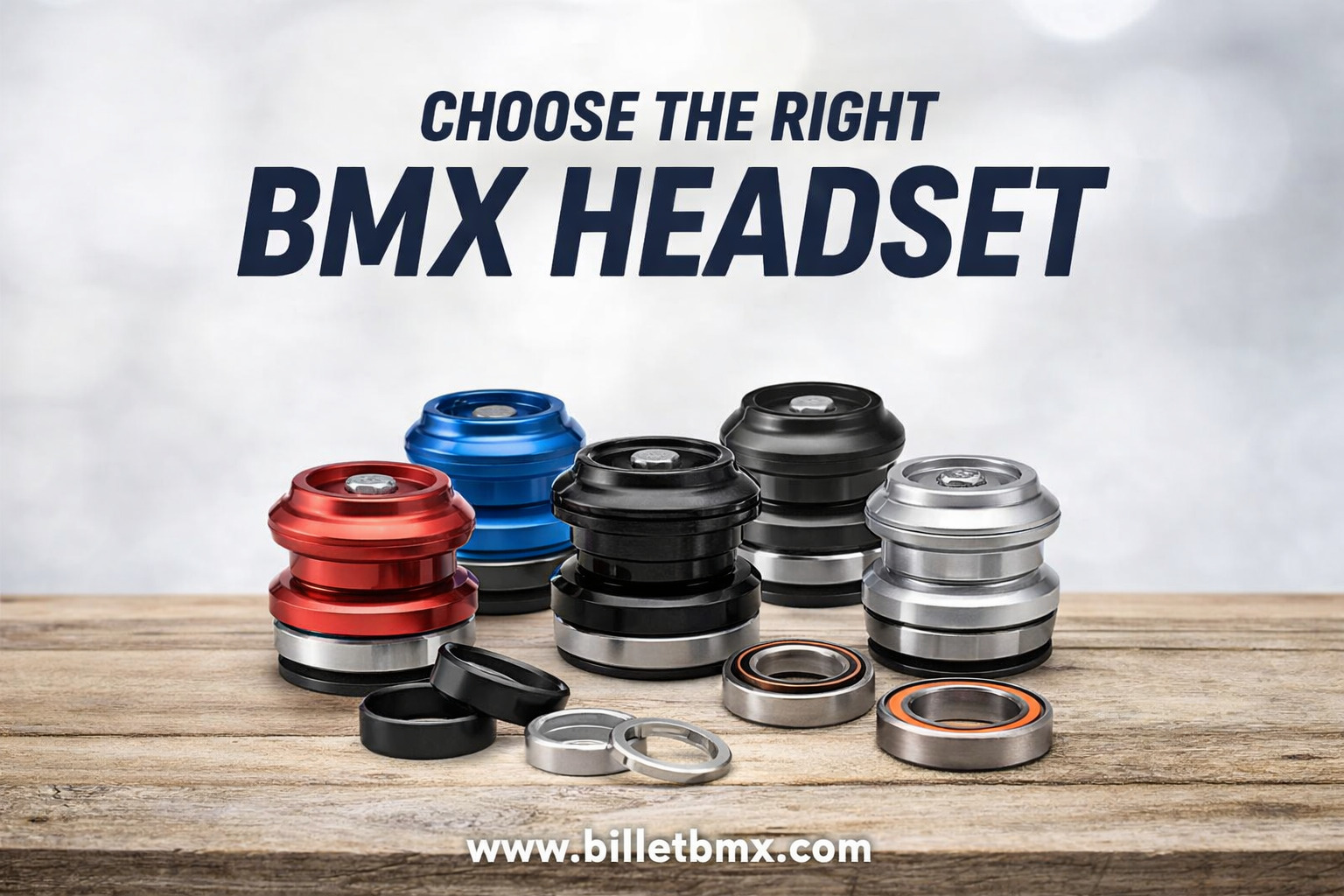
The bmx headset blue finish from Billet BMX is genuinely one of the sharpest-looking options for custom builds right now. The anodizing goes on after machining, so the color doesn't affect dimensions or fit it just looks exactly right on a blue-themed setup. Blue grips, blue pegs, blue spokes and a matching Billet BMX headset ties the whole front end together cleanly.
Inside, the ACB sealed bearings handle both radial and axial load simultaneously. That angular contact design is built for exactly what a BMX headset experiences: compression on landings and rotation on every turn. Lightweight aluminum body, quality bearings inside, proper color options. It's a straightforward upgrade with a real functional difference.
Conclusion
A BMX headset bearing replacement is one of the best time-to-reward maintenance jobs you can do. The parts are affordable, the job is fast, and the result is a bike that steers confidently again.
If you're ready to step up rather than just replace, a Billet BMX headset in blue gives you tighter tolerances, better bearing seating, longer service life, and a clean look that holds up session after session.
FAQs :-
Q: How often should I check my BMX headset bearings?
A: Every 2–3 months with regular riding. Replace when you feel grinding, clicking, or play that adjustment can't fix.
Q: Do I need special tools for the job?
A: For integrated headsets, just Allen keys. A soft mallet helps on standard cup setups, but no press is needed for modern integrated frames.
Q: Can the same bearings be used for freestyle and racing BMX?
A: Yes, as long as the spec matches. Most modern freestyle and racing frames share the same 45×45 Campy spec 1-1/8" integrated bearing.
Q: Is the Billet BMX blue finish durable?
A: Yes, anodizing is a hardwearing surface treatment, not paint. It won't chip or peel under normal riding conditions.
Q: What happens if I overtighten the compression bolt?
A: Steering becomes stiff and the bearings get damaged prematurely. Always tighten only until play is gone, then stop.


