
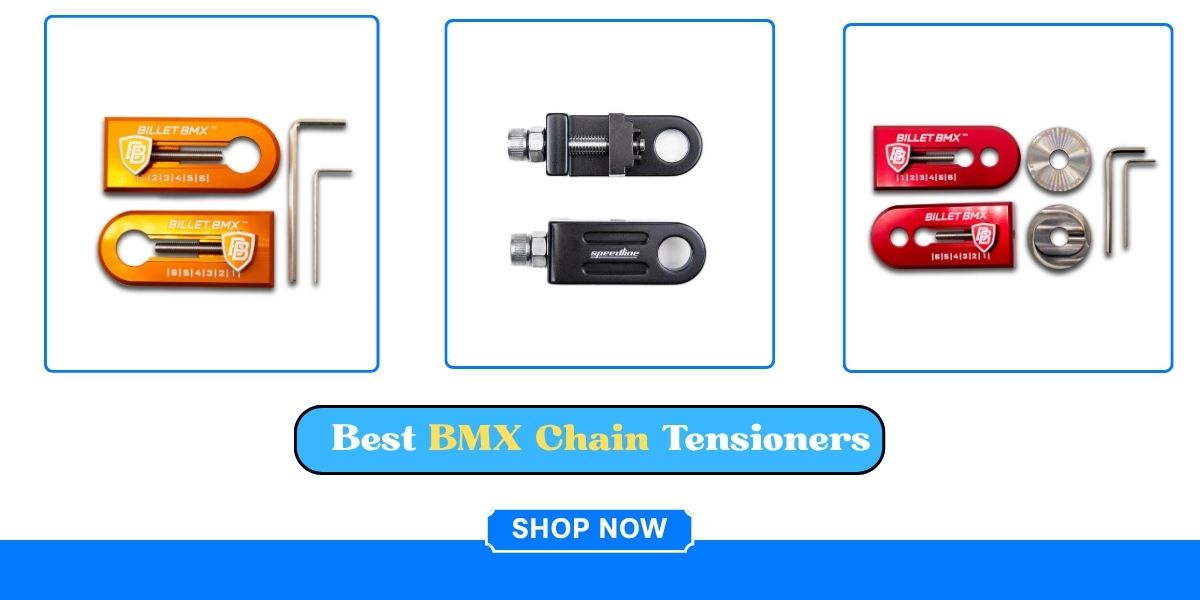
If your chain keeps slipping or your rear wheel won't stay aligned, a chain tensioner is probably what you're missing. It's a small part - but on a BMX, small parts make or break your ride. Getting this right saves you money and sessions lost to mechanical problems.
This guide covers what actually matters when shopping for tensioners, what most riders get wrong, and why this part is worth spending on.

Why Chain Tensioners Matter More Than You Think
A loose chain on a BMX isn't just an inconvenience - it's a real hazard. When your chain skips under load, you lose power at the worst possible moment. On a jump or a grind, that split second can go badly.
Chain tensioners lock your rear axle in place. They apply steady, even pressure so the wheel doesn't shift during hard riding. Without them, you're either stopping every session to re-tighten your axle bolts or dealing with a chain that pops off at full speed.
The Problem With Cheap Tensioners
Most stock tensioners are made from low-grade aluminum or stamped steel. They strip quickly, fail under torque, and eventually damage your dropout slots. If you've burned through a set already, you know the frustration.
What to Look for in the Best Chain Tensioners
These are the factors that actually separate quality tensioners from parts you'll be replacing every few months.
1. Material and Machining Quality
Billet aluminum is the benchmark for serious riders. Parts cut from a solid billet block - not cast or stamped - have tighter tolerances and hold up under real stress. Billet BMX machines their tensioners from 6061 billet aluminum, which handles repeated stress cycles without cracking, deforming, or stripping out.
Be cautious with anything listed only as "alloy" with no further specification. That word covers everything from quality aluminum to cheap zinc die-cast that looks solid until it doesn't.
2. Thread Quality
Stripped threads are the number one reason tensioners fail before they should. Look for clean, deep machine threads. Fine threads hold better under vibration and allow more precise tension adjustment than coarse threads.
3. Width and Frame Compatibility
Tensioners are not universal. Most BMX frames use 10mm axle slots, but dropout widths vary across brands and frame generations. Measure your dropout width before ordering anything. A tensioner that doesn't sit flush creates rocking hardware - and rocking hardware defeats the whole purpose.
4. Bolt-On vs. Integrated
Bolt-on tensioners clamp to the axle bolt or dropout and work with most frames. Integrated tensioners are machined into the dropout - common on premium frames, cleaner-looking, but limiting for aftermarket options. For most riders, bolt-on is the smarter, more flexible choice.
5. Single Speed Chain Compatibility
Most BMX setups run a fixed single-speed drivetrain. For those builds, you need single speed chain tensioners designed for a half-inch pitch chain and a fixed chain line. Some tensioners marketed as BMX-compatible are actually sized for track bikes or fixies. Always verify the spec before purchasing.
Common Mistakes Riders Make When Buying Tensioners
- Buying on looks alone. A machined finish doesn't equal strength. Always check the material spec before the aesthetics.
- Skipping frame measurements. A tensioner that doesn't fit your dropout creates uneven chain tension, which accelerates chain and sprocket wear.
- Under-tightening axle bolts. Even quality tensioners can't compensate for loose axle hardware. Torque your bolts properly every single time.
- Mixing brands on each side. Use a matched pair. Mismatched tensioners apply uneven pull and throw your wheel alignment off.
Why Billet BMX Is Worth Considering
If you want tensioners that hold without constant readjustment, Billet BMX makes a strong case. Their tensioners are machined in-house, built for standard BMX horizontal dropouts, and compatible with both 14mm and 3/8-inch axles.
The main advantage is precision. Tight tolerances mean once your chain tension is dialed in, it stays there through hard sessions. For riders tired of resetting their wheel every few outings, that consistency is the real selling point.
How to Install Chain Tensioners the Right Way
Installation is simple, but most riders skip at least one step.
- Loosen both axle nuts completely.
- Thread both tensioner bolts evenly into the dropout slots.
- Adjust each side the same number of turns to keep the pull even.
- Pull the wheel back until the chain has about one-quarter inch of vertical play.
- Hold the wheel straight in the frame before tightening the axle nuts.
- Re-check tension after tightening - it often shifts as you torque the bolts.
One step most riders skip: spin the cranks backward after the axle is tight. If the chain binds at any point in the rotation, your chain line is off or there is a stiff link in the chain. Both problems need fixing before you ride.
Conclusion
Choosing the right chain tensioners isn’t about looks - it’s about reliability, fit, and precision. Investing in quality components like Billet BMX tensioners ensures consistent chain tension, better alignment, and fewer mid-session adjustments. For riders who value performance and durability, upgrading this small part delivers a noticeable difference every time you ride.
FAQs:-
Why do BMX bikes need chain tensioners?
BMX frames use horizontal dropouts, which let the rear axle slide. Tensioners lock it in position and maintain consistent chain tension while you ride.
Are single speed chain tensioners different from regular ones?
Yes. Single speed chain tensioners are built for a fixed chain line and half-inch pitch chain. Multi-speed versions account for derailleur movement that BMX setups don't use.
How tight should a BMX chain be?
Press the chain midway between the front sprocket and rear cog. Around one-quarter inch of vertical movement is the correct range for most BMX builds.
Can I run just one tensioner instead of two?
No. A single tensioner pulls the axle to one side, creating an uneven chain line. This causes faster wear and increases the risk of chain skipping.
How often should I check my chain tensioners?
Every few sessions and always after crashes or hard landings. Vibration gradually loosens bolts even on properly installed tensioners.


