
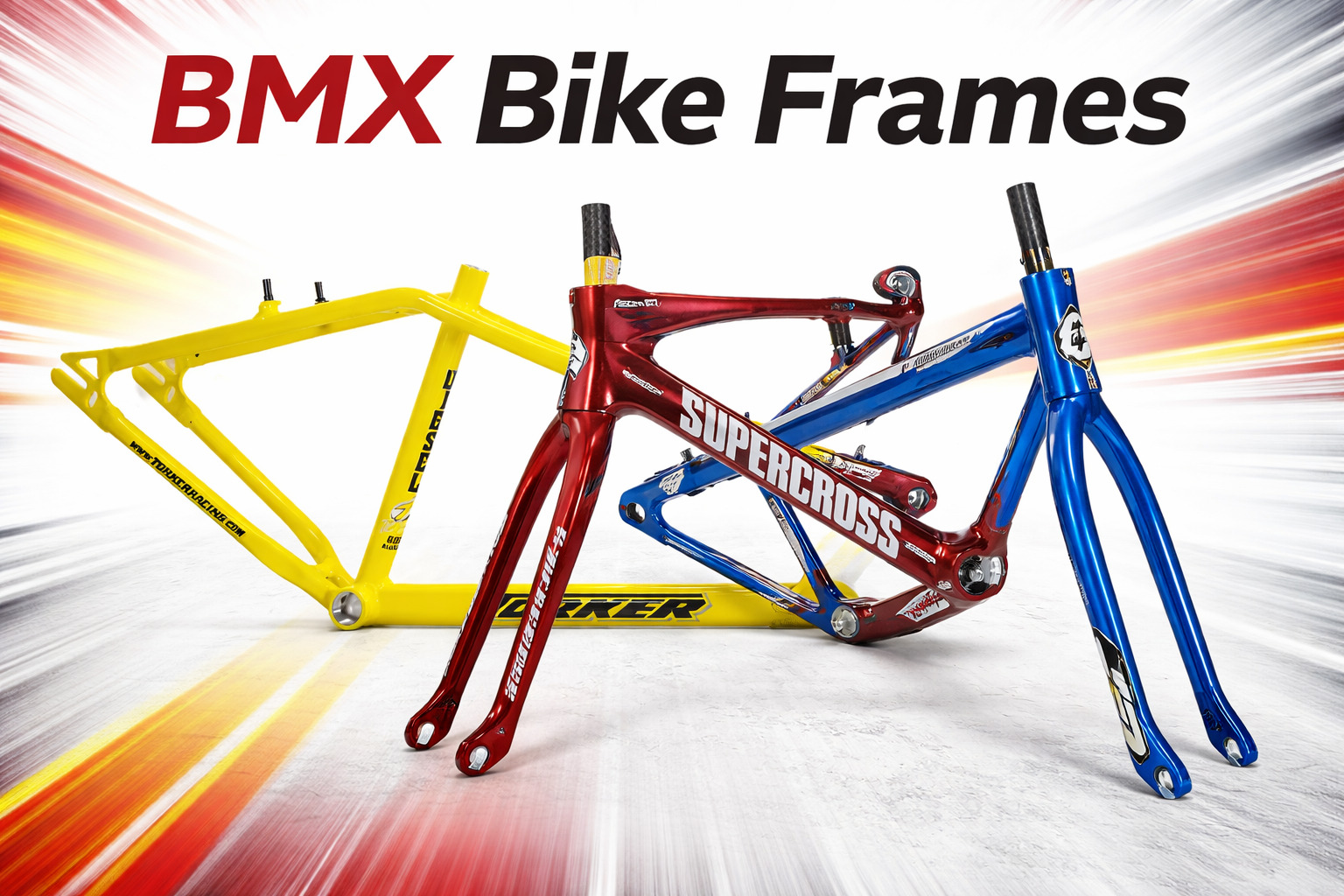
The frame is everything on a BMX. Every component you bolt onto it - cranks, bars, wheels, stem - is only as good as what it's attached to. But ask a newer rider how to pick a frame and you'll usually get a blank stare. There's a lot of information out there, and most of it assumes you already know what you're looking for.
This guide breaks it down clearly. Whether you're building a race setup from scratch, restoring an older bike, or just trying to understand what separates a decent frame from a good one - this covers what actually matters when shopping for bike frames BMX style in 2026.
Frame Material - Where It Starts
Before geometry, before sizing, before brand - material is the first decision. And it comes down to three options for most riders in the US.
Chromoly steel is the standard for freestyle and street riding. It's heavier than aluminum but it absorbs impact better and holds up to the kind of stress that comes with hard landings and repeated tricks. A good chromoly bmx frame can last years without cracking if it's built right. Riders who spend time on concrete, rails, and ledges usually prefer chromoly for exactly this reason.
Aluminum is lighter and stiffer. That stiffness helps on the track - when you're pedaling hard out of a gate, you want power going straight to the wheels, not flexing through the frame. Most bmx race bike frames at a serious level are aluminum, and that's not going to change anytime soon. The trade-off is that aluminum handles big impacts differently than chromoly. It doesn't bend - it cracks. For race riders who aren't doing drops and street hits, that's usually a fine trade.
Hi-tensile steel shows up on lower-priced complete bikes. It works, but it's heavier and doesn't hold up as long under hard use. If you're buying a frame on its own, you generally won't be in this category.
Billet BMX stocks chromoly frames built for both freestyle and older-style builds, including options that work with classic frame sizing from legacy brands. If you're not sure which material fits your riding, it usually comes down to this: track racer - go aluminum; street and park - go chromoly.
Frame Geometry - What the Numbers Actually Mean
Frame geometry sounds technical. But the two numbers that matter most are the top tube length and the head tube angle. Everything else is secondary for most riders.
Top tube length determines how stretched out or compact you feel on the bike. Most adult riders in the US are riding somewhere between 20.5" and 21.5" depending on height and preference. Riders on the taller side - say 5'10" and up - tend to be more comfortable on a 21" or 21.5" top tube. Shorter riders often do well on 20.5" or 20.75". But riding style plays into it too. Freestyle riders sometimes prefer a slightly shorter top tube for quicker turning. Race riders tend to like a bit more length for stability at speed.
Head tube angle affects steering response. A steeper angle (around 75–76°) makes the front end feel snappier and more responsive - good for technical riding and tricks. A more relaxed angle gives the bike more stability, which helps on race tracks where you're moving fast through corners.
BMX race bike frames built for competitive riding are usually designed with a steeper head tube and a geometry that moves weight forward slightly. That helps with acceleration off the gate and keeps the front wheel planted through berms.
Sizing for Adults - A Common Confusion
A lot of adult riders in the US buy bmx bike frames style without fully understanding that sizing works differently than it does on mountain bikes or road bikes. There's no "medium" or "large." You're picking by top tube length and matching it to your height and riding style.
Most adult complete bikes come with frames around 20.75" to 21". But if you're buying a standalone frame from Billet BMX to build up, you have more control over that spec. And it's worth getting right - a frame that's too short or too long affects everything from how you manual to how you land.
The Crupi Level 2.0, for example, runs a 22" top tube and is specifically designed for taller riders at 5'6" and up. That's the kind of frame-specific sizing detail that matters when you're building a race setup rather than buying off the shelf.
What to Look for in a Race-Specific Frame
If you're specifically shopping for bmx race bike frames, a few things separate race-focused designs from general freestyle frames.
Disc brake compatibility is increasingly standard on race frames in 2026. V-brake posts are still common on older frames, but dedicated race builds are moving toward disc systems for more consistent stopping in all conditions.
Chain tensioner integration keeps your chain tension consistent regardless of rear wheel position. Built-in tensioners are a small detail that makes real-world setup faster and more reliable. Worth checking for before you buy.
Bottom bracket shell spec - race frames typically use Euro BB or BB386. Make sure the frame and your cranks are compatible before ordering. It sounds obvious. But it's one of the most common mismatches when riders build up their own setups.
Old School Frames - Still Worth It
There's a real and growing community of riders across the US - particularly in California and the Midwest - who build old school BMX setups. These aren't just display pieces. Riders actually ride them. And the frame is always the hardest part of an old school build to get right.
Old school geometry is different. Longer chainstays, taller seat tube angles, and frame sizing that doesn't match anything modern. Finding hardware that fits these frames - the right axle specs, correct thread sizing, compatible clamping components - takes some research.
Billet BMX has focused part of its catalog specifically here. If you're restoring or building on a vintage bmx frame, checking fitment against the Billet BMX parts list is worth doing before you order anything.
Frame Selection - Keep It Simple
Start with material - chromoly for street and freestyle, aluminum for racing. Lock in your top tube length based on your height and how you like the bike to feel. Then look at the specific geometry details - head tube angle, BB spec, brake compatibility - before committing.
A good bike frame BMX purchase is one where every component you add to it fits properly and works as intended. Billet BMX carries frames and the components to match them, with accurate fitment info so you're not guessing. That's the difference between a build that comes together cleanly and one that stalls halfway through.
FAQs
Q1: What's the best frame material for street riding?
Chromoly steel is the go-to for street and park riding. It handles hard landings well, lasts longer under repeated stress, and holds up on concrete better than aluminum.
Q2: How do I know what top tube length I need?
Match it to your height. Riders 5'10" and above usually fit a 21"–21.5" top tube. Shorter riders generally do better on 20.5"–20.75". Riding style matters too.
Q3: Are aluminum frames good for BMX racing?
Yes. Most serious race setups use aluminum. It's stiffer and lighter than chromoly, which helps with power transfer off the gate. Not ideal for street hits though.
Q4: What makes a frame race-specific in 2026?
Race frames in 2026 usually include disc brake compatibility, built-in chain tensioners, and a steeper head tube angle. These details improve speed, control, and setup consistency on the track.
Q5: Can you still ride old school BMX frames?
Yes, and many riders do. Old school builds are active across the US. The challenge is finding parts that match vintage geometry, axle specs, and older thread sizing correctly.


