
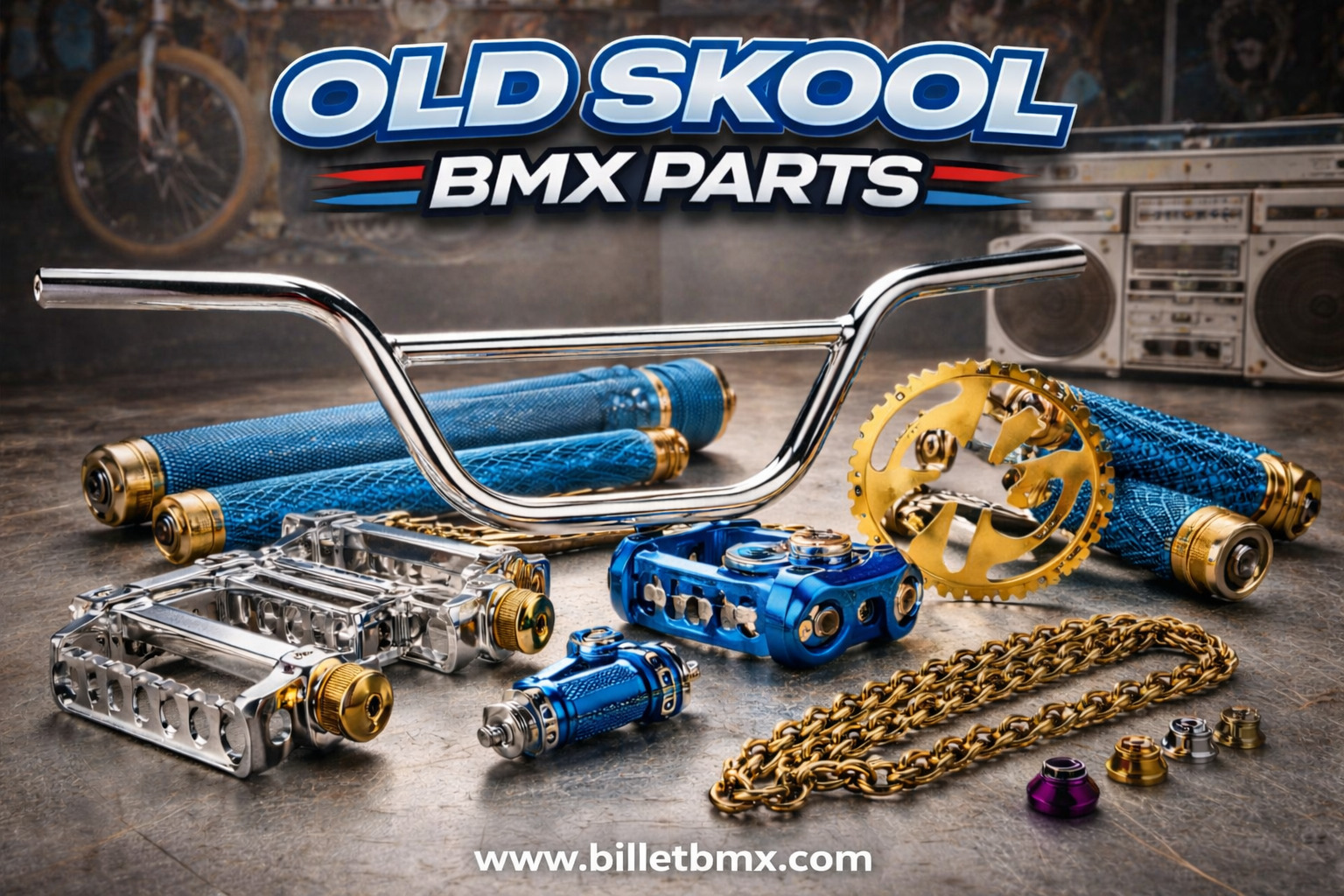
Old skool BMX builds are back. Not just as wall hangers people are actually riding them. Chromoly frames, narrow bars, small sprockets, and that stripped-down setup that made BMX what it was.
But getting the parts right? That takes some digging.
This covers which components actually define the build, what specs to check before ordering, and where to find old skool BMX parts that don't disappoint.
What "Old Skool" Actually Means in BMX
Old skool BMX loosely refers to parts and builds styled after late 70s through early 90s BMX. Think long top tubes, narrow bars, small sprockets, and a clean no-nonsense setup. No integrated headsets. No oversized everything.
A lot of riders today are mixing old skool aesthetics with modern chromoly frames. You get the look without the headaches that come with 40-year-old bearings and stressed steel.

Brands like Redline BMX built their reputation in that era. Their geometry and styling still influence how a lot of riders spec their bikes today. If you've been searching for Redline BMX parts, you already know the cult following behind that stuff runs deep.
The Parts That Matter Most on an Old Skool Build
Not every component needs to be period-correct. But a few key parts define the look and feel of an old skool build.
Handlebars and stems — Low rise bars with a two-piece or quill stem setup are the signature of old skool geometry. You want chromoly here, not aluminum. The weight is part of the feel.
Headsets — Threaded headsets, not integrated. A lot of builders get this wrong. If you're spec'ing an old skool frame, a standard threaded headset keeps it correct. Billet BMX carries solid headset options that fit traditional threaded setups.
Grips — Old skool grips are typically thinner and longer. Flanged grips with a ribbed or diamond pattern. No need for thick ergonomic foam here. Simple rubber, good grip, done.
Axle nuts and hardware — This is where you can either clean up the look or ruin it. Old skool builds look best with proper steel axle nuts, not alloy spacers stacked on a freewheel hub. Billet BMX axle nuts come in clean finishes that work on both new and vintage setups.

Sprockets and cranks — Smaller chainrings. 39T to 44T range. One-piece cranks were standard back then, but most builders switch to three-piece chromoly cranks for durability. The visual difference is minimal if you specify it right.
GT BMX Parts in the Old Skool Space
GT is one of the names that comes up constantly in old skool BMX conversations. Their Performer and Pro Series frames from the 80s are collector pieces. But GT BMX parts for modern builds are also worth knowing about.
Current GT geometry pays tribute to those original designs. If you're building on a GT-style frame or running a modern GT Performer, the parts ecosystem at Billet BMX covers the upgrade side well, stems, axle nuts, grips, and headsets that fit the platform without looking out of place.
Titanium BMX Parts — Worth It on an Old Skool Build?
Titanium BMX parts are mostly used in racing and lightweight freestyle builds. For a true old skool restoration, titanium bolts and axle hardware can actually work well. The weight savings aren't dramatic on a chromoly frame, but the corrosion resistance is real, especially if the bike sits in a garage or rides in wet conditions.
Titanium axle nuts in particular have become popular on cruiser builds. They hold tight, they don't seize, and they don't rust out after one winter. For a show bike or a daily rider you actually care about, it's worth the price difference.
BMX Parts Online vs. Local Shops
The honest reality is if you're hunting BMX parts online, your selection is ten times wider than walking into most local shops. And that's not a knock on local shops. It's just that stocking old skool-compatible parts across every size and spec isn't practical for a small store.
Searching BMX parts near me will get you what's on the shelf. That works for tubes, cables, and basic maintenance items. But for anything spec-specific correct headset sizing, old skool grip length, chromoly hardware in the right thread pitch online is where it gets done properly.
Billet BMX keeps a deep catalog across all the component categories that come up on old skool builds. The upside is that you're not guessing at compatibility; the product pages tell you what fits what.
Why a BMX Parts Diagram Saves You Money
A lot of newer builders start with a BMX parts diagram to understand what they're working with before they start ordering. That's a smart move. It prevents the common mistake of ordering a stem that doesn't match the fork steerer, or a headset that won't seat in the head tube correctly.
If you're new to old skool builds, look up a labeled parts diagram before you touch anything. It saves time and money.
What to Check Before Buying Old Skool Parts
A few things worth verifying before any purchase:
- Thread pitch and steerer diameter - Old frames don't always match modern standards. Check before ordering headsets or stems.
- Bottom bracket shell width - 68mm or 73mm? This changes your BB and crank options.
- Axle standards - 3/8" vs 14mm rear axle. Mixing these up causes problems.
- Top tube length - Old skool geometry runs longer. Stem reach affects how the bike actually feels to ride.
None of this is complicated once you know your frame. But skipping these checks costs you return shipping fees and waiting time.
Build It Right
Old skool BMX isn't complicated. Get the specs right, buy quality chromoly hardware, and don't skip the compatibility checks. Whether you're restoring a classic or mixing old skool parts into a modern build, Billet BMX has what you need. Browse the full parts catalog and build it right.
FAQ :-
Q1: What makes a BMX build "old skool"?
Old skool BMX refers to geometry and styling from the late 70s to early 90s long top tubes, narrow bars, threaded headsets, and simple one-color builds with minimal branding.
Q2: Are Redline BMX parts still available for vintage frames?
Some original Redline parts surface on used markets. For compatible modern replacements that fit vintage geometry, Billet BMX carries headsets, grips, and axle hardware that work well.
Q3: Where's the best place to find BMX parts online?
Billet BMX stocks a wide catalog of parts covering old skool-compatible components, from chromoly hardware to traditional grip styles and threaded headset options for classic frames.
Q4: Are titanium BMX parts worth using on an old skool build?
For bolts, axle nuts, and small hardware, yes. Titanium resists corrosion and holds tight long-term. For structural parts like cranks, most builders stick with quality chromoly instead.
Q5: Can I use GT BMX parts on a non-GT frame?
Yes, in most cases. Headsets, stems, grips, and axle hardware from GT-spec builds are standard sizing and fit many other frames. Always verify steerer diameter and axle standards first.


