
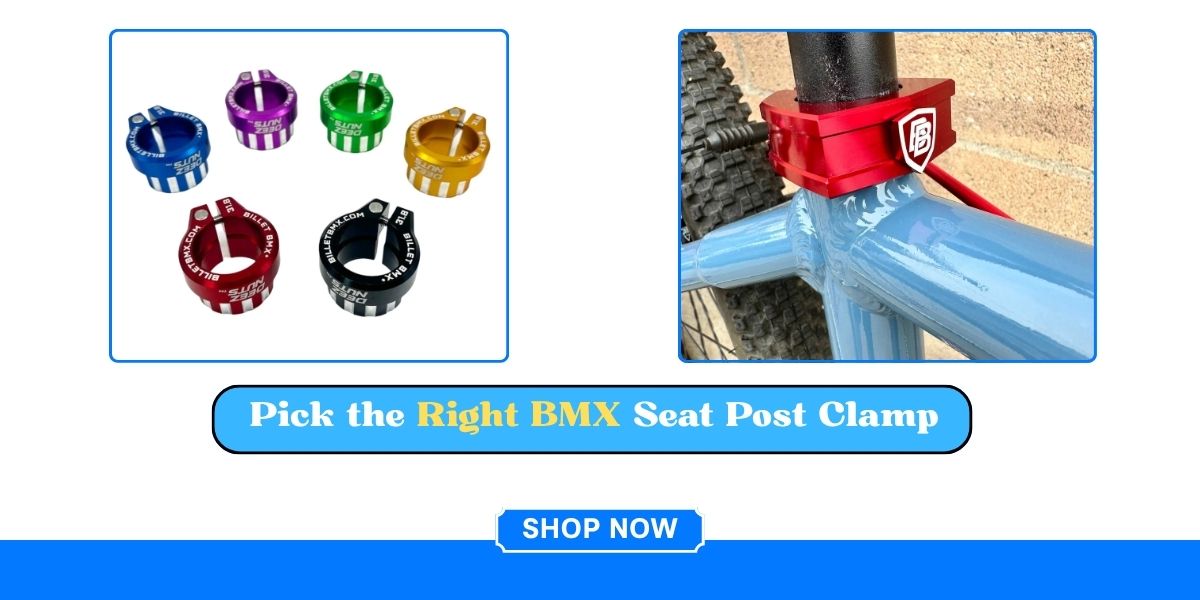
Here's a situation most BMX riders know: you're mid-session, your seat has slipped down again, and you're stopping to readjust for the third time. It's annoying. And nine times out of ten, the fix isn't a new seat or a new post - it's simply the wrong seat post clamp.
This small part does one job: hold your seat post firmly in your frame. When it's the right size and quality, you forget it's there. When it's wrong, you're constantly fighting your setup instead of riding it.
Why the Seat Post Clamp Actually Matters
It's Not Just a Bolt
Riders obsess over wheels, stems, and handlebars. The clamp barely gets a mention - until it fails. But think about what it's doing every session: holding the post secure through hard landings, tricks, grinds, and everything in between. A clamp that's too loose lets the post slip. One that's too tight can strip threads or crush the frame material.
Getting the size right and using a quality clamp means your seat stays exactly where you put it, every time.
Understanding Seat Post Diameters Before You Buy
Why Riders Get This Wrong
The most common mistake is measuring the seat post itself and ordering a clamp to match. That's not how it works. The clamp wraps around the outside of your frame's seat tube - so the measurement you need is the outer diameter of that tube, not the post inside it.
Here's a quick reference for different seat post diameters across BMX styles:
- Modern freestyle BMX: 25.4mm seat post → needs a 28.6mm clamp
- Old school / mid-school BMX: 22.2mm seat post → needs a 25.4mm clamp
- Race BMX frames: 27.2mm seat post → needs a 30mm clamp
The standard for most modern freestyle builds is 28.6mm. That covers the vast majority of complete bikes and aftermarket frames built in the last decade. If you're not sure, use a caliper on the frame's seat tube - not the post. That number is what you order.
How to Measure Correctly
Two Minutes That Save You a Return Shipment
Pull your old clamp off and measure the seat tube on the frame where it sits. A digital caliper is ideal. If you don't have one, take your bike to a shop - most will measure it in under two minutes.
Don't eyeball it. Frames from the same brand can have different seat tube diameters across model years, and being off by even a millimeter means the clamp won't seat properly. Once you have the correct number, shopping becomes straightforward.
Clamp Materials - What You're Actually Choosing Between
Aluminum vs. Steel
Most BMX seat clamps are made from aluminum alloy. It's lightweight, corrosion-resistant, and strong enough for all freestyle and street applications. For riders who want a clean, low-profile look without unnecessary weight, aluminum is the right call.
Steel clamps are heavier but slightly more resistant to cracking under extreme torque. They're less common on modern builds but available for older frames that need a more robust option.
Billet BMX stocks aluminum clamps machined to tight tolerances - which means the fit is consistent and the bolt threads hold without stripping. When the clamp is properly machined, you get the clamping force you need without over-torquing, which protects your frame long-term.
Bolt Style vs. Quick Release
Quick Answer: Almost Always Bolt Style
Quick-release clamps are popular on road and mountain bikes where seat height changes between rides. On a BMX, that's rarely the case. Most riders set their seat and leave it. A bolt-style clamp is more secure under the repeated stress of BMX riding and less likely to rattle loose over time.
Quick-release only makes sense if you're frequently adjusting height between sessions. For the vast majority of riders, a clean bolt clamp is the better choice.
Integrated vs. External Clamps
Check Before You Order
Some modern frames have an integrated seat clamp built directly into the frame. If yours does, you don't need a separate external clamp - you'll need a replacement bolt specific to your frame model.
External clamps slide over the top of the seat tube and are standard for most freestyle frames. If you're unsure, check your frame spec sheet. Billet BMX organizes clamps by compatibility, so you're not guessing when you browse their collection.
For a broader look at how clamps work with the rest of your setup, the BMX Bike Parts Guide on Billet BMX breaks down every component and how they interact.
Installation Tips That Protect Your Frame
Don't Overtighten
Apply a thin layer of grease to the seat tube before sliding the post in. Tighten the bolt gradually and stop at the recommended torque - usually 4–6 Nm for aluminum frames. Over-tightening is one of the most common ways riders damage their seat tube.
If the seat still slips at the correct torque, the clamp is the wrong size - not the wrong tightness. Crank it harder and you'll regret it.
If you're upgrading the clamp alongside other components, Top 7 BMX Upgrade Parts That Transform Your Ride gives you a smart priority order that makes the most of your budget.
Conclusion
The seat post clamp is one of those parts you fix once and forget. Get the right size, use a quality aluminum clamp from Billet BMX, torque it correctly, and your seat stays put through every session. No more mid-ride readjustments. No more fighting your setup. Just riding.
Frequently Asked Questions
Q: What size seat post clamp do I need for a standard BMX?
Most modern freestyle BMX bikes need a 28.6mm clamp, which fits the standard 25.4mm post. Always measure your seat tube to confirm before ordering.
Q: How do I know if my BMX frame has an integrated seat clamp?
Check the top of your seat tube - no external slot means it's integrated. Look up your frame model or contact the manufacturer to confirm.
Q: Can I use a quick-release seat clamp on a BMX bike?
Yes, but bolt-style is more secure for BMX. Quick-release suits riders who adjust seat height often, which is uncommon in freestyle riding.
Q: Why does my seat keep slipping even with a clamp installed?
The clamp is likely the wrong diameter for your seat tube. Measure the tube's outer diameter with a caliper and replace with the correct size.
Q: What material is best for a BMX seat post clamp?
Aluminum alloy is the standard - lightweight, strong, and corrosion-resistant. Billet-machined versions hold threads better and protect your frame under repeated use.


