
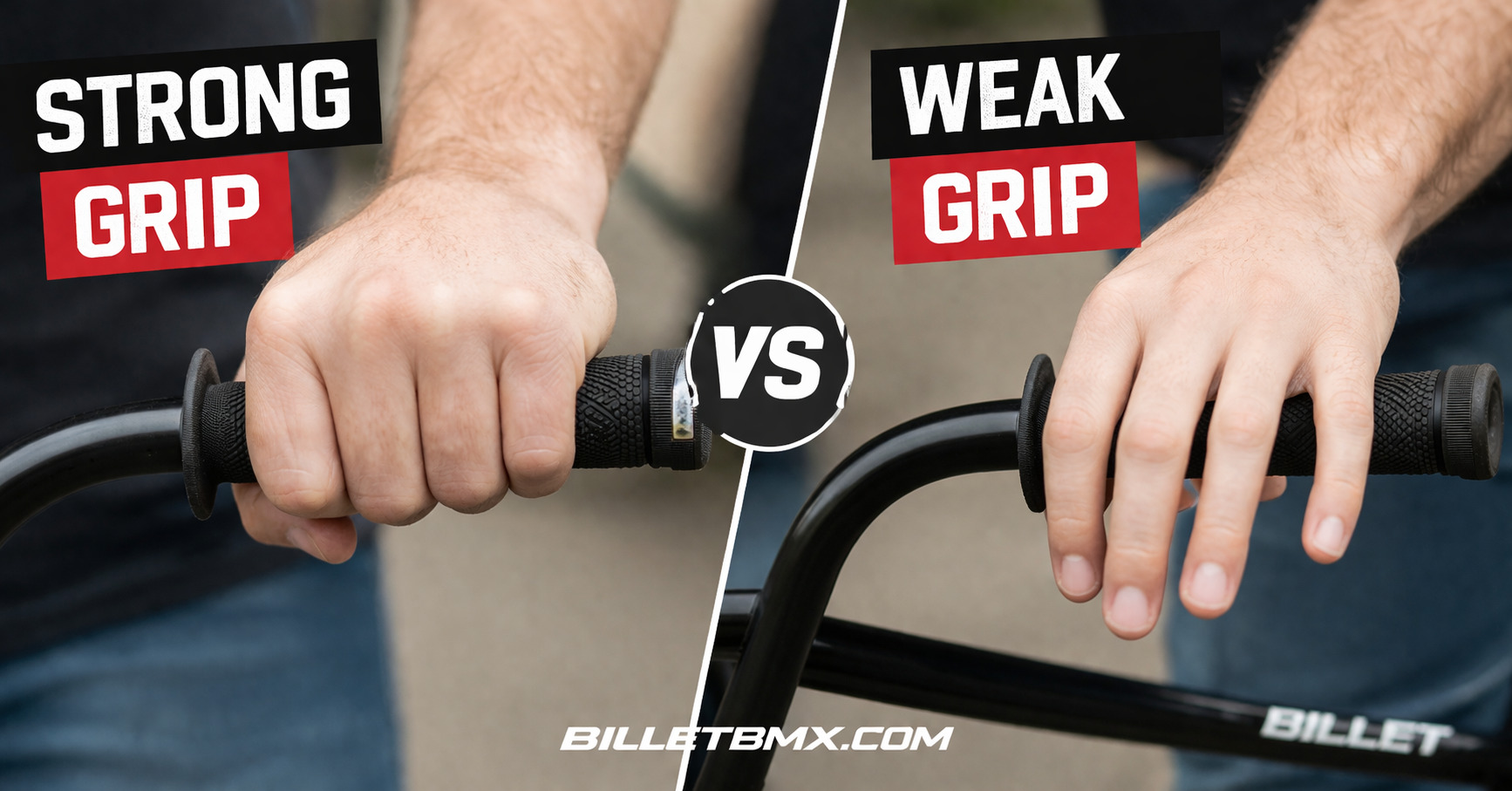
Most riders obsess over their bike build frame, wheels, bars but barely give a second thought to how they're actually holding on. Your grip style matters more than you'd think. The difference between a strong grip and a weak grip on your BMX bike grips can decide whether you land that trick clean or blow up mid-session from the forearm pump. Too tight and you fatigue fast. Too loose and you lose control when it counts. Dial in your handlebar grip technique, and everything from street lines to park sessions suddenly starts feeling a whole lot better.
What Does "Strong Grip vs Weak Grip" Actually Mean in BMX?
Let's clear this up straight away - we're not talking about hand strength here. A strong grip means you're squeezing the bars hard, locking your hands down in a firm, tight hold. A weak grip (sometimes called a light or relaxed grip) means you're holding the bars with just enough pressure to stay in control, without white-knuckling everything.
Both have their place. But riders who've been riding for a while will tell you - riding with a death grip all day is one of the fastest ways to end a session early. Your forearms pump up, your hands fatigue, and your reaction time drops. That's when crashes happen.
The Problem With Gripping Too Hard
Think about it this way. You're hitting a set of stairs, and your hands are already locked tight from the last drop. By the time you land and need to adjust, your forearms are already burning. That split-second delay costs you. A relaxed grip keeps your arms fresh and your reactions sharp.
That said, a grip that's too loose during impact is equally risky. When you're landing hard or holding a manual, you need that control. The sweet spot is a grip that's firm when needed, relaxed when not - and your BMX bike grips play a massive role in making that balance possible.
How Your Handlebar Grip Affects Your Grip Style
This is where things get really interesting. The right handlebar grip doesn't just sit there looking good - it actively supports how tightly or loosely you need to hold on. And if you're riding stock grips that came with your bike, you might be working harder than you need to.
Here's what to look for:
- Grip compound (rubber softness): Softer rubber means more natural traction at lower squeeze pressure - so you don't need to grip as hard to stay connected. Harder compounds are better suited for racers who wear gloves and need a firm, consistent surface.

- Grip texture/pattern: Diamond-cut patterns (like the ones on the Billet BMX Diamond Handlebar Grips) offer maximum surface contact, which means your hands lock in without requiring extra force. Ribbed patterns offer more give and comfort on longer sessions.
- Grip thickness and length: Thicker grips distribute pressure across more of your palm, reducing hotspots. Longer grips give your hands more room to shift position during a session - which is huge for reducing fatigue over time.
Strong Grip Situations vs Weak Grip Situations
Not every moment on the bike calls for the same approach. Here's how most experienced riders actually think about it:
When You Need a Strong Grip
- Hard landings from drops or jumps where bar stability is critical
- Technical manuals and nose pivots where micro-corrections matter
- Street riding with gaps and ledges that demand sudden input
- Any time you're riding in wet conditions or sweaty hands are a factor
When a Relaxed Grip Works Better
- Cruising between tricks to give your forearms a break
- Barspins - a lighter grip makes the release and catch smoother and more natural
- Long park or trail sessions where endurance matters
- Pumping through transitions where the bike needs to move freely under you
The key takeaway? Varying your grip pressure throughout a session - rather than holding everything tight the whole time - is a skill that separates good riders from great ones.
Choosing the Right BMX Bike Grips to Support Your Riding
Your grip style and your actual grips need to work together. There's no point in trying to ride relaxed if your grips are slipping every time you ease off. And there's no point in riding with stiff, hard-compound grips if you're a park rider who needs feel and traction on barspins.
A few grip types worth knowing:
Slip-On Grips - The classic setup. These slide onto your bars and rely on friction (or hairspray/alcohol during install) to stay put. Great for riders who like a thinner, lighter feel. The downside? They can twist or move over time, especially in wet conditions.
Lock-On Grips - These use clamps at one or both ends to bolt directly onto your bars. They won't rotate, won't slip, and give you a consistent feel every single session. Racers especially love these because grip movement at speed is not an option.
Flanged vs Flangeless - If you run brakes, a flanged grip gives your thumb some protection from the brake lever clamp. If you're brakeless and throwing barspins, flangeless grips make the catch cleaner and faster.
If you're putting together a new setup or just upgrading your ride, Billet BMX stocks a solid range of BMX bike grips built for real riding - from diamond-pattern rubber for traction-focused riding to lock-on options for those who want zero movement and maximum consistency.
And if you're also thinking about your full build, you might want to check out this comparison of the SE Big Ripper vs Throne Bikes 29 - two very different bikes that demand completely different setups, grip styles included.
Grip Fatigue, Hand Health, and Why It All Connects
Riding with the wrong grips - or the wrong grip technique - adds up over time. Riders dealing with hand numbness, cramping, or general forearm pump often trace it back to one of two things: gripping too hard because their handlebar grip isn't providing enough natural traction, or using grips that are too thin or too hard for their riding style.
Thicker, softer grips reduce vibration transfer significantly. And less vibration means less grip fatigue, which means longer sessions and less soreness the next day. If you're riding a lot of street or dirt, where impacts are constant, this is worth paying attention to.
Billet BMX Diamond Handlebar Grips are designed with exactly this in mind - traction across all conditions without forcing you to squeeze harder than necessary.
FAQs -
Q: Is a strong grip better for BMX tricks?
Not always. A relaxed grip improves barspins and reduces fatigue. Use firm grip pressure during landings and technical maneuvers, then ease off between tricks to stay fresh throughout your session.
Q: Can BMX bike grips help reduce hand fatigue?
Yes. Softer rubber compounds and thicker grip diameters absorb more vibration and distribute pressure across your palm, meaning you don't need to squeeze as hard to stay in control.
Q: What grip type is best for BMX racing?
Lock-on grips are preferred by most racers. They stay fixed on the bars without any rotation or slipping, giving a consistent feel at speed - especially important when wearing gloves.
Q: How often should I replace my BMX handlebar grips?
Most riders replace grips every few months depending on session frequency. Signs it's time: the rubber feels hard or slick, the texture has worn smooth, or the grips are rotating even after being properly installed.
Q: Do flanged or flangeless grips affect grip style?
Flangeless grips suit brakeless riders doing barspins - easier catch, cleaner feel. Flanged grips give thumb protection near brake levers. Your brake setup should guide the choice more than grip preference alone.
Ready to upgrade your setup? Browse the full range of handlebar grips and BMX bike grips at Billet BMX - built for riders who take their riding seriously.


