
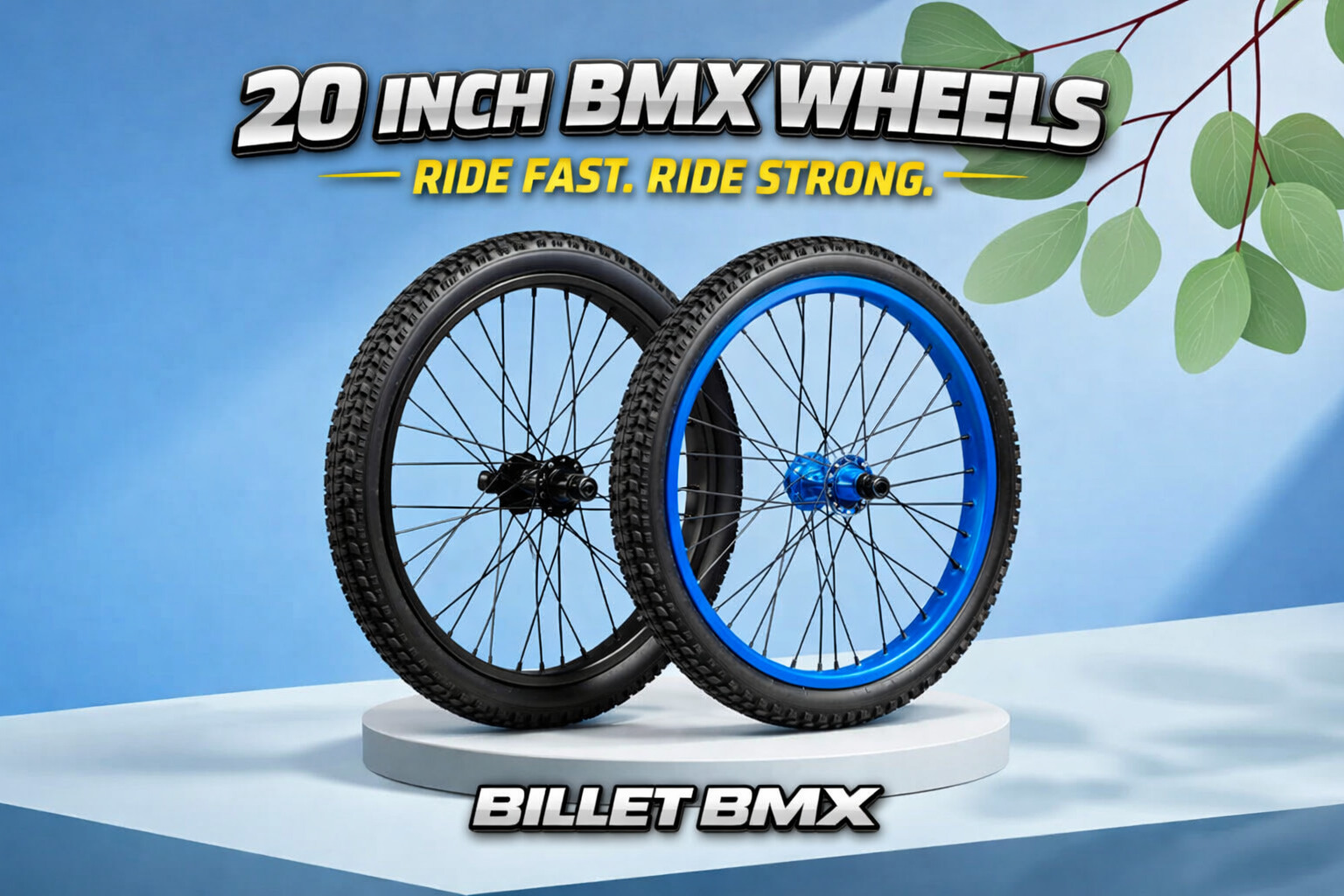
Most BMX riders spend hours picking their frame and bars but give their wheels, pegs, and axle nuts about five minutes of thought. That is a mistake. Your 20 inch BMX wheels are the foundation of everything, how the bike rolls, how it absorbs impact, and how your pegs and axle nuts hold up under real riding conditions. Get this part wrong and the rest of your setup suffers for it.
This guide covers what actually matters when choosing 20 inch BMX wheels, how to pick the right BMX bike pegs for your riding style, and why axle nuts deserve more attention than most riders give them.
What Makes a Great 20 Inch BMX Wheel
A BMX wheel looks simple. It is a rim, spokes, a hub, and a tire. But the difference between a cheap wheel and a quality one becomes obvious the moment you start riding hard.
The rim material sets the foundation. Aluminum alloy rims are the standard for good reason they are light, strong, and handle repeated impacts without warping the way cheaper steel rims do. Double-walled rims add a second layer of support along the inside of the rim wall, which matters a lot when you are landing hard off a ledge or dropping into a bowl.
Spoke count and tension matter more than most beginners realize. A well-built 20 inch BMX wheel runs tight, evenly tensioned spokes. Loose spokes lead to a wheel that goes out of true quickly, which means wobble, uneven tire wear, and eventually a broken spoke at the worst possible time. Higher spoke counts 36 or 48 , give more strength and are preferred by heavier riders or anyone doing high-impact street riding.
The hub is where the wheel connects to everything else. A sealed bearing hub keeps dirt and water out and requires less maintenance than a loose ball bearing hub. For street and park riders, a cassette hub on the rear gives you a cleaner, more responsive drivetrain. For riders who grind a lot, a freecoaster hub eliminates the need to pedal backward when setting up tricks, which changes the feel of riding entirely.
BMX Bike Pegs — Do You Need Them and How to Choose
Not every BMX rider needs BMX bike pegs but if you ride street or park and you are grinding rails, ledges, or copings, pegs are not optional — they are part of the setup.
Pegs come in two main materials. Steel pegs are heavier but grind slower and last longer, which suits riders who are learning grinds and want more control. Plastic pegs slide faster and are easier on ledges and rails, which suits more experienced riders chasing smooth, fast grinds.
Length is the next decision. Shorter pegs around 4 inches give you less surface area but keep the bike lighter and more maneuverable. Longer pegs around 4.5 inches give you more to work with on wider ledges and are more forgiving when you are learning new grinds. Most street riders land somewhere in between.
Diameter matters because it has to match your axle. Standard BMX axles run 14mm and most pegs are designed around that. Always check before ordering — a peg that does not fit your axle is useless no matter how good it looks.
One thing most riders overlook is how pegs interact with the wheel itself. A peg that is too long and sits unevenly against the hub puts lateral stress on the axle every time you grind. Choosing the right peg length for your hub width protects both the peg and the axle over time.
Axle Nuts — The Small Part That Makes a Big Difference
Axle nuts are the last thing most riders think about and one of the first things that cause problems when they are wrong. A loose axle nut lets your wheel shift under load, which throws off your alignment mid-ride and creates a safety risk. A stripped axle nut means your wheel is not going anywhere until you sort it out.
BMX axle nuts are almost universally 3/8 inch on the front and 14mm on the rear, though always verify against your specific frame and fork dropouts. The thread pitch needs to match your axle threads exactly, a nut that is close but not exact will cross-thread and strip both the nut and the axle.
Material makes a difference too. Cheap steel axle nuts rust, seize, and round off at the corners under a wrench. Chromoly axle nuts resist corrosion, hold their shape under torque, and are worth every extra cent. Some riders prefer alloy nuts for the weight saving, which is a legitimate choice for riders who care about grams.
How 20 Inch BMX Wheels, Pegs, and Axle Nuts Work Together
Your wheel, pegs, and axle nuts are not three separate decisions. They are one system and they need to work together. A strong 20 inch BMX wheel paired with the wrong length pegs puts stress on the axle at the wrong angle. Quality pegs on a wheel with a loose or cheap axle nut will shift and grind unevenly no matter how good your technique is.
The smartest approach is to spec your wheel first based on your riding style and weight, then choose pegs that match your axle diameter and hub width, and then lock everything down with quality axle nuts that fit the thread correctly and hold under real riding conditions.
The Right Setup Makes Every Ride Better
Your 20 inch BMX wheels carry everything. Your pegs take the punishment of every grind. Your axle nuts hold it all together. When all three are right the bike feels solid, predictable, and fast. When any one of them is wrong you feel it immediately.
Stop guessing on components that matter this much. Billet BMX builds precision parts for riders who want their setup to perform every single session.
Shop Billet BMX Wheels, Pegs and Axle Nuts ➜
FAQ
Q: Are 20 inch BMX wheels universal?
No. Twenty inch is the standard size but axle spacing, hub width, and dropout width must match your specific frame before ordering.
Q: What size axle nuts do BMX bikes use?
Most BMX bikes use 3/8 inch on the front and 14mm on the rear. Always verify against your frame and fork specs before replacing.
Q: What length BMX pegs should I buy?
Most riders start with 4 to 4.5 inch pegs. Shorter for technical riding, longer for learning grinds. Match the length to your hub width.
Q: Can I put pegs on any 20 inch BMX wheel?
Most wheels yes, but the peg bore must match your axle diameter. Standard rear axle is 14mm. Check for female axle compatibility before ordering.


