
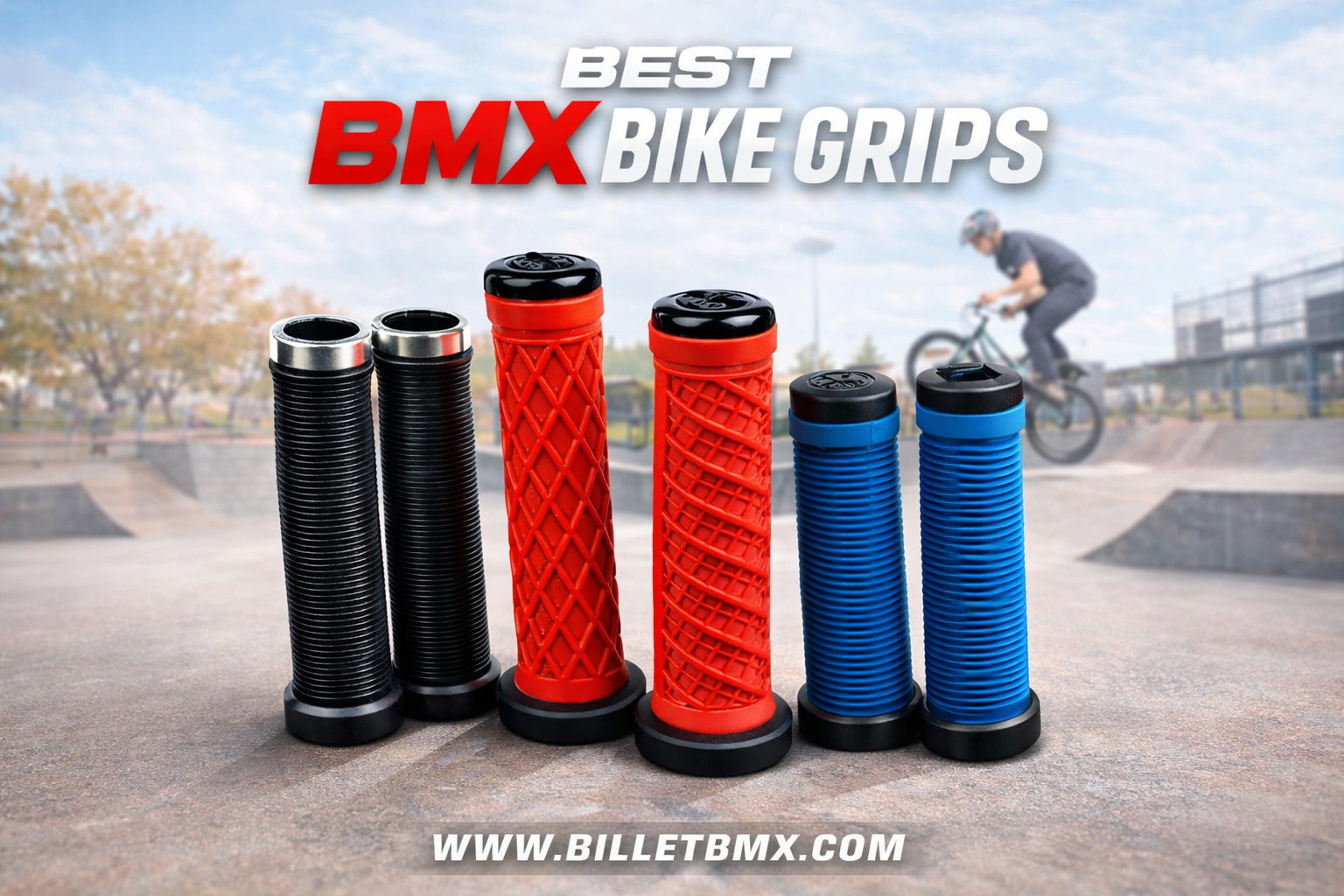
Most riders obsess over frames, forks, and wheels. But here's the truth: your hands are the only part of your body that never leaves the bike. Every trick, every manual, every hard landing runs directly through your bmx bike grips. And yet, grips are the last thing most riders upgrade. If your hands are slipping, cramping, or losing feel mid-session, the problem isn't your technique. It's what you're holding onto.
Why Your BMX Bike Grips Matter More Than You Think
Think about the last time you missed a trick. Chances are, your hands weren't where you expected them to be. That half-rotation of slip, that micro-shift in grip position it costs you control at the exact moment you need it most.
Quality bmx bike grips are not just rubber cylinders. They are the primary feedback channel between you and your bike. The right grips tell you where your bars are, how much pressure you're applying, and whether your hands are locked in or drifting. That information happens in milliseconds. And when your grips are worn, cheap, or the wrong compound, that feedback disappears.
Riders who switch to proper bmx handlebar grips consistently describe the same experience: the bike suddenly feels more connected, more predictable, and more responsive. That's not marketing language. That's physics. Better grip surface equals better control. Better control equals better riding.

What Separates Good BMX Handlebar Grips From Average Ones
Compound Matters Enormously
Not all rubber is created equal. Softer compounds absorb vibration and feel comfortable during long sessions, but they wear faster and can feel spongy on technical moves. Harder compounds offer a more direct, locked-in feel and last longer, but they can fatigue your hands on extended rides. The best bmx handlebar grips strike a balance firm enough to give you precise feedback, soft enough to absorb the punishment your hands take on every landing.
Billet BMX engineers their grip compounds specifically for the demands of modern BMX riding, not generic cycling, not scooters, not casual riding. BMX. That specificity makes a real difference in how the grips perform under actual conditions.
Flange Design and End Caps
A single-flange or double-flange design on your bmx bike grips isn't just aesthetic. Flanges prevent your hands from sliding off the end of the bar during whips, one-handers, and bar spins. They act as a natural hand stop, giving your grip a consistent anchor point. Billet BMX grips feature precision-designed flanges that sit flush and clean no sharp edges, no flex, no play.
End caps are equally important. An open-ended bar without a solid end cap is a safety hazard. Billet BMX end caps are machined to sit flush and lock in place, protecting both the rider and the bar ends from impact damage.
Length and Diameter
Grip length affects how much of your palm is supported. Too short and your pinky hangs off the edge, a surprisingly significant source of hand fatigue. Too long and your grip position feels awkward. Standard BMX grip lengths run between 155mm and 165mm, and Billet BMX offers sizing that fits the full range of riding styles and hand sizes.
Diameter is equally personal. Thicker grips reduce vibration and work well for riders with larger hands or those who prefer a more cushioned feel. Thinner grips provide a more direct bar feel, which many technical street riders prefer. Knowing your preference here is worth paying attention to.
The Real Cost of Ignoring Your Grips
Worn grips are more than an inconvenience. When the surface texture breaks down, you compensate by gripping tighter. Tighter grip means more forearm tension. More forearm tension means faster fatigue and slower reaction times. On a long session, this chain reaction turns into a hand pump that kills your performance in the back half of a riding day.
Beyond fatigue, worn bmx bike grips are a genuine safety concern. A grip that slips at the wrong moment on a flyout, a bar spin, or a high-speed manual can send you off the bike entirely. This is not a dramatic scenario. It happens to riders of every skill level when they ignore the condition of their grips.
Replacing your grips is one of the cheapest, fastest performance upgrades available. And when you choose Billet BMX grips, you're not just replacing a worn part, you're actively upgrading the control and feedback your hands receive on every single ride.
Why Riders Trust Billet BMX Grips
Billet BMX was founded on a simple idea: riders deserve parts that are built to the same standard they ride at. Every grip in the Billet BMX lineup reflects that commitment. The compounds are tested under real riding conditions. The dimensions are dialed for BMX-specific geometry. The construction holds up across street sessions, park days, and everything in between.
When you run Billet BMX handlebar grips, you're not just buying rubber. You're buying the confidence that comes from knowing your equipment won't be the variable that lets you down.
FAQs
Q1: How often should I replace my bmx bike grips?
Replace grips every three to six months, or sooner if texture wears smooth.
Q2: What size bmx handlebar grips fit most standard bars?
Most standard BMX bars take grips between 155mm and 165mm in length perfectly.
Q3: Are Billet BMX grips compatible with all handlebar diameters?
Yes, Billet BMX grips fit standard 22.2mm BMX handlebar diameter across all models.
Q4: Do bmx handlebar grips affect trick performance and control?
Absolutely fresh, quality grips improve hand stability, reduce fatigue, and sharpen overall control.


