
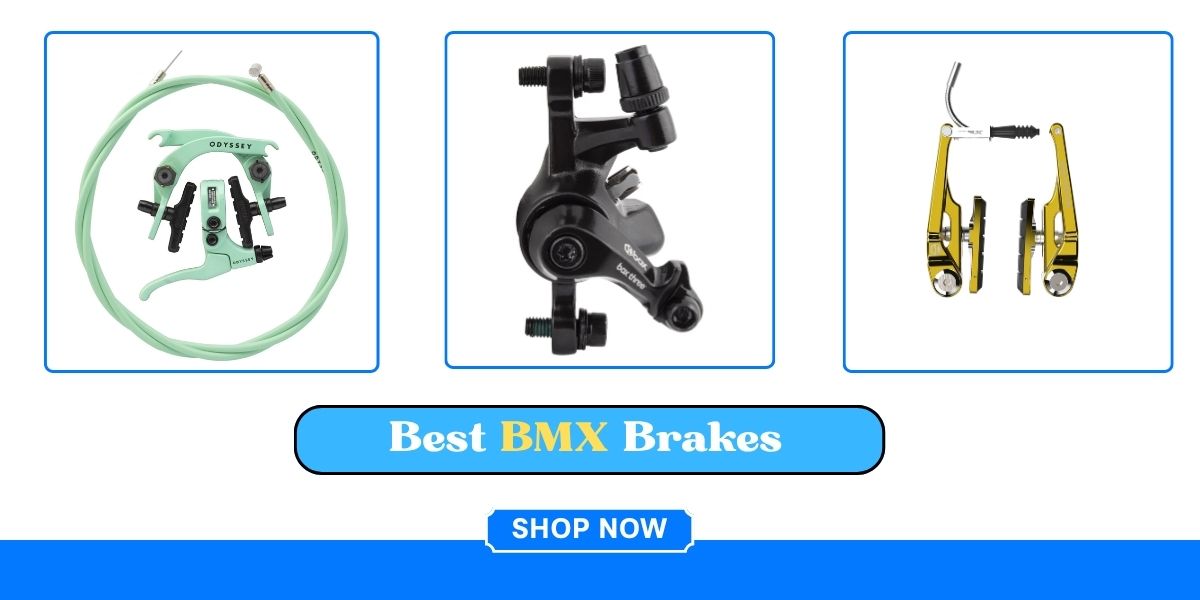
Walk into any conversation about BMX setups and brakes become a topic fast. Some riders swear by them. Others run completely brakeless. And then there's everyone in between - riders who want just enough stopping power without the extra weight or cable clutter getting in the way of their riding.
Here's the truth: your choice of bike bmx brakes matters more than most people think. It affects how your bike feels, what tricks are realistic, and whether you're set up correctly for the style of riding you actually do. This guide breaks down every brake type, what each one does well, and how to figure out which one fits your bike and your riding.
The Main Types of BMX Bike Brakes
Not all BMX brakes are built the same, and they're definitely not interchangeable. Your frame's mounting points determine which system works for your setup - so let's start there.
BMX U Brake
The BMX U brake is the standard for freestyle riding. You'll find it on the vast majority of street and park setups. The arms cross above the tire in a U shape, mounted under the seat stays or on the chain stays, keeping the whole system tucked close to the frame.

That low profile is the point. When you're doing barspins, tailwhips, or any trick that puts your hands close to the frame, a U brake stays out of the way. It also works cleanly with gyro (detangler) systems, which are essential if you spin bars frequently and don't want cable tangles killing your rotation.
Setup does take some patience. Getting the pads dialed in and the cable tension right makes a real difference in how the brake feels on the pull. Once it's set up properly, though, a U brake is reliable, low maintenance, and tough enough to handle the kind of abuse that comes with real riding.
If your frame has brake bosses mounted on the bottom of the seat stays or top of the chain stays, this is almost certainly the system your bike was designed for.
V-Brake (Linear Pull)
V-brakes work differently. The arms are mounted on top of the seat stays, and when the lever pulls the cable, both arms clamp inward against the rim simultaneously. That design creates more clamping force than a U brake, which is why V-brakes are the go-to for BMX racing.
Race riders need strong, reliable stopping power in high-speed situations. V-brakes deliver that. They're also easier to adjust for most riders because the cable system is more straightforward. The trade-off is that the arms extend outward beyond the frame, which can get in the way on trick-heavy riding styles.
If you ride a race bike - or a larger build like a 24", 27.5", or 29" setup where the bigger wheel size calls for more braking force - V-brakes are worth a close look. They're not the right call for a street or park build, but for race and off-road riding, they do the job better than most alternatives.
Caliper Brakes
Caliper brakes show up on two types of bikes: low-end completes where cost is the driving factor, and brakeless-style builds that legally still need a brake installed.
They mount to a single center bolt, sit close to the rim, and provide basic stopping power. They're not the strongest system and they're not designed for heavy-duty riding. But for riders who want to go mostly brakeless while still meeting local regulations, a caliper brake at the front does the job without adding much visual weight to the build.
Disc Brakes
Disc brakes on BMX are still a niche choice, but they're gaining ground - especially in the racing world. They work independently of the rim, which means consistent stopping performance regardless of rim condition, wet surfaces, or rim wear. Some race frames now come specced with disc mounts as standard.
The downsides are weight and complexity. They're heavier than rim brake systems, and the frame or fork needs to be built with disc mounts from the start. You can't retrofit a standard BMX frame for disc brakes without specialized hardware.
Gyro Systems: What They Are and Who Needs One
If you run barspins or tailwhips regularly, a gyro (also called a detangler) is worth understanding. A gyro sits on the headtube and separates the upper and lower brake cables, letting the bars rotate 360 degrees without the cable tangling or pulling tight.
Standard cable setups won't allow full bar rotation without binding. Some riders get around this with an Odyssey Linear cable, which is flexible enough to handle occasional bar spins without a full gyro. But if spinning bars is a big part of your riding, a proper gyro setup paired with a bmx u brake is the cleanest solution.
Small Brake Parts Big Performance Gains
Clear brake pads grip harder and stop faster. Colored pads are quieter and more consistent over time. Don't use clear pads on chrome rims - that combination causes the rubber to tear off the pad post prematurely.
For cables, linear housing gives you a more direct, responsive pull compared to traditional coiled housing. If your brakes feel spongy or delayed, replacing the cable housing with a linear option often fixes the issue before you even touch the pads or adjustment.
Brakes by Riding Style: A Quick Reference
Street and park: BMX U brake, rear only, optional gyro for bar spins
Racing: V-brake front and rear, maximum stopping power
Big wheel builds (24"/29"): V-brake rear for better rim coverage
Brakeless look: Caliper front brake for legal compliance, minimal profile
Dirt and trail: U brake or V-brake depending on frame mounts
Riders building on platforms like the GT Pro Series BMX often stick with the factory U brake setup, which is tuned for the frame geometry and mount position from the factory. Swapping brake types on an existing frame requires matching the mount style exactly - U brake and V brake mounts are not interchangeable.
Shop BMX Bike Brakes at Billet BMX
Carries brakes, levers, cables, pads, and gyro systems for every riding style. Whether you're setting up a new street build, replacing worn components, or upgrading to a better system. Billet BMX has what you need to stop with confidence. Browse the full selection online and find the right brake setup for your bike today.
FAQs :-
Q: What brakes do most BMX freestyle bikes use?
Most freestyle BMX bikes use a U brake on the rear. It stays out of the way during tricks and works well with gyro systems.
Q: Can I put a V-brake on a BMX frame that has U brake mounts?
No. U brake and V brake mounts are in different positions on the frame. They cannot be swapped without specific adapter hardware.
Q: Do I need a gyro for bar spins on a BMX bike?
Not always. An Odyssey Linear cable handles occasional bar spins. A gyro is better if you spin bars frequently in your riding.
Q: What brake pads are best for BMX?
Clear pads give the most stopping power. Colored pads are quieter and last longer. Never use clear pads on chrome rims.
Q: Do BMX race bikes use the same brakes as freestyle bikes?
No. Race bikes typically use V-brakes for stronger stopping power. Freestyle bikes use U brakes for clearance and trick compatibility.


