

A 29 inch BMX bike glides down an open path like it was made for the job. Then a parking garage ramp, a narrow gate or a packed sidewalk shows up, and the same bike needs three tries to get around one corner.
That gap between open-road comfort and tight-space clumsiness is the biggest worry for riders eyeing big wheels. Billet BMX hears the question all the time: how wide is the turning circle, and can a big-wheel BMX handle real city riding? The short answer is that wheel diameter is only part of the story. Wheelbase, steering lock, bar width and slow-speed technique do most of the work, and every one of them can be measured or improved.
Why a 29 Inch BMX Bike Feels Bigger in Tight Spaces
Riders stepping up from a 20 inch bike usually notice it first in a driveway or a crowded skatepark lot. The bike is longer, the front tire is taller, and the arc needed to turn around grows with both.
Wheelbase Sets the Size of the Turning Circle
Turning radius comes down to simple geometry. At a given steering angle, a longer wheelbase swings a wider arc. Bigger wheels need longer rear stays and more room up front, so wheelbase grows right along with wheel size. The SE Bikes Big Ripper 29 publishes a 44 inch wheelbase, which explains why a U-turn in a narrow lane can turn into a multi-point maneuver. Shorter wheelbases, by contrast, are consistently described as nimbler in corners. billetbmx.com99spokes
Steering Lock and Front-Tire Clearance
The other limit is how far the bars can turn before something gets in the way. A tall 2.4 or 2.5 inch front tire can brush the rider’s foot at full lock, a problem called toe overlap, and brake cables routed too tight can stop the bars short. Either one cuts the usable steering angle, which widens the turn even when the geometry looks friendly on paper.
The Geometry Numbers That Shape Handling
Handling is the feel that comes out of the numbers. Three measurements do most of the talking, and product pages that publish them make comparison easy.
Head Angle and Steering Speed
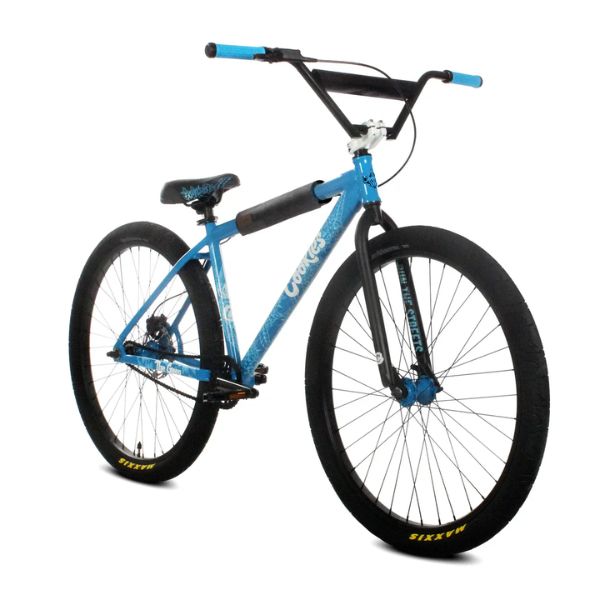
Both the Sunday High C 29 and the Big Ripper list a 71 degree head angle. In general, a steeper head tube with less trail steers quicker, while a slacker one steers slower and calmer. Calm steering suits speed. Quick steering suits tight turns, and at parking-lot speeds less trail is generally easier to control.
Chainstay Length and the Rear End
The Sunday High C 29 lists a 17.5 to 17.75 inch chainstay, while the Big Ripper sits at 18.25 inches. That is under an inch of difference, but on a bike this long every fraction goes toward a shorter wheelbase and a tighter arc. A 29 inch BMX with a compact rear end tends to feel closer to a 20 inch bike in corners. brandscyclebilletbmx.com
Bar Width and Rise
Bars are the steering lever. The Sunday and the Big Ripper both run 29 inch bars, the Rixin models step up to 30 inches, and the Throne Goon uses 810 mm bars, which works out to about 32 inches. Wider bars add leverage and calm steering at speed, but they also reach farther into gaps, door frames and gates. A guide to handlebar rise and width covers how those two measurements change control. The table below lines up the published specs.
| Bike | Published weight | Bar width | Head angle | Chainstay |
|---|---|---|---|---|
| Sunday High C 29" | About 29.1 lb | 29 in | 71° | 17.5–17.75 in |
| SE Bikes Big Ripper 29" | 32 lb | 29 in | 71° | 18.25 in |
| RIXIN District 29" | 31 lb 5 oz | 30 in | Not listed | Not listed |
| RIXIN Prospect 29" | 34 lb | 30 in | Not listed | Not listed |
| Throne Goon 29" C | Not listed | 810 mm (about 32 in) | Not listed | Not listed |
How Tires and Weight Change Slow-Speed Control
Wide Tires Add Stability and Flop
Fat 2.4 to 2.5 inch rubber helps a big wheel track straight and soak up pavement cracks. At walking pace, though, a wide front tire on a large wheel tends to flop to one side and wander, which makes slow corners feel vague. Riders who mostly ride tight lines often do better with a slightly narrower front tire, and the range of BMX tires makes that swap easy. zinncycles
Weight Makes Corrections Slower
Published weights for complete 29 inch bikes run from about 29 pounds to 34 pounds. The Sunday High C 29" lists roughly 29.1 pounds, the RIXIN District 29" lists 31 pounds 5 ounces, and the hi-ten RIXIN Prospect lists 34. A few extra pounds do not change the turning radius, but they make every small correction feel lazier, and that matters most when a gap is only slightly wider than the bars. Filter By: +2
Riding Technique for Tight Spaces on a 29er
Geometry sets the limits. Technique decides how close a rider gets to them.
Set Up the Turn Early
A long bike rewards a wide approach. Starting a turn from the outside edge of the lane and committing to full lock early beats cranking the bars late, which pushes the front tire into a wider line. Eyes belong on the exit, not on the curb.
Keep Speed Just Above Wobble
Crawling speed makes any bike unstable, and a heavy front wheel makes it worse. Holding a slow but steady pace, then feathering the rear brake, keeps the bars steerable. Light pedal pressure through the turn keeps momentum without lurching.
Lean the Bike, Keep the Body Upright
Tight corners go better when the bike leans under a mostly upright rider. Pushing the hips slightly to the outside of the turn lets the wheels carve a smaller arc than leaning with the bike would.
Pivot When Space Runs Out
When the gap is simply too narrow for a clean arc, stepping off, straddling the top tube and walking the rear wheel around beats forcing a three-point turn. Pride heals. Scraped door frames do not.
Where Tight Spaces Show Up in Real Riding
Not every tight spot asks the same thing of a bike. Garage ramps and spiral driveways need a steady small-radius arc, so leaning the bike and holding gentle momentum works best. Crowded sidewalks and bike-lane chicanes call for slow, precise steering and constant awareness of bar width. Switchback trails and park paths reward a wide entry and an early exit line. A 29 inch BMX bike handles all three, just with different habits for each.
Mistakes That Make a Big Wheel Feel Worse
Most complaints about handling trace back to a short list of fixable habits. Staring at the obstacle instead of the exit line pulls the bike straight toward it. Running tires too soft lets the sidewalls squirm in tight corners. Loose bars or a stem that has drifted out of alignment make the steering feel vague. And braking hard mid-turn stands the bike up and widens the arc. Fixing these costs nothing and often does more than any new part.
A Parking-Lot Test for Turning Radius
Spec sheets rarely publish turning radius, so riders can measure it. Wet the front tire with a little water, roll slowly at full steering lock across dry pavement, and mark where the tire track makes a full circle. Measure the width of that circle and halve it. Running it three times and averaging the results smooths out wobbles, and trying both walking pace and a light jog shows how the circle grows with speed. Repeating the test after a bar, tire or cable change shows exactly what each swap did. It also settles arguments about whether a particular 29 bmx bike will fit a given lane or garage turn.
Setup Tweaks That Tighten the Turn
Small changes add up. Checking that brake cables or hydraulic lines have enough slack lets the bars rotate fully. Moving the feet back on the pedals reduces toe overlap. Swapping to narrower BMX handlebars pulls the hands inside tighter gaps, although bars that are too narrow trade away leverage and calm steering at speed.
Choosing a 29 Inch BMX Bike for Tight Riding
Riders short on space should shop with geometry first. A compact rear end, a published wheelbase and bar width that fits the riding area all point to a bike that turns easily. Fit matters as much, and a sizing guide by rider height keeps a frame from feeling cramped or oversized. Anyone torn between sizes can compare the quickness of 26, 27.5 and 29 inch wheelie bikes, since smaller wheels feel more flickable. For a ready-to-ride option, the Throne Cycles Goon 29" C Powder White pairs an 810 mm bar with 29 inch wheels, and the full range of 29 inch BMX bikes at Billet BMX allows a side-by-side comparison. billetbmx.com
5 FAQs
How tight can a 29 inch BMX bike turn?
Tighter than most riders expect, though wider than a 20 inch bike. Full steering lock, an early setup and a compact rear end all shrink the arc.
Does wheelbase or wheel size affect turning radius more?
Wheelbase matters more. Wheel size affects it indirectly, because bigger wheels need longer stays and more front-end room, which stretches the wheelbase and widens the turning arc.
Are wider handlebars better for handling a 29 inch BMX bike?
Wider bars add leverage and calm steering at speed, but they clip gaps and door frames. Bars around 29 to 30 inches are a common middle ground.
Is a 29 inch BMX bike hard to control in tight spaces?
Not after a short adjustment. Slow riding needs earlier turn setup, steady speed and light rear braking, because the long wheelbase and wide tires respond slowly.
How can a rider measure a bike’s turning radius?
Roll slowly at full steering lock with a wet front tire, mark the track, measure across the circle, then halve that number to get the radius.
Conclusion
A 29 inch BMX bike does not have to feel clumsy in tight spaces. The long wheelbase widens the turning circle, but steering lock, bar width, tire choice and a few technique habits close much of that gap. Published geometry makes shopping easier, a simple parking-lot test makes setup honest, and a little practice at full lock does the rest. With the right bike and the right habits, a big-wheel BMX can slip through the same gaps as smaller bikes without much fuss.
Ready for a Big-Wheel BMX That Turns?
Compare big wheel BMX bikes at Billet BMX and find the right fit for tight riding.
Shop Big Wheel BMX


