

Two wheelie bikes can look nearly identical on a shop floor, yet one floats up to the balance point while the other fights every inch of the lift. Riders usually blame technique. Often the real culprit is a few pounds sitting in the wrong place.
That is why wheelie bike weight sparks so many arguments at the park. Billet BMX hears the same two questions again and again: how much should one weigh, and does that number move the balance point? The short version is that most complete 29 inch builds land roughly between 29 and 35 pounds, and weight changes the balance point far less than where the weight sits.
How Much Does a Wheelie Bike Weigh?
A 20 inch freestyle BMX usually lands in the mid-20-pound range, which is the number most people carry in their heads. A wheelie bike plays by different rules. The frames run longer, the wheels run bigger, and the tires run wide, so the total climbs.
Typical Weight of a 29 Inch Wheelie Bike
The Sunday High C 29" offers a clean reference point. Its listed weight is about 29.1 pounds, with a full chromoly frame, fork and bars, a 23.5 inch top tube and a 27T sprocket. Builds with alloy frames, wide 2.5 inch tires, hydraulic brakes or a derailleur drivetrain tend to run heavier, which makes 29 to 35 pounds a fair expectation for a complete 29 inch wheelie bike. Those figures are approximations. Brands weigh bikes differently (with or without pedals, for instance), and sizes vary within a single model.
Why 26 Inch Models Feel Lighter
Smaller wheels carry less rim, less rubber and shorter spokes, which trims rotating weight right where the rider lifts. On a scale the gap between a 26 and a 29 inch build from the same brand is often modest, yet it feels bigger in the hands. Riders weighing the two sizes against each other can read a side-by-side breakdown of 26 and 29 inch wheelie bikes covering fit and handling.
What to Do When a Listing Skips the Weight
Plenty of product pages list the frame, fork, wheels and drivetrain in detail but leave out the scale number. The spec list still tells most of the story. An alloy frame, a derailleur and hydraulic brakes point to a heavier build, while full chromoly with V-brakes and a single-speed setup points to a lighter one. When the exact figure matters, asking before ordering is worth the extra minute.
Frame Material and Where the Pounds Really Hide
Frame material gets blamed for weight more often than it deserves. The frame is only one piece of a bike that also carries two wheels, a fork, bars, cranks and a drivetrain.
Chromoly, Hi-Tensile and Alloy Frames
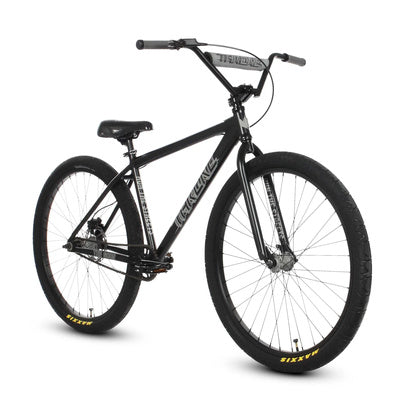
Chromoly steel can use thinner tubing for the same strength, so it usually weighs less than hi-tensile steel in a similar design. Aluminum alloy, like the TIG-welded 6061-T6 used on the Throne Goon, can save weight in the frame itself, although BMX alloy tubes are often built thick for durability. The difference between materials on one frame is typically measured in single pounds, not dozens. Riders curious about the strength side of that trade-off can read up on chromoly versus hi-tensile steel, and anyone planning a custom build can browse BMX frames directly.
Wheels, Tires and Fork Hold More Weight Than the Frame Suggests
The front end deserves the scrutiny. A 29 inch BMX wheel with a double-wall rim and a 2.5 inch tire is a big rotating mass hanging well forward of the rear axle, and the fork and bars add more. Everything out front is load the rider must raise around the rear hub, so a pound there costs more effort than a pound near the cranks.
What the Balance Point Actually Is
The balance point is the moment when the combined weight of rider and bike sits directly over the rear tire’s contact patch. At that instant gravity is not pulling the front wheel up or down, and the bike simply hangs there. Hold that position and the wheelie keeps going. Drift past it and the bike falls backward. Fall short and the front wheel drops.
Why Rider Weight Dominates the Math
Picture a 170 pound rider on a 30 pound bike. The bike makes up only about 15 percent of the total mass. That is an illustration rather than a rule, but it makes the point: the combined center of mass lives mostly around the rider’s hips. Sliding the hips back is what moves the balance point in real time, which is why technique so often outweighs equipment.
How Bike Weight Still Changes the Feel
Bike weight shows up in three ways. First, it sets lift effort, since the front wheel, fork, bars and front half of the frame all pivot around the rear axle. Second, it sets pace. A heavy front end rises and falls slowly, which leaves more time to react, while a light one snaps past the balance point fast. Third, it sets forgiveness, because heavier bikes feel steadier once the front wheel is up but demand more from the legs on the way there. The table below shows how placement changes each effect.
| Where the weight sits | Effect on the lift | Effect at the balance point |
|---|---|---|
| Heavy front wheel, tire and bars | Needs more hip drive and pedal force | Front end must rise higher; feels calm once up |
| Light front end | Pops up with little effort | Passes the point quickly; corrections must be quicker |
| Weight toward the rear | Lifts with less effort | Point arrives at a lower angle |
| Heavier bike overall | More effort to start | Steadier, slower to rise and fall |
Does Weight Change the Balance Point?
Yes, but modestly, and mostly through placement rather than the total. Extra weight in the front wheel, tire or bars pulls the combined center of mass forward, so the front end has to rise higher before the balance point arrives. Extra weight toward the rear does the opposite. The point arrives at a lower angle, which makes the lift feel easier. A bike that is simply heavier all over mainly changes effort and stability, not the angle.
Geometry Often Matters More Than Pounds
Weight shares the stage with geometry. The Sunday High C 29 shows what a wheelie-friendly layout looks like on paper: a 17.5 to 17.75 inch chainstay, a 23.5 inch top tube and a 2.5 inch bottom bracket drop. A long wheelbase and low bottom bracket slow everything down, which widens the window for corrections. Two bikes with identical weights can feel completely different if the geometry differs.
Practical Ways to Tune Weight for Easier Wheelies
Small Changes at the Front End
Swapping heavy bars, grips or a bulky front tire for lighter wheelie bike parts reduces the load the rider has to lift. A rundown of lighter wheels, tires and bars shows which swaps make a noticeable difference without hurting durability.
Moving Weight Back Instead of Adding It
Sliding the saddle back and keeping heavier parts toward the rear helps without adding pounds. Piling dead weight over the rear wheel can make the lift easier, but it also slows pedaling and makes the bike harder to haul up a curb, so the trade-off rarely pays off for everyday riding.
Mistakes Riders Make When Chasing a Lighter Wheelie Bike
Shaving weight sounds simple until the shortcuts show up.
Trading Strength for Grams
Ultralight parts on a bike that gets dropped, hopped and ridden hard tend to bend or crack long before they save any real effort. A wheelie bike takes plenty of abuse at the rear hub and cranks, so those areas reward strength first and weight savings second.
Ignoring Fit
A frame that is too small for its rider has a shorter wheelbase, and a shorter wheelbase narrows the balance window no matter what the scale says. A well-fitted 31 pound bike usually feels easier than a cramped 28 pound one, because the rider can actually reach the balance point and stay there.
Changing Parts Without Rechecking Setup
Every swap shifts mass a little. After a new wheel, tire or bar goes on, the saddle height, saddle position and brake reach deserve a quick recheck so the bike still lets the rider sit back comfortably.
Picking a Wheelie Bike by Weight, Size and Use
Shorter riders and anyone chasing a quick, light feel often start with a 26 inch frame. Taller riders and anyone after long, stable holds usually lean toward a 29 inch wheelie bike. The Throne Cycles Goon 29" C Red Earl brings a 6061-T6 alloy frame, hydraulic brakes and an 810 mm bar, while the Goon Runner White Lux adds a Deore 10-speed derailleur that puts a little more mass at the rear of the bike. Riders still sorting out categories can check which type is the best bike for wheelies before comparing builds in the full range of wheelie bikes at Billet BMX.
FAQs
How much does a 29 inch wheelie bike weigh?
Most 29 inch wheelie bikes weigh roughly 29 to 35 pounds, depending on frame material, tires, brakes and drivetrain. The Sunday High C 29 lists 29.1 pounds.
Does rider weight matter more than wheelie bike weight?
Usually yes. A rider typically makes up most of the combined weight, so hip position moves the balance point far more than any single bike part does.
Does frame material change wheelie bike weight enough to notice?
Sometimes, but the gap is usually a pound or two. Wheels, tires and the fork add more total weight, so frame material matters mostly for long-term strength.
Does extra weight at the rear make the balance point easier to find?
Weight behind the seat tube lowers the front-wheel angle needed for balance, so lifting feels easier. Too much extra mass slows pedaling and makes the bike sluggish.
How can a rider check a wheelie bike’s weight at home?
A rider can hold the bike on a bathroom scale, then subtract the rider’s weight measured alone. Weighing twice and averaging improves accuracy, since cheap scales drift.
Conclusion
Wheelie bike weight matters, just not in the way most riders assume. The scale number shapes lift effort and how calm the bike feels at the top, while the spot where the mass sits decides how far the front end has to rise before it hangs in balance. Rider position still does most of the work. A typical 29 inch build near 30 pounds, a front end kept light, and geometry built for stability make a solid starting formula. From there, a few small changes and plenty of practice do the rest.
Ready to Find the Right Wheelie Bike?
Browse Throne Cycles builds at Billet BMX, ready to ride in 26 and 29 inch sizes.
Shop Throne Cycles


