

Why the Frame Decides How Long a Wheelie Lasts
Every rider who tries a wheelie on a standard BMX runs into the same thing. The front wheel comes up easily, then the whole bike seems eager to fall back down. That is not always a technique problem. A standard BMX frame is built to react fast, turn tight and take hard landings, and none of those jobs ask the frame to sit quietly at a tilted angle for several seconds.
A wheelie bike works from the opposite brief. The frame is meant to buy the rider time: room to correct, a place to anchor the hips and hardware that supports the controls used at the balance point. The measurements behind that, such as chainstay length and head tube angle, are already covered in Billet BMX's guide to wheelie bike frame geometry. This article looks at something different: the physical features a rider can see, touch and ask about before spending money.
Where a Standard BMX Frame Falls Short on Long Holds
Standard BMX frames serve park, street, dirt and flatland riding, and all of those styles reward a compact, quick-reacting build. Billet BMX breaks down what really sets the two bike types apart in a broader comparison. For wheelies specifically, two frame traits stand out.
A Cockpit Built for Tricks, Not Time
Many freestyle setups run the saddle slammed low or skip it entirely. That works for spins and manuals, but it leaves the rider with no comfortable anchor for the hips and no easy way to shift weight back over the rear wheel. A wheelie is a sitting-and-leaning skill, and a frame that discourages sitting makes the balance point harder to hold.
A Rear End That Ignores Brake Control
Some standard frames leave off brake mounts altogether, because plenty of trick riders prefer to go brakeless. That is a fair choice at a skate park. For wheelies, it removes the one control that lets a rider catch the bike when it drifts past the balance point. Without a mount, the safest correction is a bail, and bailing early is the habit that keeps riders from ever learning to hold.
None of this means a standard BMX cannot wheelie. It can. The frame just offers less help once the front wheel is up. Riders who already own a standard BMX can still experiment on flat, open ground, and the experience is useful. It shows exactly which parts of the bike feel missing once the front wheel lifts, and the seat and the brake are usually the first two riders wish they had.
Frame Features That Help a Wheelie Bike Hold the Balance Point
A good wheelie frame does not do the balancing for the rider. It removes small annoyances that break a hold, so the rider's attention stays on hips, pedals and brake.
Dropouts and a Rear Triangle That Stay Put
The rear wheel takes a steady backward pull during a long hold. Solid dropouts, a secure axle and a well-braced rear triangle keep the wheel from creeping out of line, which matters more than it sounds. A wheel that shifts even slightly changes chain tension and the way the bike feels from one session to the next, and a rider chasing consistency cannot learn from a bike that keeps changing.
Brake Mounts and Cable Routing That Work
A proper rear brake mount gives the rider a reliable control at the balance point. Tapping the lever pulls the front wheel back down when the bike goes too far, and the frame's job is to make that response the same every time. Clean cable routing helps too, since a cable that snags or tugs when the bars turn can upset a hold that was otherwise steady. Lever position and cable tension deserve their own attention, and Billet BMX explains the details in its piece on rear brake lever position and cable tension.
A Seat Tube That Gives the Hips an Anchor
On a wheelie bike, the seat tube and saddle are working parts, not decoration. The rider sits back, pushes with the legs and leans against the saddle to keep weight behind the rear axle. A sturdy seat tube, a clamp that does not slip and a well-chosen BMX seat post let the rider fine-tune that hip position in small steps. How much weight actually sits behind the axle is covered separately in the guide to wheelie bike weight and the balance point, so the focus here stays on the hardware that holds the seat in place.
Tubing and Bracing Built for Backward Loads
Wheelie bikes live with a different kind of stress than street or park bikes. The load comes from behind, and a missed catch can drop the rear of the frame onto the pavement. Riders shopping for durability should look for clean, complete welds, gussets where the main tubes meet and a rear end that feels stiff rather than springy. A frame that flexes under that load makes it harder to feel where the balance point sits.
Tire Clearance and Wheel Size That Fit the Frame
Wheelie frames are sized around 26-inch or 29-inch wheels, with enough tire clearance to run a wider, more forgiving tire. A wider tire gives the rider a bigger patch of rubber to balance over, and extra clearance leaves room to adjust pressure without rubbing. Riders curious about the larger option can browse Billet BMX's range of 29 inch BMX bike builds to see how these frames look when complete.
Standard BMX vs Wheelie Bike: A Frame Feature Check
The table below sets the two frame types side by side, using only the features that affect how well a rider can hold the balance point.
| Frame Feature | Standard BMX Frame | Wheelie Bike Frame | Why It Matters at the Balance Point |
|---|---|---|---|
| Seat and hip anchor | Often a low or minimal seat | Full seat tube and adjustable post | Gives the hips a place to push and lean |
| Rear brake mount | Sometimes left off | Typically included | Lets the rider catch a wheelie that goes too far |
| Rear end | Built for quick moves | Braced for steady backward load | Keeps the wheel and chain consistent |
| Tire clearance | Built around smaller tires | Room for wider 26 or 29 inch tires | Adds a more forgiving contact patch |
| Tubing focus | Landing and impact strength | Backward load and tail contact | Keeps the frame stiff when it tilts back |
Frame Only or Complete Bike: What a Rider Should Check
A rider who already owns parts may want to build around a bare BMX frame. That route offers freedom, but it also puts the matching work on the buyer: fork, wheels, brake and seat hardware all need to suit the frame. For anyone new to wheelies, a complete bike removes most of that guesswork.
Before buying either one, a few questions are worth asking the seller:
-
Does the frame include a rear brake mount, and is the cable routing clear?
-
What type of dropouts does it use, and can the axle be secured firmly?
-
How much tire clearance does the frame have for the wheel size?
-
Does the frame accept a seat post that adjusts easily?
-
Is a fork included, and does it match the frame?
A seller who answers these clearly usually knows the frame well, which is a good sign for a bike that will be ridden hard and tipped back often.
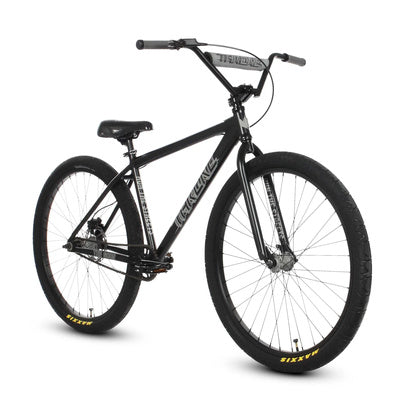
Billet BMX lists much of this detail on its product pages. The Goon, for instance, is a Throne Cycles build shown on the site as The Goon C Shadow Black, with wheel, bar and frame material information laid out so a buyer can compare it against the checklist above. Most ready-to-ride models can also be seen in person at the Whittier, California showroom, which helps riders judge frame size and feel before ordering.
Frequently Asked Questions
Can a standard BMX frame be turned into a wheelie bike?
It can wheelie, but a standard frame often lacks a rear brake mount, seat tube and tire room, so a purpose-built frame is easier to control.
Why does a wheelie bike frame need a rear brake mount?
The rear brake pulls the front wheel back down when the bike drifts past the balance point, so a solid mount gives the rider a repeatable catch.
What should a rider check on a frame before buying it for wheelies?
Check for a rear brake mount, secure dropouts, enough tire clearance, a strong seat tube and clean welds, then confirm the fork and wheel size match.
Does a wheelie bike frame need to be stronger than a regular BMX frame?
It needs strength in different places, mainly the rear triangle, seat tube and tail, because wheelies load the frame from behind and missed catches drop the rear.
Is a frame-only purchase a good idea for a first wheelie bike?
Usually not. A complete bike arrives with matched parts, while a bare frame leaves the rider sorting out fork, wheels, brake and seat hardware first.
The Last Word on Holding the Balance Point
The balance point is still earned on the pavement, one short hold at a time. But the frame sets the stage for that work. A standard BMX frame leaves the rider doing everything alone, while a wheelie bike frame offers a seat to push against, a brake to catch with, a rear end that stays true and tubing that stays stiff when the bike tips back.
Riders ready to practice can pair the right frame with a structured drill plan, such as the one in Billet BMX's balance point training guide. Those who want to compare complete builds can start at Billet BMX and work down to the frame that matches their height, wheel size and riding goals.
Ready to Find a Wheelie Bike That Holds the Balance Point?
Browse complete wheelie bikes at Billet BMX, with free shipping and installment options available.
Shop Wheelie Bikes


