

A loose wheel mid-ride is one of those things that happens fast and goes wrong even faster. Most of the time, it comes down to one small part: the axle nut. Specifically, using the wrong thread size for the axle on the bike. BMX bike axle nut thread sizes are not universal, and getting this wrong does not just cause an annoying fit problem- it can strip threads, misalign wheels, or create a real safety issue during riding.
This guide breaks down the sizing system in plain terms, explains how front and rear axles differ, and covers what to check before buying. Whether someone is building up a new setup or just replacing a damaged nut, understanding axle nut thread size BMX standards saves time and keeps the bike running safely.
Why Thread Size Matters More Than Most Riders Realize
Axle nuts hold the wheel into the frame's dropouts. That is their entire job. But the thread on the nut has to match the thread on the axle exactly- both the diameter and the pitch. If either is off, the nut will not seat correctly. It might feel like it tightens, but it is actually cross-threading or riding loose on mismatched threads.
BMX axle nut compatibility is not complicated once the two main sizing systems are understood. Most modern BMX bikes use one of two axle standards: 14mm or 3/8 inch. Each has specific thread pitch options. Mixing sizes or pitches is the most common cause of axle thread stripping BMX riders deal with- and it is almost always avoidable.
The Two Main BMX Axle Nut Sizes
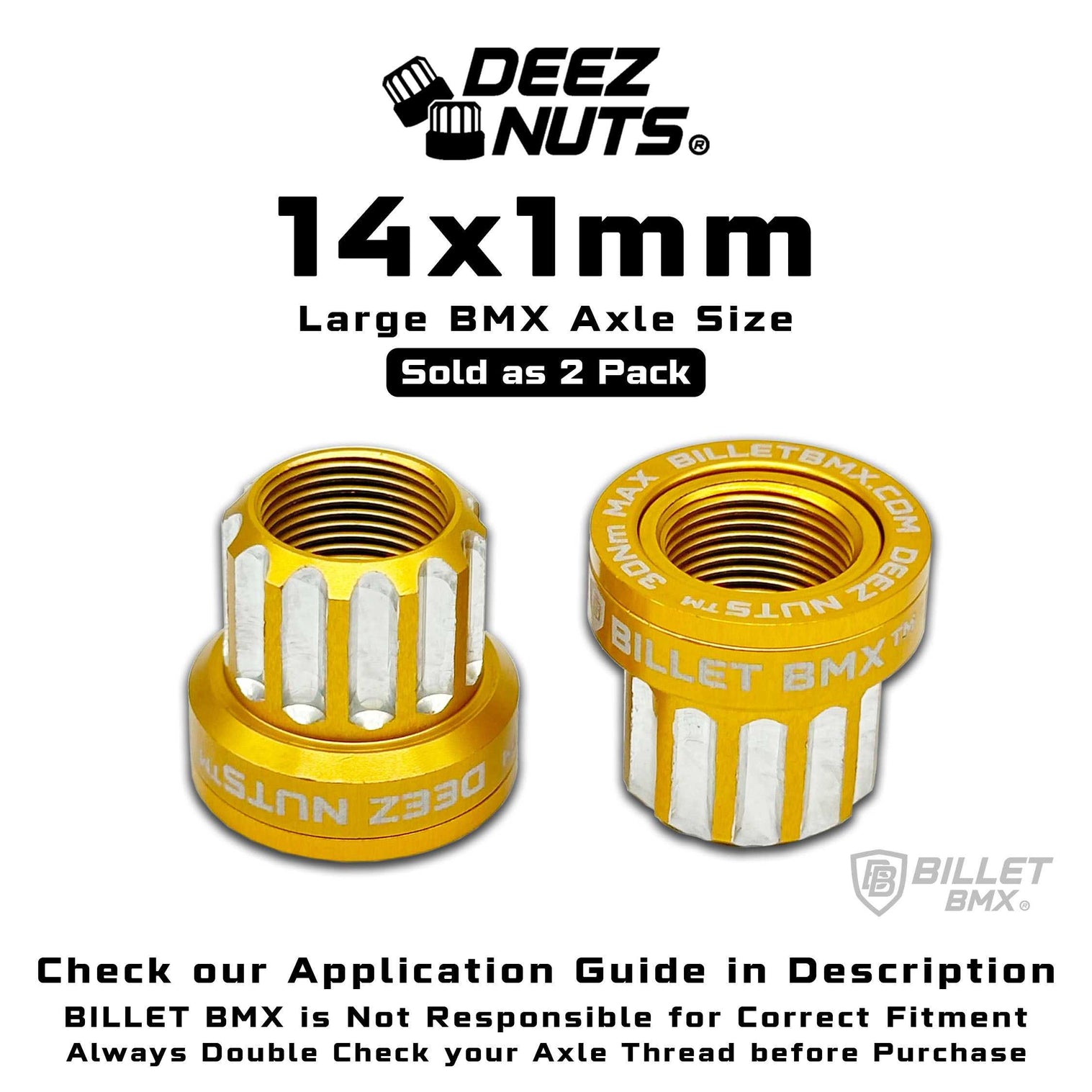
14mm BMX axle nut- This is the current standard for most modern BMX bikes. 14mm refers to the axle diameter. The standard thread pitch for 14mm axles is 1.00mm (written as 14x1mm). This is the most widely produced size and what the majority of complete bikes ship with from brands like GT, Sunday, Kink, and others.
There is also a less common variant: the 14x1.5mm thread pitch. This one shows up mostly on e-bikes and specific models like Zooz rear axles. It looks identical to the standard 14x1mm nut on the outside, so it is easy to grab the wrong one without checking. The axle nut 14x1mm vs 14x1.5mm distinction matters a lot- they are not interchangeable. Billet BMX makes both sizes clearly labeled, which avoids that exact mistake.
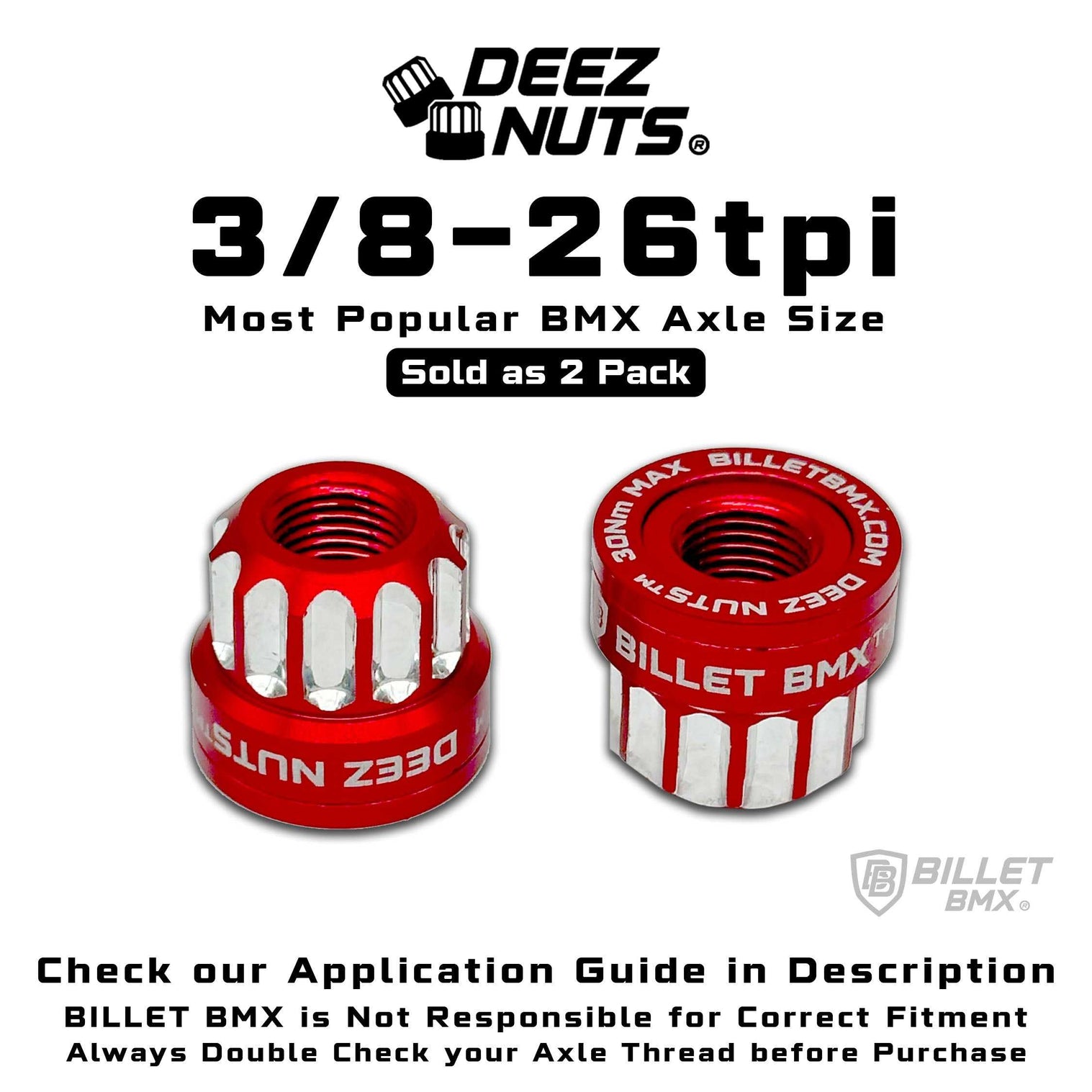
3/8 inch BMX axle nut- The 3/8 inch standard (approximately 9.5mm diameter) is the older and still widely used size, especially for front axles and race-oriented builds. The standard thread pitch is 26 TPI, written as 3/8"-26tpi. This is the most popular BMX axle nut size for front hubs and remains common across park and race setups. Billet BMX lists their 3/8"-26tpi axle nut as one of their highest-volume sellers, and for good reason- front axle replacements are frequent and this size fits the majority of BMX front hubs in use today.

Front vs Rear BMX Axle Size: Are They the Same?
This question comes up often, and the short answer is: not always. Front vs rear BMX axle size can differ depending on the bike's build and intended riding style.
Front axles on many bikes still run 3/8 inch, especially on older frames and race setups where lower weight is a priority. Rear axles on most modern street, park, and dirt bikes have moved to 14mm because the rear wheel takes far more impact- from landings, pedal kicks, and peg grinds- and the larger axle handles stress better.
BMX wheel axle fitment depends on the hub, not just the frame. Checking both the hub thread and the frame's dropout width before ordering is the right move. BMX dropout sizing can also vary- 100mm front and 110mm rear are the standard spacing, but the axle diameter still has to match the hub's thread specification exactly.
What Is a BMX Hub Thread Pitch and Why Does It Matter?
Thread pitch is the distance between each thread groove, measured in millimeters (metric) or threads per inch (imperial). BMX hub thread pitch determines how far the nut travels per rotation and how well it locks under load.
A finer pitch (like 1mm on a 14mm axle) gives more thread engagement per rotation, which can mean better holding power when tightened correctly. A coarser pitch strips more easily if overtightened or if grit gets into the threads. This is one reason precision-machined options from Billet BMX are built to exact thread tolerances- a small variance in pitch machining is enough to cause problems over time.
Axle thread stripping is almost always caused by one of three things: wrong thread pitch, overtightening, or corrosion on steel axle nuts. Aluminum nuts from Billet BMX do not rust, which removes one of those variables entirely.
How to Find the Correct Axle Nut for a BMX Frame
Finding the correct axle nut for a BMX frame is straightforward once the right information is at hand. Three things need to match: axle diameter, thread pitch, and nut width (which affects peg compatibility for street riders).
-
Check the axle diameter. Measure with calipers or look at the bike's spec sheet. Most modern rear axles are 14mm. Most front axles are 3/8 inch or 14mm.
-
Confirm the thread pitch. 14mm axles are almost always 1.00mm pitch unless the bike is an e-bike or specialty model (1.5mm). 3/8 inch axles run 26 TPI as standard.
-
Check peg compatibility. If pegs are part of the setup, the axle nut width has to allow for peg installation. Billet BMX lists peg-compatible options clearly in their product specs.
For a deeper breakdown of sizing charts and compatibility information, the original Billet BMX comprehensive axle nut thread size guide covers the full technical reference in one place.
BMX Axle Nut Sizes at a Glance
| Spec | 14x1mm | 3/8"-26tpi | 14x1.5mm |
|---|---|---|---|
| Axle Diameter | 14mm | 9.5mm (3/8") | 14mm |
| Thread Pitch | 1.00mm | 26 TPI | 1.50mm |
| Common Use | Rear - Street, Park, Dirt | Front - Race, Park, General |
E-Bikes, Zooz Rear |
| Industry Standard? | ✔ Yes | ✔ Yes |
Specialty Only |
| Peg Compatible? | Yes (check nut width) | Yes (check nut width) | Varies |
| Billet BMX Option | Shop 14x1mm | Shop 3/8"- 26tpi | Shop 14x1.5mm |
Material and Design: Why It Goes Beyond Just Sizing
Once the right thread size is confirmed, material becomes the next consideration. Steel axle nuts are common on entry-level bikes and they work fine, but they rust- especially in wet conditions or after washing the bike. Over time, a rusted nut can seize onto the axle and make wheel removal genuinely difficult.
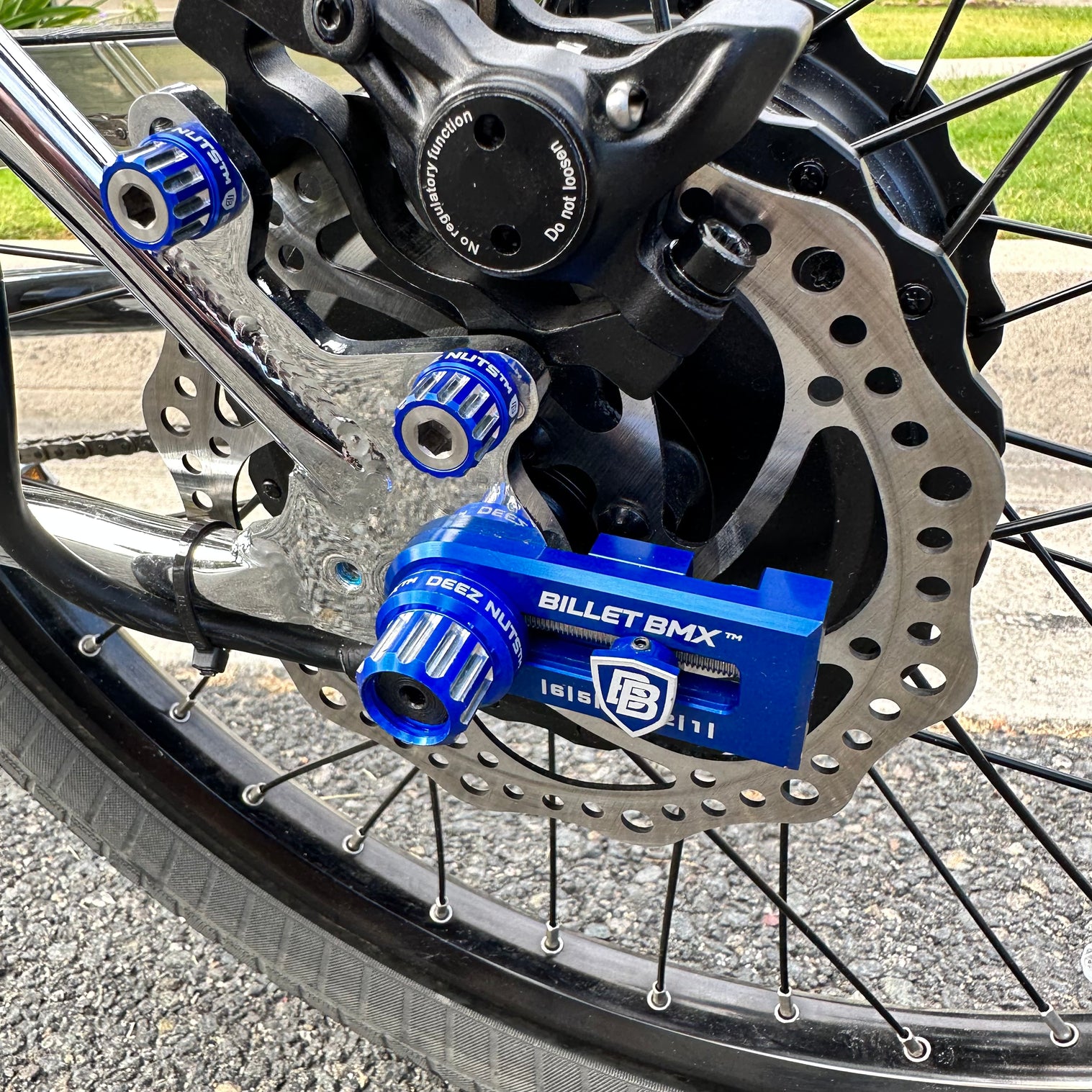
Aluminum nuts do not rust. Billet BMX makes their Deez Nuts from 7075 T6 aluminum- a high-strength aircraft-grade alloy that handles impact loads without adding unnecessary weight. The 12-point design is worth noting too: standard 6-point anodized nuts scratch easily on the first install. The 12-point head eliminates contact with the anodized color surface during tightening, so the finish stays clean.
For riders who care about how the bike looks as much as how it runs, matching the nut color to the rest of the build is easy- Billet BMX offers their axle nuts in multiple anodized colors, and the laser-engraved logo adds a detail that actually holds up over time instead of fading or scratching off.
Billet BMX Axle Nuts - Shop by Thread Size
CNC machined 7075 aluminum · 12-point no-scratch · Multiple colors
A Few Final Things Worth Knowing
Axle nuts are one of those parts that riders often ignore until something goes wrong. They are cheap to replace and quick to install, which makes it easy to get the right ones rather than working with whatever came on the bike originally.
Checking thread size takes about 30 seconds with a thread gauge or calipers. Getting it wrong costs more time than that. And if the goal is a build that holds up- one where the wheels stay where they are supposed to and the hardware does not corrode into place over a season- starting with the right axle nut is an easy first step. Billet BMX makes it straightforward: the sizing is clearly listed, the machining is consistent, and the options cover every standard BMX axle nut size in use today.
Frequently Asked Questions
Q1 What BMX axle nut thread size do most modern bikes use?
Most modern BMX bikes use a 14mm rear axle with a 1.00mm thread pitch (14x1mm). Front axles commonly run 3/8"-26tpi. Always check the hub spec before ordering to confirm the correct BMX axle nut compatibility for your specific setup.
Q2 What is the difference between 14x1mm and 14x1.5mm axle nuts?
Both are 14mm in diameter but have different thread pitches. The 14x1mm is the standard for most BMX rear hubs. The 14x1.5mm is a specialty size used on e-bikes and Zooz rear axles. They look identical but are not interchangeable — using the wrong pitch will strip the axle threads.
Q3 Can I use the same axle nut on the front and rear of a BMX?
Not always. Many bikes run 3/8"-26tpi on the front and 14x1mm on the rear. Check each axle separately before ordering. Getting both sizes right ensures proper BMX wheel axle fitment and keeps the wheels secure under riding stress.
Q4 Why do BMX axle threads strip and how can it be prevented?
Thread stripping usually comes from using the wrong pitch, overtightening, or rust on steel nuts. Precision-machined aluminum axle nuts like Billet BMX Deez Nuts eliminate rust entirely and are built to exact thread tolerances, which prevents stripping from the start.
Q5 Are Billet BMX axle nuts compatible with pegs?
Yes. Billet BMX offers peg-compatible options in both 14mm and 3/8" sizes. Nut width is the key factor for peg fitment, so checking the product spec page before ordering confirms the right match for any street setup running pegs.


