

A rider walking into a shop looking for bmx racing parts often assumes a race bike and a street bike share most of the same components with a few tweaks here and there. That is not really true. The two builds are engineered around opposite problems - one is built to win a 30-second sprint around a dirt track, the other is built to survive years of curb hits, rail grinds and stair sets. Once the differences click, picking the right race bmx parts for a specific goal gets a lot easier.
Frame Geometry Built Around The Job
Race frames are long, light and stretched out. A taller front end and a longer top tube help a rider generate speed out of the gate and stay stable while pumping down straights at 25+ mph. Chromoly tubing is kept as thin as possible without sacrificing strength, because every gram counts when eight riders are fighting for the same line into the first turn.
Street and park frames flip that priority. They are shorter, lower, and reinforced at the head tube and dropouts to handle repeated impact from drops, grinds and case-outs. A street frame doesn't need to be aerodynamic - it needs to take a beating and keep the geometry tight for technical tricks. Billet BMX sees this split constantly in customer builds: racers ask about weight savings first, street riders ask about durability first.
Gearing And Sprockets For Racing Versus Street
Gear ratio is one of the clearest lines between the two disciplines. Racers commonly run a 41/16 or 43/16 setup for maximum top-end speed on a straightaway, since track racing rewards raw acceleration and sustained sprint power over technical control.
Street and park riders go the other direction, running smaller sprockets in the 25 to 28 tooth range paired with a 9-tooth driver. A smaller sprocket keeps pedal strikes to a minimum on ledges and rails, and it drops rotating weight, which matters when a rider is throwing the bike into spins and flips. Billet BMX stocks CNC sprockets across both ranges, so the choice usually comes down to riding style rather than part availability.
Wheels And Tires Made For Different Surfaces
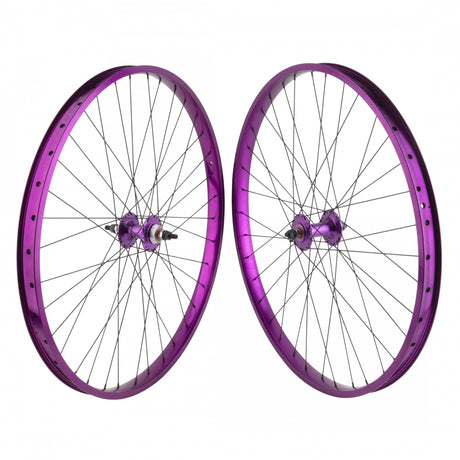
Race wheels are built for speed and low rolling resistance. Narrower tires with a smooth or lightly knobbed tread reduce drag on packed dirt, and race-specific rims are often laced with fewer spokes to save weight, since track riding puts less lateral stress on the wheel compared to grinding or landing drops.
Street wheels take the opposite approach. Wider tires with more tread grip pavement and absorb small impacts, and rims are built heavier with a higher spoke count to survive stair sets, gaps and grinds. A street rider running race wheels would find them flexing and denting quickly, while a racer on street wheels would feel the extra rotating weight slowing every lap.
Brakes A Decision That Splits The Two Disciplines
Most modern street and park riders run brakeless, since a rear brake gets in the way of barspins and tailwhips and simply is not needed for grinding or jumping. Race bmx parts tell a different story - nearly every track racer runs a rear brake, since controlling speed into a sharp turn or a rhythm section is part of racing safely and competitively. That single component decision changes how the rest of the cockpit is built, from lever placement to cable routing.
Cranks, Pedals And Cockpit Setup
Race cranks favor a stiffer, lighter design since power transfer during a sprint start matters more than surviving repeated impact. Pedal choice tends to be smaller platform pedals with less material, again chasing lower weight.
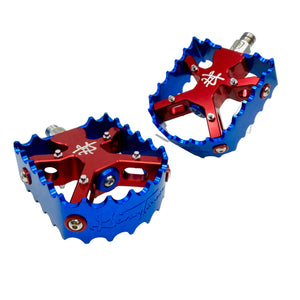
Street setups lean toward stronger three-piece cranks and larger platform pedals with grippier pins, since a bent crank arm or a slipped pedal mid-trick is a bigger problem than a few extra ounces. Billet BMX's cockpit lineup - stems, bars and pedals - reflects that split, offering both lightweight race-oriented options and heavier-duty street parts built to take a hit.
Choosing The Right BMX Racing Parts For Your Riding Style
The honest answer for most riders is that a hybrid setup rarely performs well in either discipline. A racer running street gearing will get smoked off the start line. A street rider running race wheels will be replacing bent rims within a month. Building a bike around one clear purpose - track speed or street durability - produces a machine that actually feels right under a rider's specific style.
Anyone comparing bmx racing parts side by side should start with how the bike will actually be ridden most often, then build outward from frame geometry to gearing to wheels. Billet BMX carries components suited to both ends of that spectrum, which makes it easier to source a full setup instead of mixing and matching from multiple vendors.
Track Race Bikes vs Street Builds
| Component | Track Race Build | Street Build |
|---|---|---|
| Frame | Long, light, stretched geometry | Short, reinforced, impact-ready |
| Sprocket | 41T-43T for top speed | 25T-28T for clearance |
| Wheels | Narrow, low rolling resistance | Wide, high spoke count |
| Brakes | Rear brake standard | Usually brakeless |
| Cranks/Pedals | Lightweight, stiff for sprints | Heavy-duty, grippy pins |
Summary
Track and street BMX may share a wheel size and a chain, but almost everything else about how the parts are engineered points in different directions. Understanding those differences before buying race bmx parts saves money and prevents the frustration of gear that fights the riding style instead of supporting it. Whether the goal is shaving tenths of a second off a lap time or landing a rail grind clean, Billet BMX stocks racing bmx components built for the specific job at hand.
Frequently Asked Questions
What is the biggest difference between race and street BMX parts?
Race parts prioritize low weight and speed, using lighter frames and larger sprockets. Street parts focus on durability with reinforced frames, wider tires, and stronger cranks built to withstand repeated hard impacts and grinding.
Do BMX racers need a rear brake?
Yes. Most BMX racers use a rear brake for controlled braking through turns and rhythm sections, while many street and park riders prefer a brakeless setup to perform barspins, tailwhips, and other freestyle tricks.
What sprocket size works best for BMX racing?
Most BMX racers run a 41 to 43 tooth sprocket paired with a 16 tooth driver for higher top-end speed. Street and park riders generally choose 25 to 28 tooth sprockets for reduced weight and improved ground clearance.
Can street BMX wheels be used for racing?
Not effectively. Street BMX wheels are heavier and built with more spokes for impact resistance, which increases rotating weight and reduces acceleration compared to dedicated race wheelsets.
Where can riders find reliable BMX racing parts?
Billet BMX offers a wide selection of BMX racing and street components, including frames, sprockets, wheels, handlebars, stems, and cockpit parts to help riders build a bike that matches their riding style.


