

Gearing rarely gets the attention that frames, bars, and wheels do, yet it decides how a wheelie bike launches, how long a rider can hold the front end up, and how tired the legs feel after a session. Billet BMX stocks the drivetrain parts that make these changes possible, so this guide lays out the math in plain terms, offers a practical chart for 29-inch builds, and explains how to land on a combination that fits the way a rider actually pedals.
How Wheelie Bike Gearing Works
Every drivetrain comes down to two toothed wheels connected by a chain. The chainring, called a sprocket by most BMX riders, bolts to the crank. The cog sits on the rear hub or freewheel. The relationship between those two parts determines how far the bike rolls for each full turn of the cranks, which is the whole story behind wheelie bike gearing.
The Ratio Formula
Divide the chainring teeth by the cog teeth. A 36-tooth chainring with a 16-tooth cog produces a ratio of 2.25, meaning the rear wheel turns 2.25 times for every crank revolution. A higher number is a taller gear: harder to get moving, quicker once rolling. A lower number is a shorter gear: easier launches, and more pedal strokes at the same speed.
Gear Inches Make Comparisons Fair
Ratio alone ignores wheel size, so riders often multiply it by the wheel diameter to get gear inches. That same 2.25 ratio equals roughly 65 gear inches on a 29-inch wheel and about 58 on a 26-inch wheel. It explains why two bikes with identical sprockets can feel different, and why a rider moving between sizes may need new tooth counts. Anyone still deciding on wheel diameter can compare the options in this 26 vs 27.5 vs 29 inch wheelie bike breakdown.
Wheelie Bike Gear Ratio Chart for a 29-Inch Wheel
The chart covers combinations that show up often on BMX-style builds. Speeds assume a 29-inch tire diameter and steady pedaling. Real rolling diameter runs slightly smaller, so actual speeds will come in a touch lower.
| Chainring / Cog | Ratio | Gear Inches | MPH at 50 rpm | MPH at 70 rpm | Best Fit |
|---|---|---|---|---|---|
| 33/16 | 2.06 | 59.8 | 8.9 | 12.5 | Easiest launches |
| 36/16 | 2.25 | 65.2 | 9.7 | 13.6 | Learning the balance point |
| 39/16 | 2.44 | 70.7 | 10.5 | 14.7 | All-round street riding |
| 44/16 | 2.75 | 79.8 | 11.9 | 16.6 | Cruising, threaded freewheel |
| 25/9 | 2.78 | 80.6 | 12.0 | 16.8 | Compact setup, 9T-capable driver |
| 28/9 | 3.11 | 90.2 | 13.4 | 18.8 | Flat ground, long runs |
Reading the Chart
Look at the 25/9 and 44/16 rows. They land on almost the same ratio, yet they are very different pieces of hardware. The 25/9 pairing uses a small, tucked-in chainring and a 9-tooth driver, which usually calls for a cassette-style hub. The 44/16 pairing uses a larger chainring and a standard threaded freewheel. Same feel, different parts, different clearance, which is why any bmx gear ratio decision should start with what the hub will accept.
The top rows are where most learners start. A 33/16 or 36/16 gives a rider more pedal revolutions at a given speed, and that tends to make the stroke smoother and the front wheel easier to hold.
Matching Gearing to Pedaling Speed at the Balance Point
A held wheelie happens at a modest speed, somewhere between a brisk jog and an easy cruise. Pedaling at that speed is slow work, since the rider is balancing weight over the rear axle while feeding in small amounts of power. The question is how fast the cranks turn at that moment, and the answer comes straight from the ratio.
The Cadence Formula
Cadence in rpm equals speed in mph times 1,056, divided by the ratio times the wheel diameter times 3.14. The 1,056 is simply how many inches a bike covers per minute at one mile per hour.
Worked Examples
Take two sample speeds for the math: 8 and 10 mph on a 29-inch wheel.
-
25/9 gives roughly 33 rpm at 8 mph and 42 rpm at 10 mph.
-
36/16 gives roughly 41 rpm at 8 mph and 52 rpm at 10 mph.
-
33/16 gives roughly 45 rpm at 8 mph and 56 rpm at 10 mph.
A cadence in the low 30s means each pedal stroke lasts a long time. Every push has to be well timed, because a heavy stroke at the wrong moment can launch the front end past the balance point. A cadence in the 40s or 50s breaks the same effort into shorter, more even pulses, which gives a rider more chances per second to feather the pedals. Personal preference and leg strength still matter, so these numbers are a starting point rather than a rule.
Choosing Chainring Size and Cog by Rider Goal
Riders Learning the Balance Point
A ratio near 2.0 to 2.4 keeps launches easy and cadence comfortable. Pairs such as 33/16 or 36/16 fit that range. The goal here is repetition, and a shorter gear lets a beginner practice lifts without grinding. Riders still working on technique can pair this chart with the wheelie bike setup guide on fit, gearing, and contact points.
Street Cruising and Everyday Riding
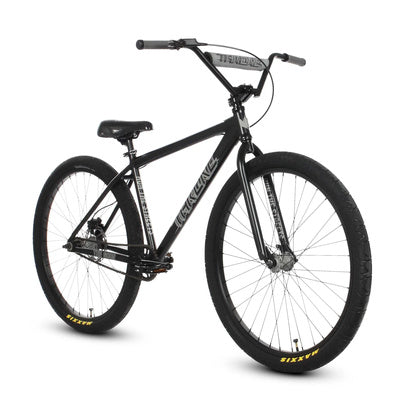
For mixed riding with stoplights, short hills, and sudden bursts of speed, a ratio around 2.4 to 2.8 usually keeps both low-speed control and top-end spin in a good place. Options like 39/16, 44/16, or 25/9 sit in that window. Riders weighing small sprockets against larger ones can see how tooth counts compare in this BMX sprocket sizes breakdown.
Long Runs, Flat Ground, and Heavier Loads
Open pavement and long, steady wheelie runs reward a taller gear such as 28/9, because the rider spends less time spinning out. Hills and heavier riders push the other way, since a short gear keeps the legs from stalling under load. A rider who wants both ends of that range is better served by a drivetrain with multiple gears, and the single speed versus geared comparison for wheelie bikes explains the trade-offs. Anyone ready to shop that route can browse geared bikes directly.
What Changes When the Gearing Changes
Chain Length and Tension
Every tooth added or removed shifts the chain path. A larger chainring or a smaller cog calls for a longer chain, while the reverse leaves slack that can hop off the teeth. Bikes without horizontal dropouts depend on a tensioner to keep that slack under control, and the single speed chain tensioner setup guide walks through the adjustment. The BMX chain tensioners collection covers axle sizes for most common builds.
Cog and Freewheel Compatibility
The rear end limits how small a cog can go. Threaded freewheels commonly start around 13 or 14 teeth, while cassette-style drivers can drop to 9. Riders planning to alter the rear half of the ratio can browse cogs, freewheels, and drivers, including options like the Theory Rattlesnake freewheel. Checking the tooth count on each product page before ordering avoids guesswork. For help telling freewheels from freecoasters, the BMX hubs, freecoaster, and freewheel guide covers the differences.
Chainring and Crank Fit
Changing chainring size means checking the spider pattern and bolt style on the crank. The BMX gears, spiders, and bolts collection helps match a new sprocket to the existing hardware. Riders replacing the whole crank at the same time can look at a set like the Profile Racing chrome moly race crankset.
Common Ratio Mistakes Worth Avoiding
Copying a friend’s setup is the most common shortcut, and it rarely transfers cleanly. A heavier rider, a different wheel size, or a longer crank arm all change how a ratio feels, even when the tooth counts match. Another slip is chasing top speed on a bike built for balance work. A tall gear looks impressive on paper, but a wheelie bike spends most of its life at low speed, where a shorter gear gives more control. Finally, some riders ignore tire diameter. A fat 29-inch tire and a slim one differ enough to nudge gear inches by a few points, which can be the gap between a comfortable cadence and a clumsy one.
Testing a New Setup Without Guessing
Changing one number at a time keeps results readable. A rider who swaps both chainring and cog in one afternoon cannot tell which change helped. A practical routine is to change one part, ride the same flat stretch for a few sessions, and note how launches and balance-point cadence feel. If the pedals spin out early, the gear is too short. If the front wheel will not lift without a hard stomp, the gear is too tall. Keeping a short note of each change, the speed ridden, and how the bike felt turns guesswork into a record that makes the next adjustment far easier.
Anyone planning a fresh build around a wheelie bike can set the ratio before ordering parts, which saves trial and error later.
Frequently Asked Questions
1. What gear ratio is best for a beginner wheelie bike?
A good starter ratio sits near 2.0 to 2.4, such as 33/16 or 36/16. Shorter gears ease launches and let beginners practice lifting the front wheel.
2. How is a BMX gear ratio calculated?
Divide chainring teeth by cog teeth. A 36-tooth chainring with a 16-tooth cog gives 2.25, meaning the rear wheel turns 2.25 times for every crank revolution.
3. Is a smaller or larger chainring better for wheelies?
Learners usually do better with a smaller chainring or larger cog, since the lower ratio eases launches. Taller ratios suit flat ground and long runs.
4. Can a rider change the cog on a wheelie bike?
Often yes, if the hub accepts it. Threaded freewheels typically start near 13 or 14 teeth, while cassette-style drivers can run smaller, so check compatibility before ordering.
5. Does changing chainring size affect chain length?
Yes. Changing chainring or cog size alters chain path and length. A larger chainring needs a longer chain, and a tensioner manages slack on some bikes.
Conclusion
A wheelie bike rewards the rider who treats gearing as a tuning tool rather than an afterthought. The formula is short: chainring teeth divided by cog teeth, multiplied by wheel diameter for gear inches, then converted to cadence at the speeds that matter for balance. Lower ratios favor learning and hills. Taller ratios favor flat runs and cruising speed. Somewhere in the middle sits a setup that matches each rider’s legs, weight, and habits. Start with one change, test it, and let the numbers guide the next move.
Ready to change the ratio?
Browse BMX cranks and chainrings at Billet BMX and dial in the right gearing.
Shop BMX Cranks


