
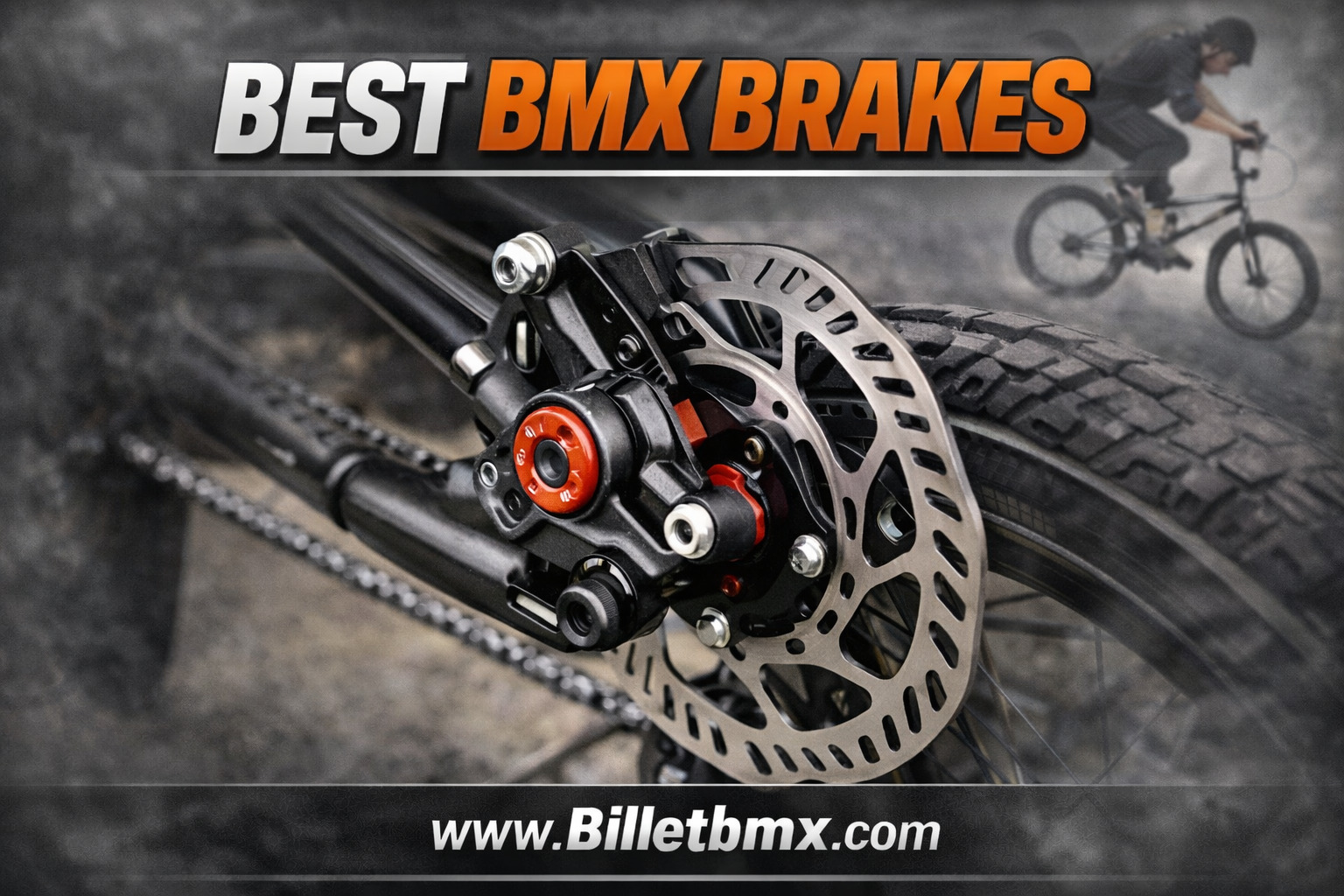
You do not really think about your brakes until your brakes let you down at the possible moment. Your brakes let you down when you are going at a speed in the middle of a trick and in the middle of feeling confident. Then your lever becomes soft. Your stomach drops. You feel a moment of panic. This moment of panic is completely avoidable. It starts with understanding what your brakes are.
What Actually Makes a BMX Brake Good
Forget the marketing language for a second. Best BMX Brakes does three things well: it stops you when you need it, it feels consistent every time you squeeze the lever, and it doesn't need constant fiddling to stay that way.
Stopping power is obviously the main thing. But here's what most people miss: stopping power on a dry, clean surface isn't the real test. The real test is how your brake performs when the rim is dusty, when you've been riding for two hours, or when it's slightly damp outside. That's where cheap setups fall apart.
Billet BMX components are machined from billet aluminium, which removes the inconsistencies you get from cast parts. The brake arms don't flex under load, the pivot points stay tight, and the whole system behaves predictably ride after ride.
BMX Brakes for Beginners : The Only Guide You Need
If you're just starting out, don't overthink this. A rear U-brake setup is where almost every BMX rider begins, and for good reason it's simple, it's reliable, and when something goes wrong you can diagnose it in about thirty seconds.
Run a rear brake only to start. Front brakes on BMX bikes have caught out plenty of experienced riders, let alone beginners. The front wheel locking unexpectedly throws you forward fast, and it's not a lesson you want to learn the hard way.
A complete brake kit lever, cable, housing, and caliper together is the right starting move. Mix-and-match parts from different setups as a beginner usually means compatibility headaches and hours of frustration.
How to Adjust BMX Brakes
This is the most searched topic in BMX maintenance for a reason.
Start with the pads:
Everything else is secondary. Get them sitting evenly on the rim a millimetre above the edge on both sides, with the pad face fully contacting the braking surface. Once pads are right, half your adjustment work is done.
Move to cable tension:
Squeeze the lever firmly. It should engage the brake solidly before it gets anywhere near the handlebar. If you're pulling all the way back before anything happens, wind out the barrel adjuster counter-clockwise.
Centre the caliper:
This is where a lot of riders give up, but it's actually simple. Loosen the mounting bolt slightly, hold the lever in, and retighten while the brake is engaged. On most U-brake designs these self-centred arms.
Always do a rolling test:
Push the bike forward and hit the brake. The wheel should stop cleanly with firm but not extreme lever pressure. If it feels right, you're done. Spend ten minutes doing this every few weeks and your break will never catch you out.
Best BMX Brakes for Street Riding
Street riding is the hardest environment for brakes. Dust, grit, kerbs, and the kind of unpredictable hard stops that skatepark riding just doesn't prepare you for.
Low-profile calipers are important for street; anything that sticks out too far from the frame becomes a target for ledges and kerb edges. You want the setup sitting tight and clean.
Riders using Billet BMX street brake kits consistently report that the one improvement they didn't expect was how the brakes held up during long sessions without the fade that cheaper aluminium setups develop as they heat up.
BMX Brakes vs No Brakes
This debate will never fully end in BMX culture, and honestly it doesn't need to. Both choices are valid in the right context.
Brakeless riding makes sense if you're an experienced rider doing flat-ground freestyle work in controlled environments where you know the terrain and you're not interacting with pedestrians or traffic. The weight saving is real, and for specific trick styles the cleaner setup genuinely helps.
Brakes make sense for almost everyone else. Street riding in public spaces, riding with other people, riding somewhere you're not completely familiar with all of those situations benefit from reliable stopping power.
BMX Brake Caliper Upgrade : When Your Stock Caliper Is Holding You Back
Factory calipers on mid-range BMX bikes are almost always the weakest link. They're made from cast metal with unpredictable flex under pressure, and you feel it as that soft, spongy sensation in your lever even when your cables and pads are perfectly adjusted.
If you've replaced your pads, replaced your cable, dialled in your tension, and your brake still doesn't feel sharp and immediate your caliper is the problem. Particularly if you can see the caliper arms visibly bending when you look at them during hard braking.
Upgrading to a machined single-piece caliper removes those flex points entirely. The lever feel changes immediately, more direct, more confident, more linear.
Conclusion
Good BMX brakes make a big difference in how your bike feels and performs. When the braking system is strong and properly adjusted, riders gain better control and confidence during every ride. From beginners learning basic riding skills to experienced riders performing tricks, reliable brakes help keep the bike safe and responsive.
Choosing quality components and checking them regularly can prevent problems and improve overall performance. At Billet BMX, riders can find durable brake parts designed for real BMX riding. The right setup helps every rider enjoy smoother and safer sessions on the street, park or track.
FAQs :-
Do BMX bikes need both front and rear brakes
Most BMX riders use only a rear brake for better balance and safer control.
Why do BMX brakes make noise
Noise usually happens when brake pads are worn dirty or positioned incorrectly.
How tight should BMX brake cables be
Brake cables should allow the lever to move halfway before strong braking begins.
Can you ride a BMX bike without brakes
Some riders do but brakes are safer especially when riding in public areas.
How long do BMX brake pads last
Brake pad lifespan depends on riding style but regular checks are always recommended.


