

Most riders don't think about their handlebar grips until something goes wrong. A grip tears mid-session. The surface hardens after a few months and stops feeling tacky. Or worse - a grip spins on the bar at exactly the wrong moment and sends a trick sideways. These aren't freak accidents. They're predictable failures that happen when riders settle for the wrong grips or ignore worn ones for too long.
Handlebar grips are the only point of contact between a rider's hands and the bike. Every input - steering, pulling up for jumps, absorbing landings - goes through those grips. When they're right, a rider barely notices them. When they're wrong, everything from trick control to wrist fatigue gets worse. Understanding what separates a quality grip from a cheap one - and what Billet BMX grips bring to the table - changes how riders think about one of the most affordable and impactful upgrades on any BMX build.
The Real Problem With Most Handlebar Grips
The BMX accessories market is flooded with grips. Walk into any shop or scroll through any online retailer and there are dozens of options at prices ranging from a few dollars to thirty or more. The problem isn't a lack of choice - it's that most riders have no way to evaluate grips before they buy, so they default to whatever looks good or costs the least.

Cheap handlebar grips fail in predictable ways. The compound hardens fast - sometimes within a few weeks of regular riding in heat or sun exposure. A grip that feels soft and tacky in the store becomes slippery and firm after a handful of sessions. The flanges crack or tear when they catch on a rail or ledge. The inner sleeve spins inside the grip material when the lock ring or end plug isn't doing its job properly.
None of these failures are dramatic. They happen gradually, and most riders adapt without realizing how much control they've quietly given up. Switching to a grip that actually holds up reveals the difference immediately.
What to Look for in a BMX Handlebar Grip
There are four things that separate a grip worth buying from one that will disappoint within a season.
Compound softness and durability. The best BMX grips use a soft compound that stays soft. This isn't as common as it should be - many manufacturers use a softer outer layer over a harder base, which means the tactile feel degrades as the softer layer wears through. A grip that stays consistent in feel from the first session to the hundredth is the standard worth looking for.
Flange design. The flanges on either end of the grip serve two purposes: they prevent the hand from sliding off the end of the bar, and they add a small but real amount of vibration dampening on rough surfaces. Flanges that are too thick add bulk that some riders find uncomfortable. Flanges that are too thin don't do the job. The right balance is a matter of preference, but the structural integrity of the flange matters regardless - it needs to handle the lateral stress of tricks without cracking.
Inner diameter and fit. BMX handlebars use either 7/8 inch or 22.2mm outer diameter tubing - these are effectively the same spec. Most BMX-specific handlebar grips are made to fit this diameter. A grip that fits too loosely will rotate even with a lock ring in place. A grip that fits too tightly is hard to install correctly and can split along the inner sleeve under heavy use.
Length. Grip length affects how much of the bar a rider can use as a comfortable contact surface. Standard BMX grips run around 143mm to 165mm. Riders who do barspins often prefer shorter grips that leave more clearance at the end of the bar. Riders focused on street grinding and manual work often prefer a longer grip for more hand placement options during sessions.
Why Billet BMX Grips Are Built Differently
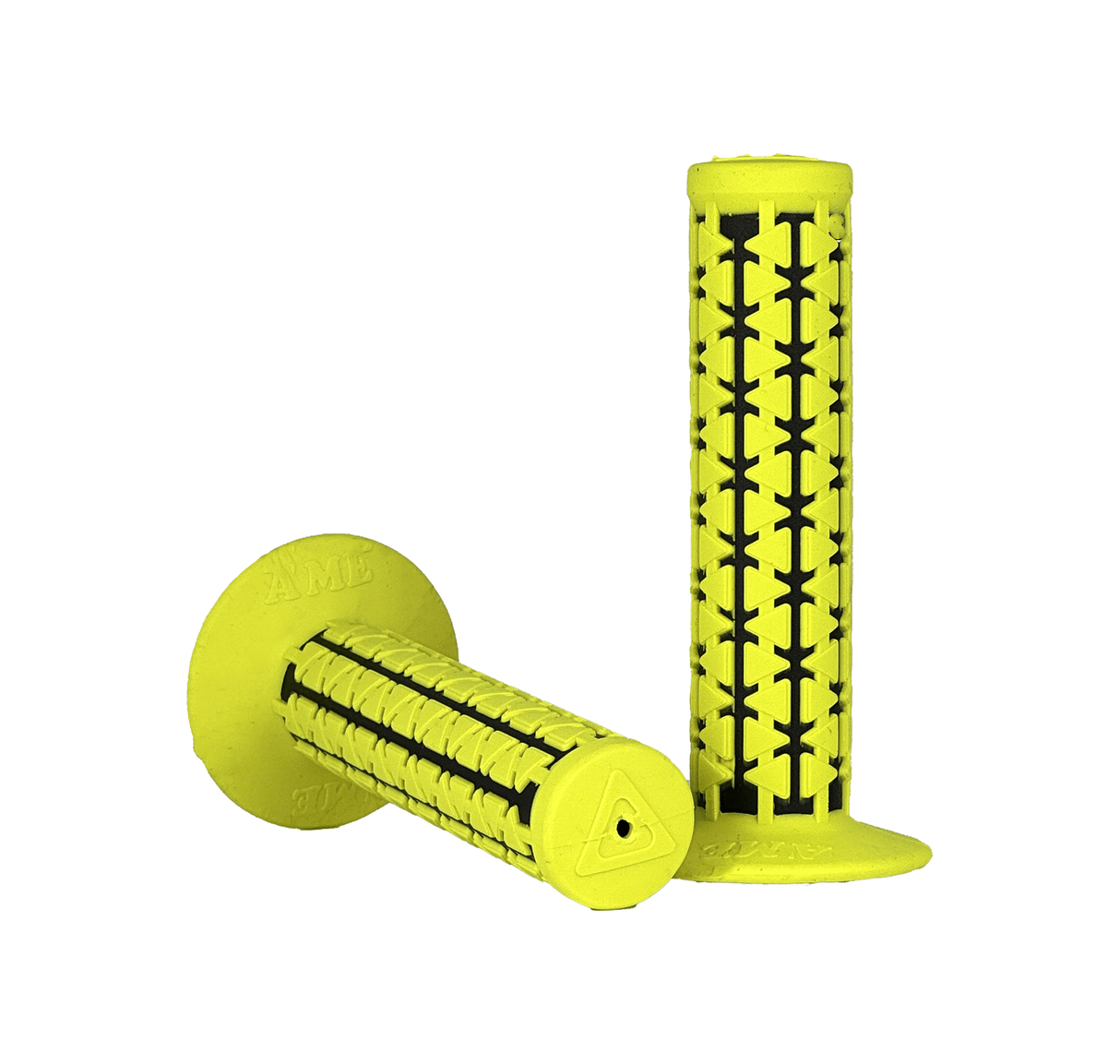
Billet BMX grips are designed with real riding feedback rather than mass-market specifications. The Ultra Grips Diamond Series is the standout product in the lineup - a premium handlebar grip built with a super soft compound that maintains its feel through extended use without hardening or degrading the way cheaper alternatives do.
The diamond pattern cut into the grip surface serves a functional purpose beyond aesthetics. It creates multiple small contact edges that improve grip retention even when hands are sweaty, dusty, or wet from a light rain session. Riders who've switched from standard smooth or lightly textured grips consistently notice the difference in how much less they have to consciously squeeze the bar to maintain control.
The Billet BMX Ultra Grips are compatible with 7/8 inch and 22.2mm handlebars - the standard spec for BMX bikes, mountain bikes, beach cruisers, e-bikes, scooters, and most bicycles. That broad compatibility means riders don't have to worry about fit regardless of what they're running. The grip is also sold as a pair with donut rings included, which eliminates the separate accessory purchase that many grip sets require.
For riders building a dedicated BMX setup or upgrading an existing one, Billet BMX grips sit at a price point that reflects genuine quality without the premium markup that some boutique grip brands charge for comparable performance. The value shows up in longevity - grips that don't need replacing every few months are cheaper in the long run regardless of upfront cost.
How to Install Handlebar Grips the Right Way
Even the best grips fail early if they're installed incorrectly. The most common mistake is using water or saliva to slide the grip onto the bar - both leave residue that reduces long-term grip retention and can cause rotation under load.
The correct method uses isopropyl alcohol or compressed air to seat the grip. Isopropyl alcohol works as a temporary lubricant that evaporates completely within minutes, leaving the grip bonded tightly to the bar surface. Compressed air works even faster - inject it under the lip of the grip and it slides on cleanly without any liquid residue.
Once the grip is seated, end plugs or bar ends should be installed immediately to protect the open end of the handlebar and lock the grip in place. A grip that's correctly installed with end plugs and seated with alcohol or compressed air doesn't rotate, doesn't slide, and doesn't pull off under impact. It just works.
Checking grips for rotation before every session takes about five seconds. Grab each grip and try to rotate it on the bar. If it moves, it needs to be reseated or replaced before riding. A grip that spins during a trick is a safety issue, not just an inconvenience.
When to Replace Handlebar Grips
Grips are consumable parts. The question isn't whether to replace them - it's knowing when. Riders who wait until a grip is visibly destroyed are usually riding on compromised control for weeks before that point.
Three clear signals that grips need replacing: the surface no longer feels tacky when rubbed with a dry hand, visible tears or cracks have developed in the flange or grip body, or the grip has lost enough thickness that the underlying sleeve is becoming noticeable under hand pressure. Any one of these signals is enough reason to swap them out. Grips are one of the cheapest parts on any BMX bike - waiting to replace them makes no sense when the cost of a quality replacement is this low.
Closing
Handlebar grips don't get the attention they deserve in most BMX build conversations. But they affect every single thing a rider does on the bike - and the difference between grips that work and grips that fail quietly shows up in control, confidence, and consistency session after session. Getting them right is one of the easiest and most immediate improvements any rider can make.
Billet BMX grips are built for riders who want performance that lasts without constantly shopping for replacements. For anyone tired of grips that harden, spin, or tear before their time, the upgrade is straightforward - and available at Billet BMX.
Frequently Asked Questions
Q1: Why do my handlebar grips keep getting slippery after a few weeks of riding?
Most grips use a soft outer layer over a harder base compound. As the softer layer wears through from regular use and sun exposure, the grip surface hardens and loses traction. Switching to a single-compound soft grip like Billet BMX grips solves this problem at the source permanently.
Q2: What is the correct way to install BMX handlebar grips without them spinning?
Use isopropyl alcohol or compressed air to seat the grip - never water or saliva, which leave residue that reduces adhesion. Once the grip is seated, install end plugs immediately to lock it in place. A correctly installed grip with end plugs will not rotate under normal riding conditions.
Q3: How long should a quality pair of BMX handlebar grips last?
A quality soft compound grip used in regular riding conditions should last four to eight months before the surface feel degrades noticeably. Riders who session daily in heat or abrasive conditions may need to replace grips sooner. Cheap grips often need replacement within six to eight weeks of regular use.
Q4: Are Billet BMX grips compatible with all BMX handlebars?
Yes. Billet BMX Ultra Grips are compatible with 7/8 inch and 22.2mm outer diameter handlebars - the standard spec used on BMX bikes, mountain bikes, beach cruisers, e-bikes, and most bicycles. The grip fits most standard BMX handlebar setups without any modification or adapter requirement.
Q5: What grip length should BMX riders choose for street riding versus barspins?
Street riders who focus on grinds and manuals generally prefer longer grips around 155mm to 165mm for more hand placement options. Riders who prioritize barspins typically choose shorter grips around 143mm to 150mm to maximize bar clearance and reduce the chance of hands catching during spin tricks.


