

On a trick bike, grip wear is mostly about impact and scuffing. On a wheelie bike, it is about load that never lets up. A rider holding the balance point is leaning on the bars, pulling them toward the chest, and making constant tiny corrections. Every one of those corrections runs through the grip, and any slack between the rubber and the bar shows up as a twist.
Bike size adds to it. A wheelie bike usually has a longer wheelbase, a taller front end, and a rider position that sits farther back than a standard BMX.
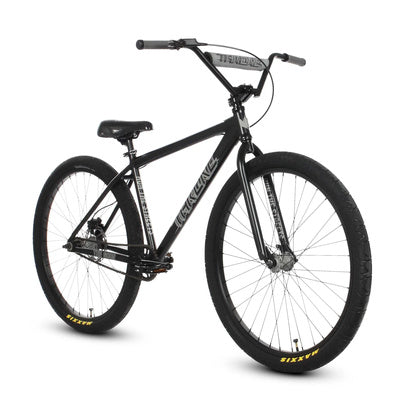
Billet BMX riders who build wheelie bikes tend to run into the same three complaints: grips that rotate under pull, grips that harden hands during a long ride, and grips that go slick the moment a palm gets damp.
What the Grip Actually Has to Survive
Constant pull instead of quick push
Rotation is the classic failure. When a rider pulls back and twists the wrists to hold the front end up, the force tries to turn the grip around the bar. Slip-on grips depend entirely on friction and whatever adhesive was used during installation. Lock-on styles add clamps that bite the bar directly. For anyone chasing long wheelies, that clamp is not a luxury. Riders whose sets already slip can start with this breakdown of why BMX grips keep spinning, which covers the mechanical side in detail.
Long sessions and vibration
Street riders get natural breaks between tricks. Wheelie riders often hold one position for blocks at a time, over cracked pavement and expansion joints. A very thin or very hard grip transmits every bump into the heel of the hand. After enough miles, that turns into tingling fingers and a tight grip, which is exactly the opposite of the loose, controlled hold a good wheelie needs.
Wider bars and bigger hands on the bike
Larger frames usually come with wider, taller bars. Wider bars give more leverage, so the grip gets pulled harder from the ends. Taller riders and riders with bigger hands also tend to find standard thin grips cramped. Diameter and length stop being cosmetic choices and start being fit choices.
Matching Grip Features to the Way a Rider Holds the Bar
Not every wheelie rider needs the same grip. A few common situations and the features that tend to help most are laid out below.
| Riding situation | Grip feature to prioritize | Why it helps |
|---|---|---|
| Long balance-point holds | Lock-on clamps | Stops rotation under constant pull |
| Rough pavement, long rides | Soft compound | Absorbs vibration and reduces hand fatigue |
| Larger hands or wide bars | Thicker diameter | Spreads pressure across the palm |
| Hands sliding inward | Flange | Gives the palm a stop point |
| Hot, damp days | Textured surface | Keeps traction when palms sweat |
The pattern is simple: the harder and longer the hold, the more a clamp, a softer compound, and a flange are worth.
Compound, Diameter, and Flange: The Three Choices That Matter Most
Compound: soft enough to absorb, firm enough to last
Softer rubber soaks up vibration and feels warm in the hand, which suits long rides on rough pavement. The trade-off is wear. Soft compounds scuff and flatten faster, particularly where the palm sits. Firmer rubber lasts longer and feels more precise but can leave hands buzzing by the end of a ride. Most wheelie riders land somewhere in the middle, then adjust after a few weeks. A closer comparison of the materials is in this look at silicone versus rubber BMX grips.
Diameter: the quiet comfort factor
Thicker grips spread pressure across more of the palm, which helps riders with larger hands and anyone who gets sore from gripping hard. Thinner grips give a more direct feel but can force the fingers to curl tighter.
Flange: a small lip with a real job
A flange is the raised edge at the inner end of the grip. On a wheelie bike, where the hands tend to slide inward under pull, it gives the palm something to rest against and keeps the hand from creeping toward the brake lever or the stem.
For a deeper look at that decision, the guide to flanged versus flangeless BMX grips walks through the pros and cons.
Where Billet BMX Riders Usually Start
Shoppers browsing the full BMX grips collection at Billet BMX will see a lot of options, so a short list helps. Three directions cover most wheelie builds.
The first is a soft, cushioned set for comfort on long rides. The Billet BMX Ultra Grips Diamond Series is a super-soft design with donut-style ends, made for 7/8 inch or 22.2mm bars, so it fits BMX, cruiser, and many other setups. That softness is the main selling point for riders who care more about hand fatigue than about a razor-sharp feel.
The second is a classic, proven shape. The ODI Mushroom single-ply grips have been a staple for years, and they suit riders who want a familiar profile that is simple to size and install.
The third is a match for the bike itself. Riders on an SE Big Ripper or a similar build often like the factory look carried through the whole cockpit, and the SE Bikes Bike Life grips and SE Bikes S-1E grips are the easy way to do that.
Fitting the Grips and the Small Details That Keep a Set Secure
A great grip installed badly still spins. Bars need to be clean and dry, free of old adhesive residue. Slip-on sets need a quick-drying adhesive or a spray that evaporates fully before riding. Lock-on sets need the clamps tightened evenly, not cranked down on one side. The full process is covered in this walkthrough on how to install BMX grips the right way.
One detail gets skipped too often: bar ends. An open bar end is a safety problem in a crash, and it also lets dirt and moisture into the tube. Plugs or handlebar ends close that off and also help hold grips in place on the outer edge.
Bar width and rise should also be part of the conversation. Riders who find that grips never feel right sometimes have a bar problem rather than a grip problem. Browsing BMX handlebars with a different width or sweep can change how the hands sit in the first place, which makes the grip choice easier.
When It Is Time to Replace Worn Grips
Worn grips announce themselves, though riders tend to ignore the signs. Shiny, flattened spots where the palm rests mean the compound has lost its texture. A grip that turns freely even after a fresh install has probably stretched. Cracks near the flange or tears along the edge are an obvious end-of-life sign. A rider who notices numbness or tingling on rides that used to feel fine should also check the grips first, because the compound may have gone hard.
For wheelie bikes, replacement tends to come sooner than on a street bike, since the hands never get a break. A swap every season is a reasonable rhythm for heavy riders, while casual weekend riders can stretch it further. Pairing a new set with a few of the best upgrades for wheelie bikes saves a second trip to the garage. Riders new to the whole category can also start with the wheelie bike guide for the bigger picture.
CONCLUSION
The right BMX grips will not make a wheelie happen on their own, but the wrong ones can make it impossible. Pull-heavy riding asks for a secure fit, a compound that absorbs vibration without wearing out in a month, and a diameter that suits the hand holding it. Billet BMX stocks the grips, bars, and bar ends to get all of that sorted in one order, and the details above make the choice easier. The next time a front end drops sooner than expected, the hands deserve a look before the bike does. Riders ready to compare options can start at the Billet BMX and work through the grip lineup from there.
FAQS
Do wheelie bikes need different BMX grips than street bikes?
Not different in kind, but tougher. Wheelie riding applies constant pull, so lock-on clamps, a softer compound, and a comfortable diameter matter more than on street bikes.
Are lock-on grips worth it for wheelie riding?
Usually yes. Clamps hold the grip directly against the bar, so it will not rotate when a rider pulls back hard, and installation needs no adhesive.
How often should wheelie bike grips be replaced?
Heavy riders often replace them every season. Replace sooner when the surface turns shiny, cracks appear, or a freshly installed grip keeps turning on the bar.
Can BMX grips be too thick for a wheelie bike?
Yes. Overly thick grips can stretch smaller hands and reduce control. Choose a diameter that lets the fingers wrap loosely without straining during long rides.
Do handlebar ends matter if the grips are already tight?
Yes. Open bar ends let dirt and moisture into the tube and create a crash hazard, while plugs seal the bar and support the grip edge.


